
Liability for a fire caused by a home battery
Recent developments are making investing in a home battery increasingly attractive for households. Think of the arrival of dynamic energy contracts, which let you respond smartly to fluctuating energy prices. Or think of the abolition of the net metering scheme (salderingsregeling) on 1 January 2027. This makes feeding electricity back into the grid less attractive for households with solar panels. From 2027 they will receive a feed-in tariff (terugleververgoeding) from their energy supplier, which until 2030 must be at least 50% of the bare supply rate (the electricity rate excluding taxes) (source: Rijksoverheid, the Dutch government). With the growing demand for home batteries, the question also arises: how does liability work when a battery causes damage to your home? You can read more about it in this article. This article describes the situation in the Netherlands.
Liability depends on the cause of the damage
In many cases, a household is itself liable for damage caused by a home battery. Does the damage turn out to be the result of a technical defect or a manufacturing fault? In that case, the manufacturer of the home battery can be held liable for the damage. A third possibility is holding an installer or electrician liable, if the home battery has not been connected in accordance with the Dutch standard for low-voltage installations (NEN 1010).
You do not always need the help of an electrician or installer. Many households choose an easy-to-use plug-and-play home battery that you connect yourself. Plug the system into an earthed socket and connect the P1 meter to the smart meter in your meter cupboard. In general, connecting a plug-in battery takes no more than fifteen minutes of your time. For a business home battery, a Scope inspection almost always applies.
A home battery is often covered by buildings insurance
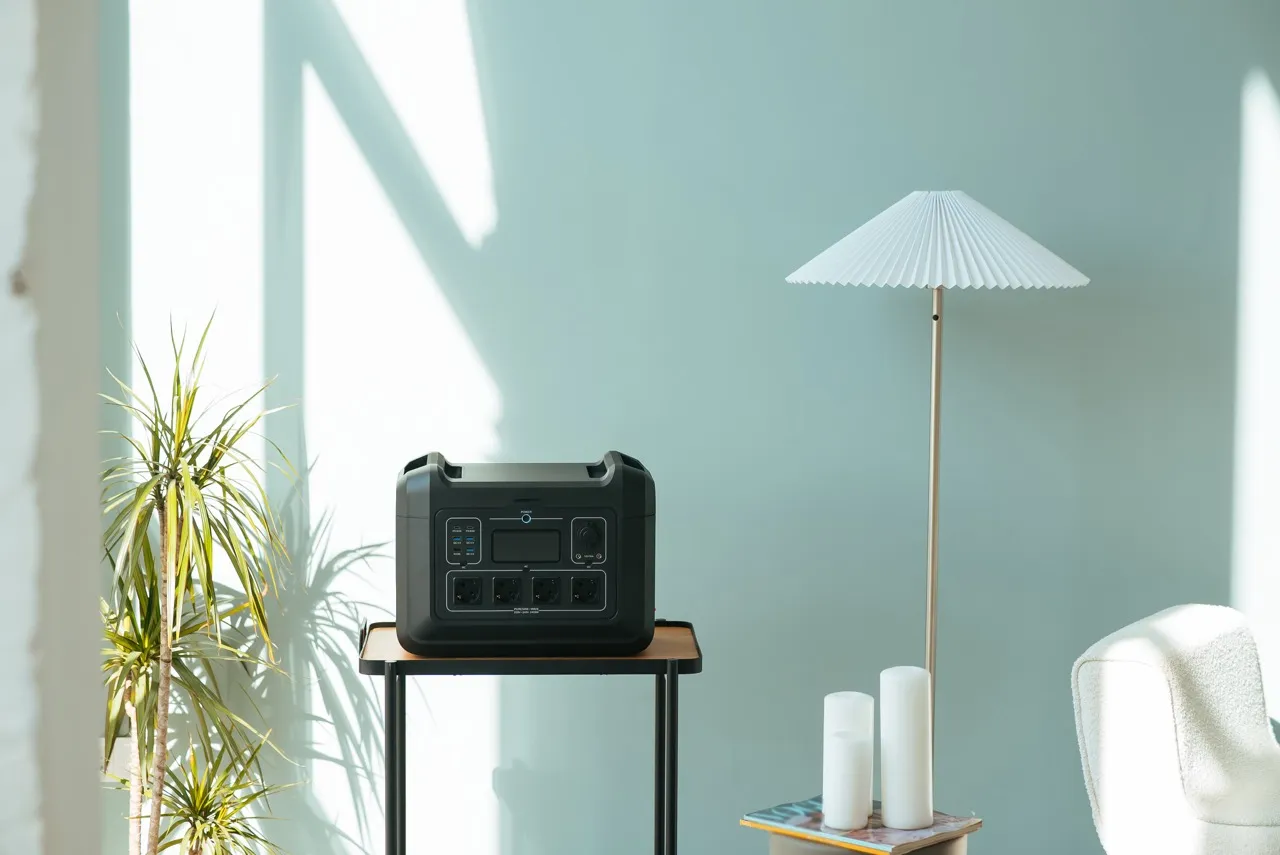 When you connect a home battery in your home, you usually do not need to take out separate insurance. Damage resulting from the use of the home battery is often covered by your buildings insurance. You can compare it with solar panels, for which the same applies. However, an insurer may have included a duty to notify in its terms and conditions. This means you have to inform the insurer about the installed home battery.
Not sure whether this is compulsory with your insurer? In that case, do it as a precaution, to avoid discussions later on. It is important that the home battery is installed correctly. Logically, there must also be no negligence in the event of damage.
Choose a home battery with LFP technology
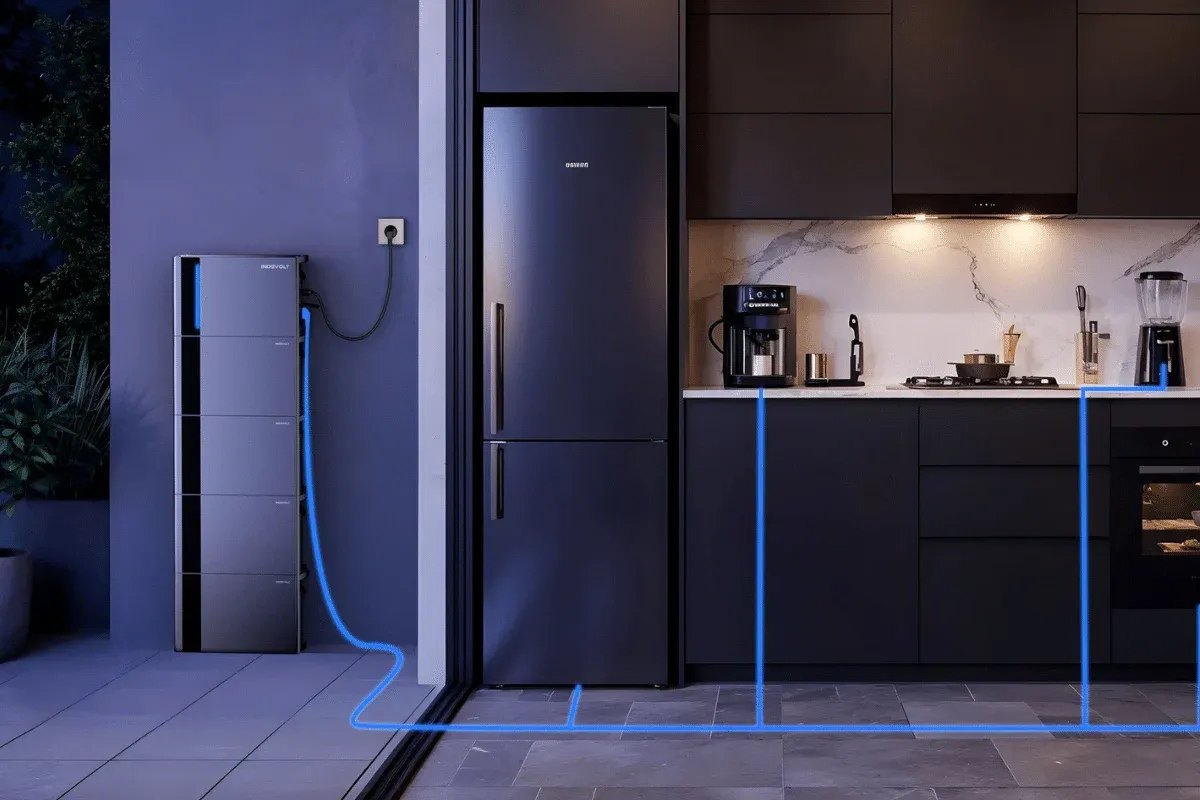
You can compare home batteries on the basis of various factors. One of those factors is the type of battery cells used. For example, it is advisable to choose a battery with LiFePO4 cells, such as the Indevolt PowerFlex 2000. These are also known as LFP batteries. These batteries are a safer alternative to batteries with classic lithium-ion cells, because they are chemically more stable and therefore better able to cope with heat. This reduces the risk of fire. Not unimportantly, these modern lithium iron phosphate batteries are also more durable.
To let the heat escape, it is important that the battery is placed in a well-ventilated, cool room. Think of a shed, the attic or, for example, the space under a staircase. In some cases, a home battery can also be placed outdoors. Pay close attention to the IP rating of the system. Keep the battery out of direct sunlight outdoors. This could have a negative effect on how the battery works.
Battery Management System (BMS) of batteries
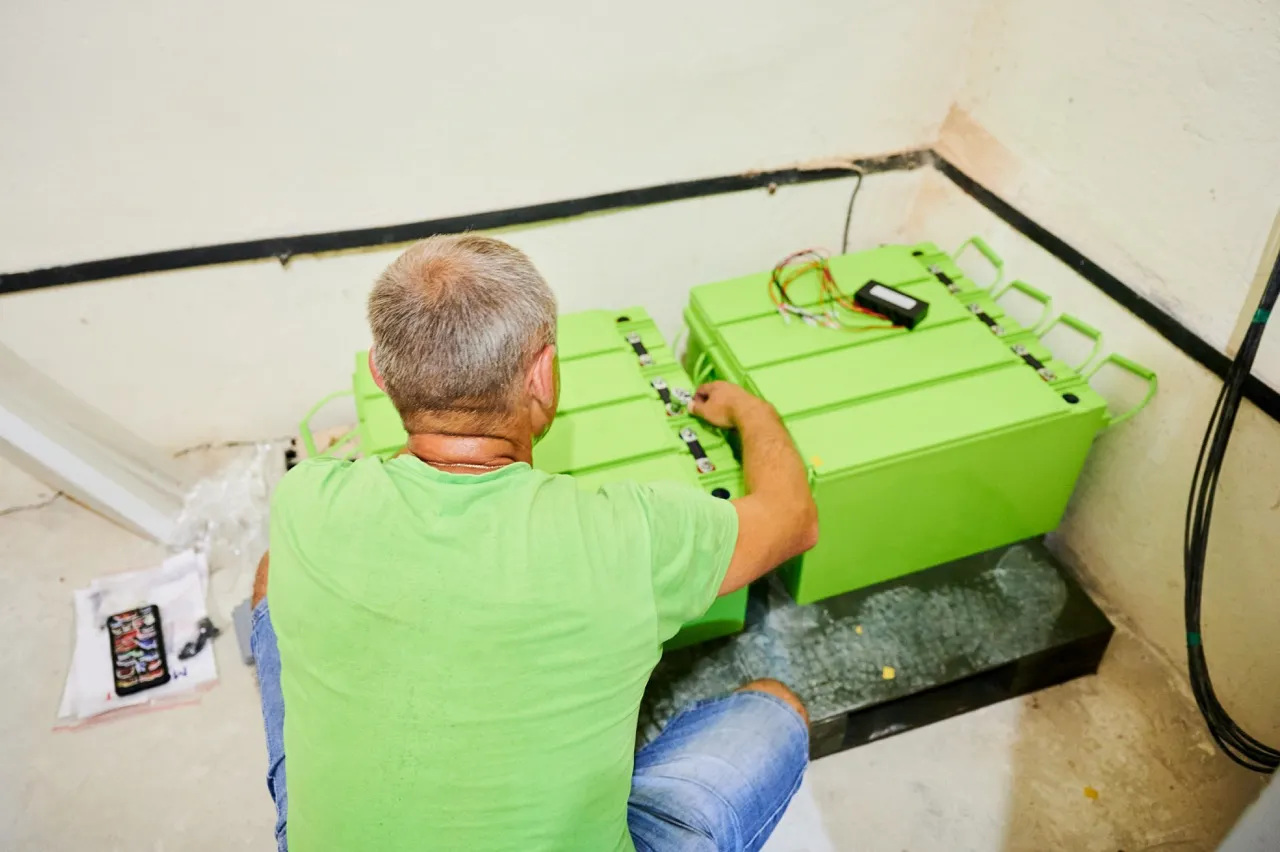 Home batteries almost always come with a Battery Management System (BMS) as standard, which monitors the safe operation of the device. As soon as overcharging, deep discharging or a short circuit threatens, the BMS switches the battery off. In many cases, this can prevent worse, such as a fire.
Checklist for a safe installation
The tips below help you connect a plug-and-play home battery safely in your home.
- The right room
Choose a room in your home where the temperature is stable. Temperature fluctuations make a home battery less efficient.
- Heat dissipation
Make sure there is enough free space around your home battery, which makes it easier for heat to escape.
- The right circuit in the meter cupboard
Always choose an earthed socket and preferably give the home battery its own circuit in the meter cupboard, dedicated entirely to the battery. A circuit shared with other appliances limits the power of your home battery.
- Keep it clear
Never place anything on top of the home battery. Think of a plant, a few books and so on.
- Download the app
Via the app that nowadays comes with the home battery almost as standard, you can follow the status of the system.
- Contact your buildings insurer and check your policy
Some insurers have special rules about home batteries. It is sensible to check your policy and ask your buildings insurer about installing a home battery.
Read also: Lightning damage: liability and insurance.
About this page
Written by Ronald de Waard, insurance editor. Last updated on 9 November 2026. WA.nl provides general information, not personal advice.