Flying a drone always involves risks. The drone can fall on someone's head, it can be stolen or it can be damaged by the weather. A drone like that is quite expensive, and the damage to others can run very high. That is why it is wise to get insured. Several types of insurance are available. Here we need to distinguish between drone insurance for recreational use and drone insurance for professional or business use. This page describes the situation in the Netherlands.
Drone insurance for recreational use
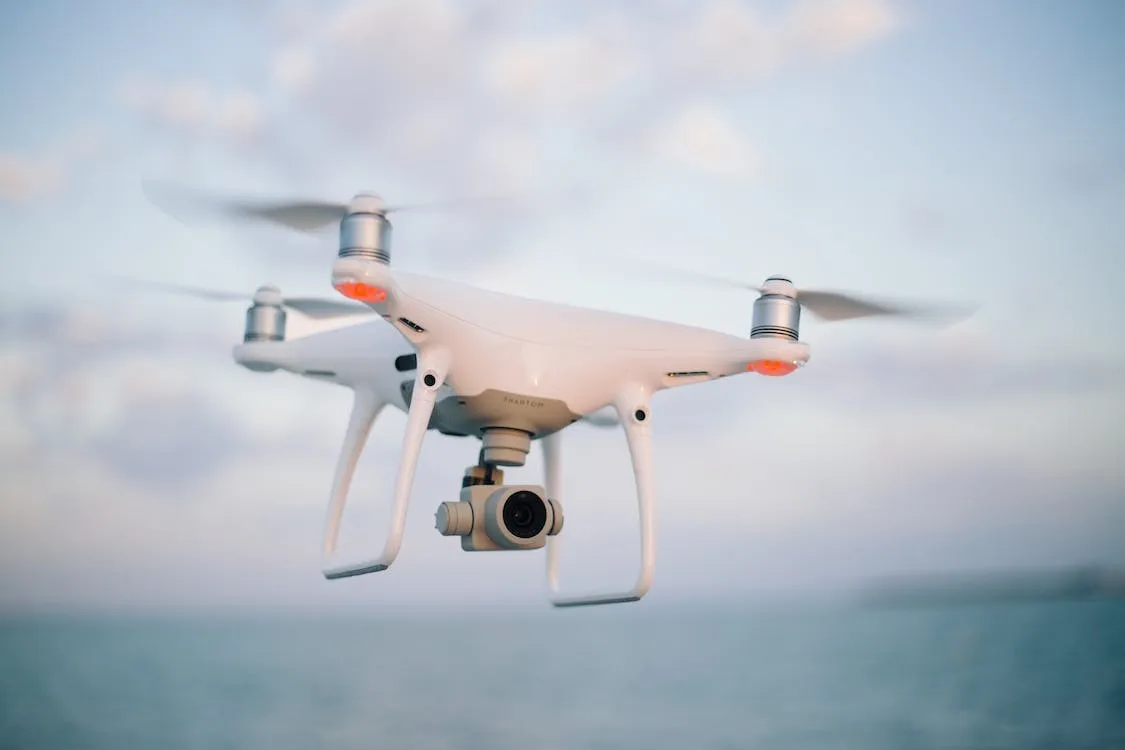
When a drone is used recreationally, liability for damage to third parties is usually covered by personal liability insurance (AVP). However, exclusions may also apply. Many insurers only cover damage caused by drones or model aircraft weighing up to 25 kilograms. The exact limit depends on the policy. Anyone who uses a drone recreationally would do well to check first whether their AVP insurance offers sufficient cover. If a drone is used professionally, AVP insurance will not provide cover in any case.
Drones and personal liability insurance (AVP)
When it comes to personal liability, you soon end up with AVP insurance. In most cases this insurance covers personal liability: liability for damage to someone else's belongings or to their body. If you cause damage with your bicycle, your scooter or a drone, you may be able to claim on your AVP insurance.
Still, it is not as simple as it seems. Insurers can include additional conditions and exclusions in the policy. For example, insurers stipulate that accidents caused with a car are not covered. For that you need to take out third-party liability insurance (WA).
Some insurers also include restrictions and exclusions for drones or model aircraft. This is not always a complete exclusion; sometimes it concerns weight limits. For example, the insurer only covers damage caused by drones weighing up to 20 or 25 kilograms. It is therefore advisable to always read the policy conditions and check whether or not your AVP insurer covers damage caused by drones. You can of course also contact the insurer to check the details.
More about personal liability insuranceInsurers where drones fall under the AVP
Going through the policy conditions is very complex. They do not always explicitly mention a drone. Sometimes they refer to model aircraft. A study of the definition used may then show that it does in fact include a drone. For the major AVP insurers in the Netherlands we checked whether or not drones are insured and which restrictions apply. Below you will find the AVP insurers that cover damage caused by a drone. Most Dutch insurers offer their website and policy documents in Dutch only. Bear in mind that policy conditions can change at any time. So be sure to discuss your situation with the insurer before you sign an insurance contract. In addition, the overview below is not exhaustive.
| Insurer | Conditions | Restrictions |
|---|---|---|
| FBTO | You fly in the Open category A1, A2 or A3. | Not insured if the applicable EU legislation for recreational use is not complied with. |
| Univé | The drone is used as a hobby and the damage is caused in Europe. | Not insured if the applicable EU legislation for recreational use is not complied with. Not insured if the drone weighs more than 25 kg. |
| Allianz Direct | The drone is used as a hobby. | Not insured if you do not follow the drone rules. Not insured if the drone weighs more than 5 kg. |
| AEGON | The damage does not occur while you are doing paid work with the drone. | Not insured if the drone weighs more than 25 kg. |
| ING | The damage does not occur while you are doing paid work with the drone. An exception is made for holiday jobs, side jobs and work placements of children who are at school or studying. | Not insured if the drone weighs 25 kg or more. |
| Centraal Beheer | You fly in the Open category A1, A2 or A3. | Not insured if the applicable EU legislation for recreational use is not complied with. Damage to another aircraft is not insured. |
| Promovendum | The drone is used privately and the flight is a low-risk flight in the Open category A1 or A2. | Not insured if the applicable EU legislation for recreational use is not complied with. Damage caused by drones heavier than 25 kg is not insured. |
| a.s.r. verzekeringen | Only for recreational use in Europe. In addition, you must always have the drone in sight, you may not fly higher than 120 metres, you may not fly in the dark, you may not fly over a crowd and you may not fly in no-fly zones. | Not insured if the drone weighs more than 3 kg. |
Co-insured persons
If an AVP policy states that damage caused by a drone is covered, it is also worth checking who is and who is not co-insured. This is often set out in the general terms and conditions. With most insurers, minor children, children living at home and children who study and live away from home are co-insured as standard. Do bear age limits in mind, however. If a child is co-insured, the AVP insurance also covers damage the child has caused with a drone.
Taking your drone on holiday
Most AVP insurers state explicitly that the insurance does not provide cover if the damage occurs outside Europe. Sometimes this also follows from the general terms and conditions, which contain a territorial restriction. In addition, AVP insurance does not provide enough cover against the risks that come with a holiday. Your luggage with your expensive drone could be stolen, for example. Only good travel insurance offers a solution.
All about taking your drone on a tripTheft
A drone can be quite expensive and a lot can go wrong. For example, the drone may be stolen during a burglary. This is often covered by home contents insurance. However, the drone may also be stolen while you are flying it, for example after it has landed in a field. In such cases home contents insurance in principle does not provide cover, if only because it is often unclear what happened to the drone. Home contents insurance with cover outside the home can cover theft of a drone during flying activities.
Some insurers offer good theft cover for drones, usually combined with a comprehensive formula. This means that any form of loss, theft or damage to the drone itself is covered. Expect a relatively high excess and a relatively high premium, at least in relation to the value of the drone.
All about burglary damage and insuranceDamage to your own drone
Personal liability insurance will only cover damage to other people's property and to persons, as well as consequential damage. This means, for example, the damage to a third party's house that the drone crashes onto. The damage to the drone itself is not covered. Sometimes home contents insurance offers a solution, in particular if you have cover outside the home.
Solutions for drones are gradually appearing. This is sometimes called "drone casco insurance" (cover for damage to the drone itself). Bear in mind that high excesses sometimes apply. This means that a large part of the damage to your own drone still has to be paid by you. The excess can be as high as fifteen percent. The number of providers is still limited.
There are also drone manufacturers that offer damage insurance themselves. One example is DJI, which offers insurance for a one-off premium with the DJI Care Refresh Card. This insurance is of course only available for DJI drones.
Drone insurance for business use
The business use of drones keeps increasing. This is partly due to legislation that is becoming clearer and has made it easier to use drones for business purposes. For business use of a drone, for example for chimney inspections or aerial photography, insurance is in principle always compulsory. Because it concerns business use, AVP insurance will not provide cover. In other words, additional insurance is necessary.
Drones and business liability insurance
Liability for damage to third parties caused by aircraft, which includes drones, is in principle not covered by business liability insurance (AVB). These policies always include an exclusion for damage caused by aircraft. That is why insurers offer separate insurance. This is also called (specific) drone insurance for businesses. Businesses are usually required to have this insurance if they want to use a drone for business purposes.
More about business liability insurance
Damage to third parties
Liability towards third parties must be insured for business use. Business liability insurance is not sufficient. In other words, you need to take out specific drone insurance for businesses. A limited number of insurers offer drone insurance for business use. They apply their own conditions and restrictions, so it is always advisable to read the policy conditions. It is important that the amount covered each year matches the risk. With most insurers this is €1 million to €2.5 million.
Damage to the drone itself
Providers of drone insurance often also offer the option of insuring the drone itself. This means that if the drone lands on a house, for example, the insurer pays for the damage caused and for the damage to the drone. Such insurance is always tailor-made, because things like the value of the drone have to be taken into account. The more valuable the drone, the higher the premium for this casco insurance for drones will be. Some insurers only offer this option for valuable drones, for example once they are worth more than €5,000.
Employer's liability
Specific drone insurance does not cover employer's liability arising from the employer's duty of care. For that you need to rely on business liability insurance. Most business liability insurers can add a clause to the insurance contract so that employer's liability when using drones is properly covered. It is important to discuss this carefully with the insurer.
All about safety at work and liability
Insurers offering business drone insurance
By no means all providers of business liability insurance allow you to insure the risk of damage caused by drones in addition. Most business liability insurers do not promote or offer this insurance. It is mainly the specialist drone insurers that promote it. Such drone insurance policies are very well put together and are recommended. For now, the choice is limited.
| Drone insurer | Explanation |
|---|---|
| Coverdrone | The first in the sector to start offering specialist drone cover. It also offers solutions for private individuals. |
| Flight Deck | A specialist in aviation insurance. This insurer offers solutions for drones, aircraft, pilots, flying clubs and aviation companies. |
In some cases, business drone pilots can also make use of an attractive collective scheme. This is the case, for example, for members of the Drones department of the KNVvl. For this, the KNVvl (Royal Netherlands Aeronautical Association, Koninklijke Nederlandse Vereniging voor Luchtvaart) works together with Driessen & Rappange Verzekeringen.
Costs of drone insurance
How much drone insurance costs depends on several factors. The cover you choose plays an important role, among other things. For business drone insurance that covers liability, the premium usually ranges between €210 and €600 per year (including insurance premium tax). For above-average risks the premium can of course be higher. A second drone on the same policy, so with 1 pilot on the policy, is often cheaper.
For private individuals, liability cover is often included in the AVP insurance and there are no extra costs. Specific drone insurance for private individuals costs around €35 to €50 per year (including insurance premium tax). Additional cover of course comes with additional costs, for example if you want your ground equipment insured. Always take policy fees into account as well. Sometimes you can avoid these policy fees through a promotion. For example, if you order your drone certificate through Drone Class, you receive a discount code. When you then take out drone insurance with Flight Deck, the policy fee of €15 is waived.
For the insurance for DJI drones (the DJI Care Refresh Card), the premium depends on the validity period of the card and the model. At Coolblue, prices for these cards range between €54.99 and €349.
Liability for damage caused with a drone
Flying a drone is not without risk. If the drone comes down badly, you can seriously injure someone. As the pilot, you are liable for the damage you cause. That is also the case if you use the drone recreationally. That is why good liability insurance is always advisable, even if this insurance is not required by law.
Damage caused with a drone
Whether drone use is recreational or professional, damage can never be ruled out. And as the pilot, you are guaranteed to be held liable for it. A drone can fall on a car or hit a passer-by, for example. Fortunately, AVP insurance or business drone insurance comes to the rescue. These policies cover both material damage and non-material damage.
Material damage
Material damage is damage that can be expressed directly in money. It concerns damage to someone's belongings, for example the damage to the car the drone fell on. However, it is not only about directly visible damage. Material damage also includes lost income, the costs of medical care, the costs of hiring domestic help and so on. Such costs are relatively easy to estimate.
Non-material damage
Non-material damage is damage that cannot be expressed directly in money. Examples are pain, grief or a loss of enjoyment of life. If a drone falls on someone and, because of their injuries, they can no longer play sport, this will cause grief. This grief is also eligible for compensation. The compensation awarded for it is also called non-material damages (smartengeld). In cases of privacy violations, among others, you can be ordered to pay non-material damages. In other words, it is very important to respect your neighbours' privacy. This follows from neighbour law and privacy law.
Amount of cover
The compensation for material damage, combined with non-material damages, can sometimes run very high. This is certainly the case if someone suffers permanent injury. That is why it is important to know up to what amount the liability insurer will pay for the damage. Because if the damage is higher than the amount of cover, you will still have to pay part of the damage yourself. Insurers often offer basic cover of around €1 million. It is also possible to increase this amount, for example to €2.5 million. This will of course also affect the premium.
Case law and the use of drones
Drone use increases every year, but so far there is little case law on liability for drones. As more people start using drones, there will be more accidents and there is bound to be more case law. Even so, there are already a number of interesting cases on liability involving drones.
Liability when spying on a neighbour who shoots at the drone
In this case, the owner flew a drone with a camera over the property of a neighbour who had not given permission for this. The owner of the property felt spied on. The owner of the property then shot at the drone with an air rifle, damaging the drone. According to the court, there was indeed an unlawful invasion of privacy. But of course that does not give the victim the right to shoot at the drone with an air rifle. Because both parties had acted unlawfully, the court ruled that each party must bear 50% of the damage.
Read the ruling on Rechtspraak.nl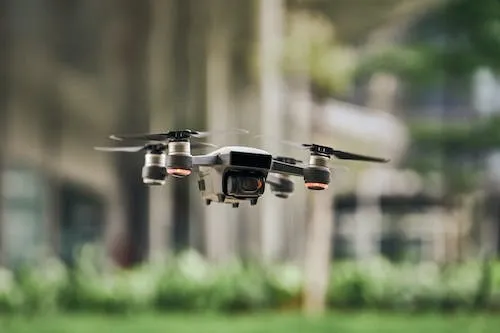
Invasion of privacy by filming with a drone
In this case, someone had flown a drone with a camera from his own property over someone else's property. He had previously also installed cameras with which he could spy on the neighbour. The neighbour eventually went to court. The court was clear and prohibited him from filming the neighbour's property with the drone again. The court stressed that it makes no difference that the pilot flies over his own property: even then there can still be an invasion of privacy. To enforce this ban, the court imposed a penalty payment (dwangsom) of €250 per day up to a maximum of €10,000. In addition, the drone owner had to pay all legal costs.
Read the ruling on Rechtspraak.nl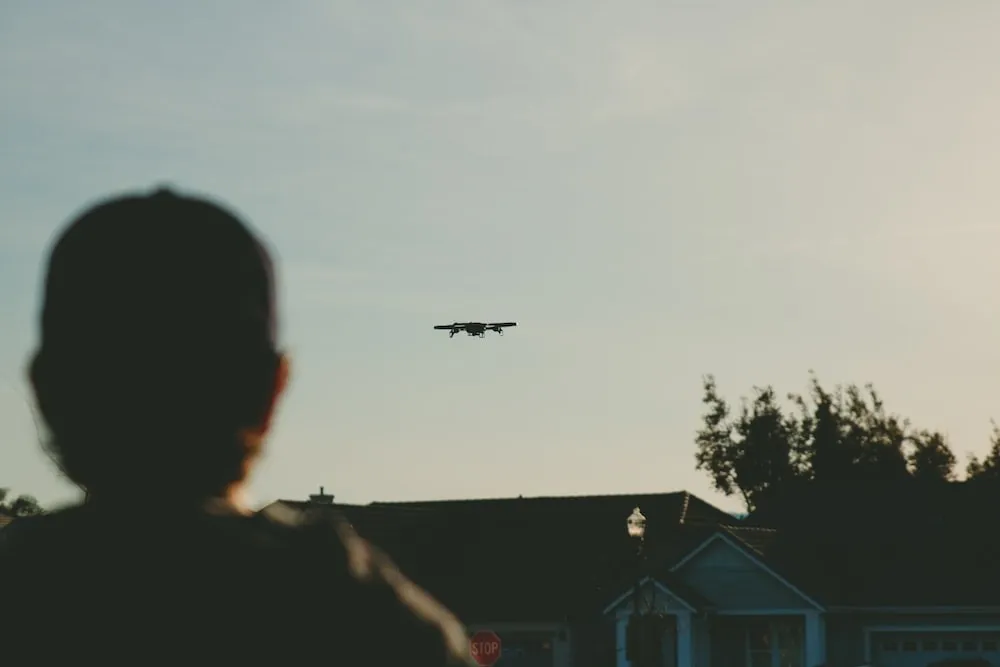
Herd of animals stampedes because of a drone
A 31-year-old man from Haarlem was suspected of deliberately disturbing animals in the Oostvaardersplassen nature reserve. The forest ranger had first watched a herd of Heck cattle at rest and then saw them stampede in great panic. Through his binoculars he saw a drone flying above the cattle and saw greylag geese also becoming restless as the drone approached. Not long afterwards, the ranger noticed that red deer also stampeded when the drone and the Heck cattle came closer. However, the police court judge (politierechter) acquitted the man, because it had not been shown that he had intended to make the animals flee.
Read the ruling on Rechtspraak.nl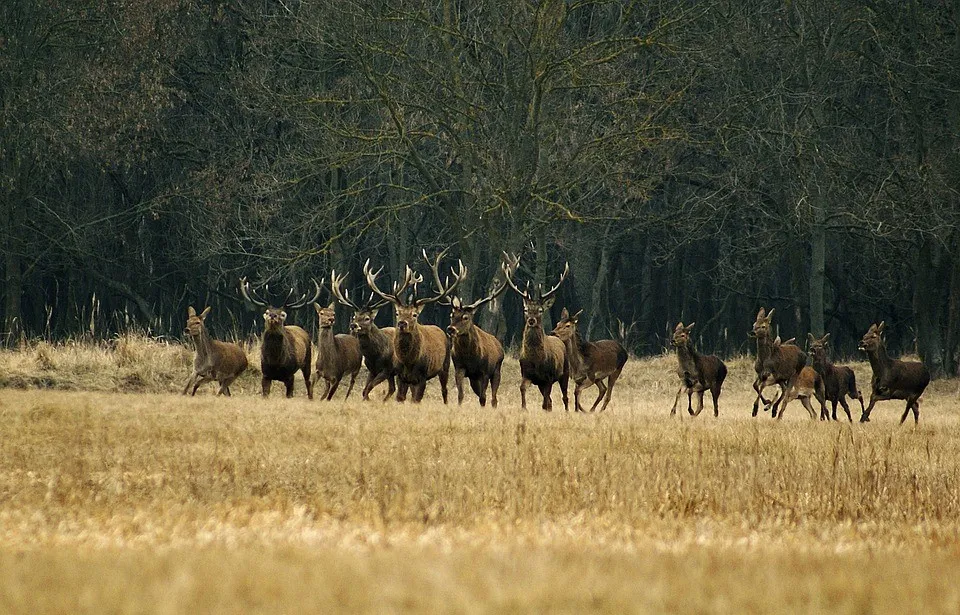
More information about flying a drone
When flying a drone, you have to take many rules into account. The class and the subcategory, among other things, determine what applies. Based on these, you know for example whether or not you may fly over people or how much distance you must keep from people. The main rules are shown in the table below.
| Subcategory | Class | Maximum take-off mass | Maximum height | Maximum speed | Physical serial number and geo-awareness | Operational restrictions | Distance from people | Operator registration |
|---|---|---|---|---|---|---|---|---|
| A1 | Legacy<br>drone | < 250 grams | ≤ 120 metres | 68 km/h | No | Max. 50 metres from the pilot (horizontally and vertically) if follow-me mode is activated | Not over crowds | No |
| A1 | C0 | < 250 grams | ≤ 120 metres | 68 km/h | No | Max. 50 metres from the pilot (horizontally and vertically) if follow-me mode is activated | Not over crowds | No |
| A1 | C1 | < 900 grams | ≤ 120 metres | 68 km/h | Yes | Max. 50 metres from the pilot (horizontally and vertically) if follow-me mode is activated | Not over crowds | Yes |
| A2 | C2 | < 4 kg | ≤ 120 metres | None, but must have a low-speed mode (11 km/h) | Yes | At least 30 metres from uninvolved persons, or 5 metres in low-speed mode | Yes | |
| A3 | C2 | < 4 kg | ≤ 120 metres | None, but must have a low-speed mode (11 km/h) | Yes | 150 metres from residential, industrial, commercial and recreational areas | Only fly in areas where there is no risk of endangering uninvolved persons | Yes |
| A3 | Legacy drone | < 25 kg | ≤ 120 metres | None | No | 150 metres from residential, industrial, commercial and recreational areas | Only fly in areas where there is no risk of endangering uninvolved persons | Yes |
| A3 | C3 | < 25 kg | ≤ 120 metres | None | Yes | 150 metres from residential, industrial, commercial and recreational areas | Only fly in areas where there is no risk of endangering uninvolved persons | Yes |
| A3 | C4 | < 25 kg | ≤ 120 metres | None | Yes | 150 metres from residential, industrial, commercial and recreational areas | Only fly in areas where there is no risk of endangering uninvolved persons | Yes |
Bear exceptions in mind. For example, registration as an operator is in principle not required if the drone weighs less than 250 grams, but it is required if the drone is fitted with a photo camera, video camera or infrared camera.
Rules for recreational drone use
The distinction between private and business drone use, as it existed before 1 January 2021, has been abolished. Even so, the distinction is still important when it comes to insurance. In addition, recreational users will mainly fly in the Open category. The Open category is also possible for professional users, but some businesses will be more likely to fly in the Specific category, for example.
More about private drone useRules for professional drone use
Anyone who flies a drone professionally must take additional rules into account. Taking out drone insurance is compulsory, for example. Professional users can fly in the Open category, but also in the Specific category. Additional requirements apply there. It quickly becomes very complicated.
More about professional drone useRules for low-risk drone flights
Low-risk flights fall under the so-called Open category. For a flight to count as low-risk, the drone may not weigh more than 25 kilograms at take-off. In addition, you may not fly higher than 120 metres, and a number of other requirements apply. Recreational use will usually involve a low-risk flight. Even so, professional users can also operate in the Open category.
More about low-risk flightsRules for medium-risk and high-risk drone flights
Some drone flights carry extra risk, for example because the drone drops something during the flight or because goods are carried over crowds. A risk assessment may show that a flight involves a medium or high risk. This affects which rules apply. Recreational use will rarely involve a medium or high risk. Knowledge of this is mainly important for businesses.
More about medium-risk and high-risk flightsEuropean drone legislation
European drone legislation has replaced the former national rules. One advantage is that the European legislation has created uniformity. The same rules apply in all EU countries. If you are allowed to fly a drone in the Netherlands, you are also allowed to do so in France or Germany, for example. Europe has introduced a number of new rules, and requirements are also set for the drones themselves.
More about European drone legislationCx and CE labels on drones
New drones must have an appropriate CE marking. The Cx label indicates the subcategory for which a drone has been approved and can be used. This also affects the applicable legislation and the obligations that come with that category. For example, a drone in category C1 must weigh less than 900 grams. For this, a European A1/A3 drone pilot certificate is sufficient. For a drone with the C2 label, an additional A2 certificate of competency is compulsory.
More about the Cx and CE labelsDrone pilot certificate
Europe has introduced the drone pilot certificate. In most cases, pilots must have a pilot certificate, even when flying as a hobby. To get one, they have to take a course and pass an exam. There are exceptions, for example for toy drones. The training can be followed online and the exam can also be taken online. After passing the exam, you can apply for the pilot certificate.
More about the drone pilot certificateDrone certificate of competency
In a limited number of cases, the drone pilot certificate is not enough. After obtaining the pilot certificate, you then have to take an additional knowledge test. The pilot must also gain practical experience. Only then can the certificate of competency for a drone be applied for.
More about the drone certificate of competencyFrequently asked questions about insuring your drone and liability during a flight
Drones are a relatively recent phenomenon, and the legislation is still developing rapidly. The rules change constantly, while insurers are also adjusting their drone insurance. New insurance products are still being launched. It is easy to see how this raises questions.
What is the difference between recreational and professional drone use?
Recreational use is a form of hobby use. This means that the drone is not used for business or professional purposes and that you are not paid for the flight. With professional use, that is different. This distinction is mainly important for insurance.
Is my drone covered as standard by my liability insurance?
In the case of recreational use, the drone is usually covered by personal liability insurance, although this differs per insurer. Restrictions often apply. In the case of professional use, the drone is in principle not covered by business liability insurance. Taking out specific drone insurance is then necessary.
What do I need to do to be allowed to fly my drone?
That depends on many factors. The risk of an accident causing damage determines which rules apply. In some cases, for example, you must have a drone pilot certificate, while in other cases a certificate of competency is also compulsory. You may also need to register as an operator or take out insurance.
What kinds of damage can I cause with my drone?
With a drone you can cause both material and non-material damage. Material damage is damage that can be expressed in money, for example damage to a car or a house. Non-material damage is damage that cannot easily be expressed in money, for example grief or pain.
Is drone insurance compulsory?
Whether or not drone insurance is compulsory depends on several factors. If you use a drone of less than 25 kg as a hobby in the Open category, insurance is not compulsory. For business use you are always required to take out drone insurance. This follows from aviation legislation.