An accident or another harmful event often involves material damage, such as damage to a vehicle, medical costs or loss of income. These items of damage are relatively easy to express in money and therefore also to compensate. But in addition to this material damage, a victim can also suffer non-material damage, such as pain, grief and psychological suffering. This kind of damage is harder to quantify, but it is also eligible for financial compensation. In the Netherlands, this compensation is known as smartengeld; in English, non-material damages. There are specific mechanisms and methods for determining the amount of non-material damages, taking into account the severity of the injury, the impact on daily life and previous court rulings in comparable cases. This page describes the situation in the Netherlands.

What are non-material damages?
Non-material damages (smartengeld) are financial compensation for non-material damage, such as pain, grief and psychological suffering. This is damage that a victim suffers through the actions of someone else. It can be the result of, for example, an accident, assault or a medical mistake. The amount of non-material damages depends on factors such as the severity of the injury, the impact on daily life and the length of recovery. They can be awarded through a settlement with an insurer or with the liable party, or by a court as a result of legal proceedings. Non-material damages are not a replacement for medical costs or loss of income, but are intended as recognition of and compensation for the non-material suffering endured.
History of non-material damages
Non-material damages, the compensation for non-material damage, have a long and complex history. The roots of this form of compensation actually go back to Roman law, where the offence 'iniuria' existed. This concerned deliberately insulting or wounding a person, for which a fixed sum of money was set as compensation. At the time, these fines were intended more as punishment and retribution than as real compensation for the victim. During the Middle Ages, the concept of 'zoengeld' (atonement money) was used, under which fines were imposed as a form of satisfaction. Later in legal history, compensation for non-material damage remained limited to exceptional cases, mainly because of the reluctance of the legislator. It was not until the twentieth century that non-material damages gained a more accepted place in civil law. An important milestone was the Van Kreuningen/Bessem judgment (1943), in which the Dutch Supreme Court (Hoge Raad) explicitly recognised that non-material damage is eligible for compensation.
In the Netherlands, a system was used for a long time to categorise the severity of injury and the corresponding non-material damages: the injury pyramid (letselpiramide). This model, which was also included for a long time in the Smartengeldboek (see below), arranged injuries into seven categories. These ranged from minor injury (such as bruises) to exceptionally serious injury (such as complete paralysis or blindness). The pyramid served as a guideline for judges and insurers in determining the amount of compensation for non-material damage. The higher an injury was placed in the pyramid, the greater the non-material damages. This system was used until 1997, after which it was dropped in later editions of the Smartengeldboek. The reason for this was a growing recognition that the severity of an injury could not always be linked unambiguously to a fixed sum of money, because the impact of an injury can vary greatly from person to person. Today, non-material damages are calculated in a different way, as discussed later. This leaves more room for individual differences and personal situations.
Legal basis for non-material damages
Non-material damages have various legal bases. They serve as compensation for non-material damage suffered, such as pain, grief and reduced enjoyment of life, when someone else is liable for it. In other words, there is a direct link with liability law and the law on compensation. The compensation can arise from an unlawful act (tort) or from breach of contract (wanprestatie) and is intended to offer the victim some degree of redress.
After recognition by the Supreme Court in 1943, non-material damages became an essential part of Dutch compensation law. The codification in Article 6:106 of the Dutch Civil Code (Burgerlijk Wetboek, BW), which alongside case law is an important legal basis for non-material damages, confirms that a victim is, under certain conditions, entitled to compensation for a disadvantage that cannot be expressed as financial loss.
Functions of non-material damages
Non-material damages serve several functions. Firstly, they have a compensatory function, in which the victim receives a financial payment as recognition of the suffering. Secondly, they serve as satisfaction, an acknowledgement of the wrong done to the victim. In addition, non-material damages have a preventive function, because they can have a deterrent effect on potential perpetrators. Finally, they have a social function, because they contribute to awareness of the seriousness of non-material damage and the importance of recognising it in law.
Methods for calculating non-material damages
Determining the amount of non-material damages is a complex process in which judges take various factors into account. Non-material damage simply cannot be measured directly in financial terms, which makes an objective assessment difficult. That is why various methods are used that do justice to the specific circumstances of the victim and the severity of the injury. Some common methods are explained below.
The QALY concept
A more theoretical approach is the QALY concept (Quality Adjusted Life Year), a method often used in medical and economic science. This model assigns a certain value to the loss of quality of life due to injury or psychological suffering. Although this concept does not yet play a fixed role in calculating non-material damages in the Netherlands, it is increasingly mentioned in the literature as a potential tool for making non-material damages more objective.
The factors approach
When determining the compensation, various factors (gezichtspunten) play a role, such as the severity and duration of the injury, the age of the victim and the effect on their quality of life. The Supreme Court has confirmed that these factors must be included in the assessment. The more serious and long-lasting the consequences, the higher the compensation awarded. This helps to value the impact of non-material suffering on the victim's daily life in a fair way.
Using the Smartengeldgids
One of the most widely used methods in the Netherlands is the Smartengeldgids (guide to non-material damages), a publication of the Dutch motoring and travel association ANWB. This guide contains a collection of court rulings on non-material damages awarded in a wide range of cases, adjusted annually for inflation. Judges and lawyers use the guide as a reference to arrive at a reasonable amount. In other words, it is a form of case comparison. This is done by making a comparison with earlier, similar cases. In this way, the Smartengeldgids offers a practical and objective way of ensuring consistency in the amount of non-material damages. Judges therefore attach great value to the amounts in the ANWB Smartengeldgids.
Comparison with foreign case law
In some cases, the amount of non-material damages in other countries is also considered. Of course, this must be done with due restraint, because other countries have different rules that do not apply in the Netherlands. Moreover, our system is in any case cautious about awarding high amounts of non-material damages. Nevertheless, case law from countries such as Germany or Belgium can serve as a guideline to a limited extent. This happens mainly in situations where Dutch case law offers few precedents, such as with rare or new forms of non-material damage. In any case, comparative law can never be mere cut-and-paste work.
Using formulas for non-material damages
An alternative method for calculating non-material damages objectively is the use of so-called formulas for non-material damages (smartengeldformules). These formulas have been developed to set an indicative amount on the basis of objective criteria. Factors such as the severity of the injury, the length of recovery and the impact on the victim's quality of life are taken into account. Although the outcome of these formulas certainly need not be binding, they can serve as a guideline. Formulas for non-material damages are mainly used in complex cases in which standard references offer insufficient guidance. In practice, by the way, judges are reluctant to use such formulas, which means they are of only limited value.
Calculating non-material damages yourself
Calculating non-material damages yourself can be extremely complex, which is why it is advisable to call on a specialist personal injury lawyer. For those who want to look into it, it is, however, possible to some extent to get a good indication of the non-material damages yourself.
- Determine the severity of the injury
The severity of the physical or psychological injury is a crucial factor in calculating non-material damages. The more serious and long-lasting the consequences, the higher the compensation that may be awarded. This includes physical limitations, pain and the emotional impact on daily life. So first map out the injury properly before you calculate the non-material damages.
- Consult the Smartengeldgids
The Smartengeldgids contains court rulings on amounts awarded for comparable injuries. By comparing non-material damages awarded previously with your own situation, you can make a realistic estimate. This ensures a consistent and well-founded approach. The ANWB Smartengeldgids can be ordered online. You can also choose digital access to the database of non-material damages.
- Take personal circumstances into account
Factors such as age, occupation and quality of life play an important role in the amount of non-material damages. A young victim with a promising career, for example, may receive higher compensation than an older person with a similar injury. The impact on social activities is also taken into account and must therefore be mapped out properly.
- Compare with foreign case law
In some cases, foreign case law can offer useful insights, especially with new or exceptional forms of non-material damage. That is why case law from neighbouring countries is sometimes used to support a claim.
- Consult a legal expert
A lawyer or personal injury specialist can help estimate a realistic amount and support a claim. Legal expertise can prevent you from accepting an amount that is too low or overlooking important factors.
Right to non-material damages
Non-material damages are compensation for non-material damage that can be awarded to victims in various situations. With fractures and burns, for example, there is often also non-material damage. Certainly with psychological suffering caused by assault or sexual abuse, there will be a right to non-material damages. The aim of this compensation is to give victims recognition for their suffering and to help them in the recovery process. The amount of non-material damages is determined on the basis of various factors, including the impact on daily life.
Non-material damages for a sexual offence
Victims of a sexual offence can suffer long-term psychological and emotional damage, ranging from post-traumatic stress disorder to serious anxiety. The non-material damage they suffer is often difficult to express in money, but non-material damages can nevertheless offer a form of recognition and compensation. The amount of compensation depends on various factors. Think of the seriousness of the offence, the age of the victim and the lasting impact. The need for long-term therapy and the social consequences for the victim are often also taken into account.
More info about compensation for a sexual offence
Non-material damages for a hospital admission
A hospital admission as a result of an accident, a medical mistake or assault can be both physically and mentally demanding. The length of the stay, the need for operations and the chance of permanent limitations play a major role in calculating non-material damages. Victims may face pain, stress and a long recovery process, which limits them in their daily activities. Additional factors such as loss of work or social isolation are also taken into account when determining the non-material damages.
More info about compensation for a hospital admission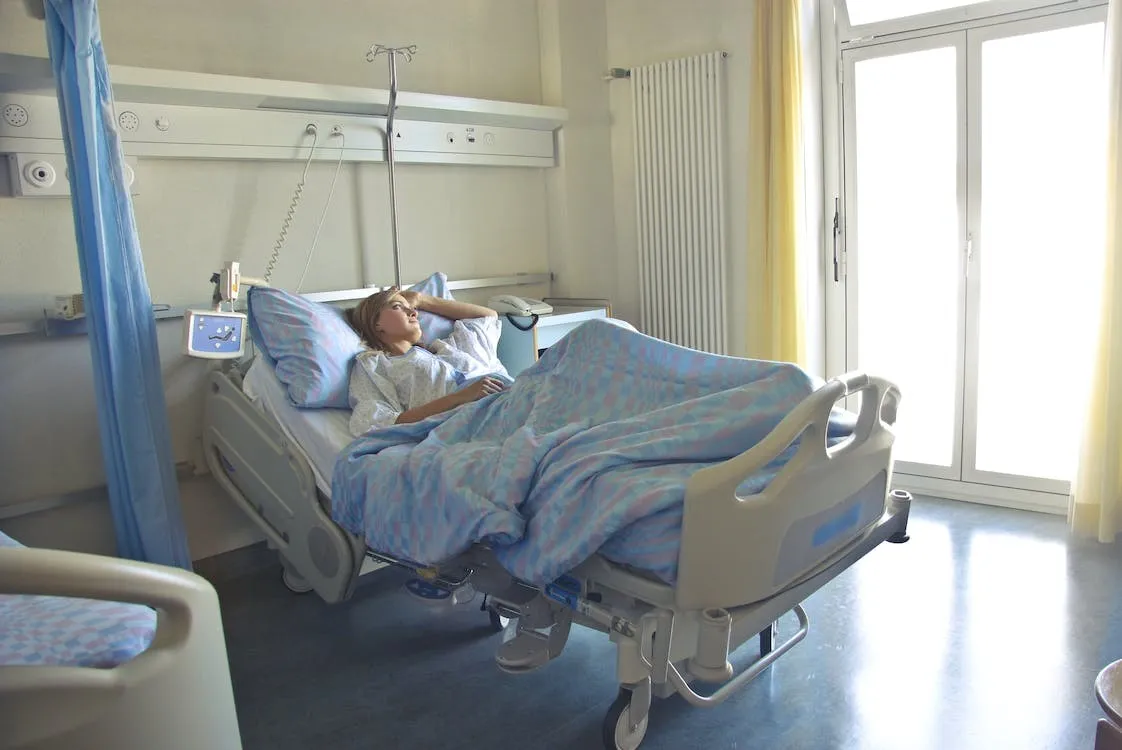
Non-material damages for eye injury
Eye injuries can have major consequences for a victim's quality of life, especially if the injury leads to permanent visual impairment or blindness. This can seriously affect the ability to work, to drive a car and to function independently. The amount of non-material damages is determined on the basis of the severity of the injury, the pain suffered and the lasting impact. In some cases, an eye injury can lead to social isolation and psychological suffering, such as depression or anxiety, which is taken into account in calculating the compensation.
More info about compensation for eye injuries
Non-material damages for fractures
A broken bone can require a long recovery process and involve severe pain, reduced mobility and loss of independence. Depending on the severity of the fracture and the medical treatment, a victim may remain limited in his or her daily activities for months. In some cases, surgery is necessary, which extends the recovery time even further and causes additional discomfort. In addition, the impact on working life can be considerable, especially if the victim becomes temporarily or even permanently unable to work. This not only causes financial stress, but can also cause emotional damage. Non-material damages compensate this non-material damage, with the amount depending on the nature of the fracture, the recovery time and the lasting consequences for the victim.
More info about compensation for a broken bone
Non-material damages for a spinal cord injury
A spinal cord injury (dwarslaesie) is one of the most serious forms of injury and often leads to permanent paralysis. Victims often lose their independence and become dependent on aids, care providers and adaptations to their home and work environment. This has not only physical consequences, but also a major psychological and social impact. Many victims experience feelings of depression, anxiety and loss of self-esteem as a result of their limited mobility and dependence on others. The amount of non-material damages in these cases is usually high, because the injury causes a permanent and far-reaching change in the victim's life, and this requires a high degree of compensation and recognition.
More info about compensation for a spinal cord injury
Non-material damages for amputation
An amputation has not only physical, but also psychological and social consequences. Losing a limb means a far-reaching adjustment to daily life, both practically and emotionally. Phantom pain, in which victims feel pain in a limb that is no longer there, is common and can be chronic. In addition, victims face limitations in mobility and self-reliance, which affects their social life and work opportunities. Prostheses can offer a solution, but often require long rehabilitation and getting used to. Non-material damages are determined on the basis of the degree of disability and the necessary medical and psychological care.
More info about compensation for amputation
Non-material damages for scars
Scars can be both physically and emotionally distressing, especially if they are visible on the face or other prominent places. They can lead to shame, reduced self-esteem and psychological complaints, such as depression or social anxiety. Depending on the location and severity, scars can also cause physical limitations, such as reduced mobility of the skin. Some scars require operations or long-term medical treatment to reduce the discomfort. The compensation depends on the size, the visibility, the medical need for corrective surgery and the psychological impact of the scar on daily life. The age of the victim also plays a role in determining non-material damages for scars: a younger victim has to live with the scar for longer.
More info about compensation for scars
Non-material damages for burns
Burns can cause severe pain and permanent damage, both physically and mentally. Depending on their severity and depth, burns can leave scars and limit mobility, especially when the skin tightens and affects the joints. Victims can also experience extreme pain and infections during the healing process, which is often a long and difficult road. Psychologically, burns can have a major impact, especially with visible scars, which negatively affect self-confidence and social interaction. The larger the area of skin affected, the younger the victim and the more complex the corrective operations, the higher the compensation will generally be.
More info about compensation for burns
Non-material damages for whiplash
Whiplash can lead to chronic pain, dizziness, concentration problems and permanent neck or back problems. It is usually the result of a road accident. The symptoms often only become noticeable after a few days or weeks, which sometimes delays diagnosis and treatment. The medical impact varies greatly from person to person, but can seriously hinder daily and professional functioning. The latter is especially the case with work that requires physical effort or concentration. The non-material damages are determined on the basis of medical reports, the consequences for daily functioning and the duration of the symptoms.
More info about compensation for whiplash
Payment of non-material damages
In many cases, non-material damages are paid after a settlement with the liable party or their insurer. This can be done through negotiations, in which the parties reach an agreement without the involvement of the court. If a settlement is not possible, the court can give a ruling and award a certain amount. Payment will then be made by the liable party. In some cases, a bailiff may be needed to enforce payment.
Non-material damages from the liable party
When a person or organisation is held liable for non-material damage, they may be obliged to pay non-material damages to the victim. The amount owed is determined by taking all relevant factors into account. If the liable party is willing to reach a settlement out of court, the victim can receive compensation more quickly. A lawyer or personal injury specialist is often brought in to negotiate fair compensation and to make sure everything is put on paper correctly. In cases where the liable party does not pay voluntarily, legal proceedings may be necessary.
Non-material damages from the insurer
In some cases, non-material damages are paid by the insurer of the liable party, for example the third-party liability (WA) insurer or the personal liability insurance (AVP) insurer. This happens mainly with road accidents, accidents at work and medical mistakes, where the person or organisation responsible has liability insurance. The insurer assesses the claim and can offer compensation on the basis of medical reports, witness statements and other evidence.
Victims would do well to get legal advice before accepting such an offer, because insurers sometimes try to keep the payment as low as possible. In the event of a dispute, a personal injury lawyer can negotiate with the insurer or start legal proceedings. If the insurer refuses to pay or the offer is unreasonably low, the court can give a ruling on the amount of compensation. In some cases, the insurer may be ordered to pay a higher amount than was originally offered. Both parties have the option of appealing against this ruling.
Non-material damages from the Violent Offences Compensation Fund
The Violent Offences Compensation Fund (Schadefonds Geweldsmisdrijven) also makes payments to victims who have suffered (psychological) injury as a result of an intentional violent crime. The psychological injury must be serious and have long-term or permanent consequences, such as post-traumatic stress disorder or severe depression. In other words, the criteria used are stricter. To be eligible for a payment, the victim must show that the injury results directly from the crime and that it has led to limitations in daily functioning. The Schadefonds Geweldsmisdrijven assesses these applications carefully and uses medical reports to establish the severity and impact of the psychological injury. The financial payment is intended to help victims recover and deal with the consequences of the crime, for example by (partly) compensating costs for therapy or loss of income.
Also read: Compensation for infertility or reduced fertility and Shock damage and bereavement damage.
Frequently asked questions about non-material damages
Many people have questions about non-material damages and how they are calculated. That is certainly not illogical, because it is a complex and often emotionally charged subject. There are many misunderstandings about when and how non-material damages are awarded, how the amount is determined and which legal procedures have to be followed. Below, we answer some frequently asked questions about non-material damages that have not yet been covered in this article.
Can I get non-material damages if there is no physical injury?
Yes, non-material damages are not only intended for situations in which there is also physical injury, but can also be awarded for psychological damage without physical injury. For example, in the case of serious emotional damage after a traumatic event. An example of this is purely psychological abuse. In such cases, it must, however, be shown that there is psychological damage. Medical reports from a psychologist or psychiatrist are often relied on for this.
How long does it take before I receive non-material damages?
The length of the procedure depends on the complexity of the case. In some cases, a settlement with an insurer can be reached within a few months. If a court case is needed, however, it can take longer, sometimes even several years. Factors such as the burden of proof, medical examinations, the willingness of the other party to cooperate and whether or not an appeal is lodged play a role in this.
Can non-material damages be awarded alongside other compensation?
Yes, non-material damages are separate from other compensation, such as compensation for medical costs and loss of income. They are specifically intended for non-material damage, such as pain, grief and loss of enjoyment of life. Victims can therefore receive both non-material damages and other forms of compensation, depending on the situation and the damage suffered.
Is there a minimum or maximum amount for non-material damages?
There is no fixed minimum or maximum amount for non-material damages. The amount is determined case by case and depends on many factors that have already been explained in detail above. In the Netherlands, non-material damages usually range from a few hundred to tens of thousands of euros, with even higher amounts in exceptional cases of very serious injury.
Do I have to pay tax on non-material damages?
Not as income: non-material damages are compensation and are not regarded as taxable income. So they do not have to be declared as income. The amount received does, however, count towards your assets in box 3 (the tax on savings and investments): bank and savings balances on 1 January are an asset in box 3, and non-material damages are not among the exempt assets (Dutch Tax and Customs Administration, Belastingdienst). If total assets exceed the tax-free allowance (heffingsvrij vermogen), the recipient pays tax on them in box 3. This applies both to payments through a settlement and to amounts awarded by a court.
Are non-material damages taken into account for rent benefit?
If your assets are too high, you cannot get rent benefit (huurtoeslag). Special assets (bijzonder vermogen) can be disregarded for this purpose. Non-material damages are an example of special assets. You can ask for the non-material damages not to be counted as part of your assets, using the form Verzoek bijzonder vermogen toeslagen (request for special assets, benefits) or by letter (Belastingdienst). This applies not only to rent benefit, but also, for example, to the child-related budget (kindgebonden budget) and the healthcare benefit (zorgtoeslag).