If you want to ride a motorised vehicle on the public road in the Netherlands, you are required to have liability insurance. The legislator does still make an exception for the electric bicycle, but not for the e-scooter (elektrische step) that runs without the rider kicking off. Insurers will also only insure e-scooters that are allowed on the public road. This page describes the situation in the Netherlands.
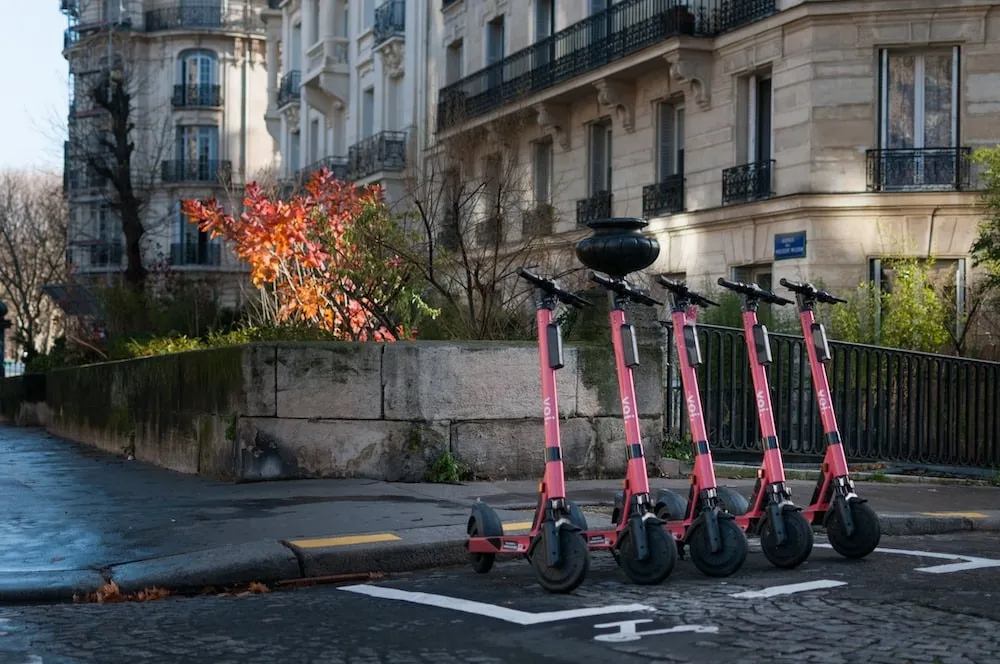
E-scooter insurance
Taking out liability insurance is compulsory if the e-scooter will be ridden on the public road. In addition, you can take out extra insurance to protect yourself or your e-scooter against the financial consequences of, for example, an accident or theft. In any case, there are a number of things you need to think about.
Vehicle Identification Number (VIN)
In the Netherlands, vehicles need a unique frame number, known as a VIN (Vehicle Identification Number). This frame number allows the police to trace vehicles. If an e-scooter does not have a VIN, you can have one stamped into the e-scooter at a local office of the Netherlands Vehicle Authority (RDW). A VIN is nothing more than a frame number that can be put on any vehicle; it says nothing about whether the vehicle is legal. But having a VIN is important: without a VIN, you cannot insure the e-scooter or use it on the public road.
Personal liability insurance (AVP)
Some people think that liability for an e-scooter is already properly covered by personal liability insurance (AVP), but unlike with the (electric) bicycle, that is not the case. Personal liability insurance (AVP) does not cover liability for motor vehicles for which third-party liability insurance (WA) is required by law, such as a car, a moped (scooter) or an e-scooter. You therefore need to take out third-party liability insurance (WA) in addition. Kick scooters that do not have a motor and that rely on the rider's own propulsion are covered by personal liability insurance (AVP).
More information about personal liability insurance (AVP)Third-party liability insurance (WA) for the e-scooter
Third-party liability insurance (WA) is the most basic insurance for the e-scooter. This compulsory insurance for the e-scooter covers your liability if you cause an accident in traffic. Damage to your own e-scooter is not covered, but damage to others is, if you are liable for it. You can only take out third-party liability insurance (WA) for e-scooters that have been approved for use on the public road.
More about third-party liability insurance (WA)All-risk insurance for the e-scooter
If you choose a more expensive e-scooter, you need more than just third-party liability insurance (WA). Third-party liability insurance (WA) only covers damage to others, not damage to your own e-scooter. As a result, all-risk insurance will also be somewhat more expensive than third-party liability insurance (WA). Bear in mind that an excess often applies.
Theft
E-scooters have the advantage and the disadvantage of being light and easy to transport. The advantage: you can easily take them with you, for example on holiday or on the train. The disadvantage: thieves can all too easily throw an e-scooter into a van. It is precisely because of the latter that you may want to consider insuring your e-scooter against theft. With theft insurance, you should always read the small print carefully. There are often very specific requirements regarding the use of locks and the like.
Additional insurance for the e-scooter
With some insurers, you can also choose extra cover. Think, for example, of breakdown cover, where you can contact an emergency centre 24/7 and get help straight away if your e-scooter breaks down on the way. Cover for ‘occupants’, for when an extra passenger rides on the e-scooter, is also possible. Another type of cover that is often added to e-scooter insurance is legal expenses cover. In the event of a legal dispute, you then receive legal support.
Conditions for e-scooter insurance
You cannot simply insure any e-scooter in the Netherlands. An insurer will only want to insure an e-scooter if that e-scooter may also be used on the public road. According to the Dutch central government (Rijksoverheid) (consulted on 9 November 2026), an e-scooter without pedal assistance may only go on the road if the model has been approved; for a model that has not been approved, no registration (licence plate) can be applied for. The rider must be 16 or older, a driving licence is not needed, the maximum speed is 25 km/h and third-party liability insurance (WA) is compulsory. Since 1 July 2025, special mopeds (bijzondere bromfietsen), including the approved e-scooter, need a registration: a registration starting with an E, on a smaller blue licence plate (Rijksoverheid, 24 April 2025). The Netherlands Vehicle Authority (RDW) keeps a list of the types of e-scooter that have been approved. By no means all e-scooters meet these requirements. For an e-scooter with pedal assistance, where the rider has to kick off themselves and the auxiliary motor has a maximum of 250 watts, the same rules apply as for an electric bicycle according to the Rijksoverheid; no registration is needed for it.
Insurers offering e-scooter insurance
The e-scooter keeps growing in popularity, so there are also various insurers offering insurance solutions. Recently, quite a few approved e-scooters have also been added. You can insure an e-scooter with the following insurer: Centraal Beheer. Most Dutch insurers offer their website and policy documents in Dutch only.
Bear in mind that every insurer has its own conditions and prices. With some insurers you also get extras, such as breakdown assistance. In other words, comparing carefully is important.
Cost of e-scooter insurance
Insuring an e-scooter is fairly inexpensive. With most insurers, you pay €4 to €6 per month for it. Sometimes the helmet and accessories are also insured for that price, or you get assistance from an emergency centre. If you choose one of the extra types of cover, a few euros per month are added to this. So these are not astronomical amounts, but it is worth giving it some thought.
Comparing e-scooter insurance
Not only are there different providers of e-scooter insurance, they also all have their own conditions. For example, there are sometimes big differences in the excess. The excess is the amount you have to pay yourself when you make a claim. With all-risk insurance, you should check how the e-scooter is depreciated: what do you still get if your e-scooter is a total loss after 1 year, after 2 years, after 3 years and so on? Finally, you can also take the price of the e-scooter insurance into account, although the differences are generally fairly small.
The e-scooter and liability
An e-scooter is regarded as a special moped (bijzondere bromfiets). This has far-reaching consequences for liability in an accident, because the rules are very unfavourable. Third-party liability insurance (WA) is compulsory for the e-scooter, and that is a good thing, because these unfavourable liability rules mean you really cannot do without this compulsory liability insurance for the e-scooter.
Motor Insurance Liability Act (WAM)
An e-scooter falls into the category of special mopeds. These must meet a number of obligations. For example, the e-scooter must have reflectors and lights. On top of that, you are also required to take out third-party liability insurance (WA) under the Motor Insurance Liability Act (WAM). If you have this insurance and you are liable, the insurer will pay for the damage to the other party. Fortunately, because compensation can run up considerably.
Liability with an e-scooter
An e-scooter is a motor vehicle, so the liability rules that also apply to other motor vehicles, for example a car or a lorry, apply. In an accident with another motor vehicle, the question of fault is important; this will result in a causal apportionment, which will determine how the claim is settled. That is different if you hit an (electric) cyclist or a pedestrian with your e-scooter: you are then almost always liable for at least fifty per cent of the damage. With young children, it is even one hundred per cent. Although you are also very vulnerable on your e-scooter, you are still treated like a car and you are not given extra protection by liability law.
Examples of e-scooter liability in an accident
As mentioned earlier, liability in an accident with an e-scooter is not favourably arranged. Or at least not for the e-scooter rider. A number of examples make this clear. There is currently not much case law on liability for the e-scooter, so we cannot (yet) give any real-life examples.
E-scooter and accident with a car
In a collision with a car, the e-scooter is in practice the weaker party, but unlike a pedestrian or a cyclist, the e-scooter rider is not given extra protection by liability law. In other words, the ordinary rules of causation apply.
E-scooter and accident with a bus or tram
In a collision with a bus or tram, the e-scooter is also the weaker party, but the e-scooter rider does not receive extra protection. A bus, a car or an e-scooter: in liability law they are on exactly the same level. Unlike with a pedestrian or a cyclist, there is no liability rule stating that the rider of an e-scooter always gets (part of) their damage compensated.
Liability and public transportE-scooter and accident with a bicycle or pedestrian
A cyclist or a pedestrian enjoys extra protection in liability law. This protection is aimed at the relationship with motorised vehicles, such as a car or an e-scooter. If you hit a cyclist or a pedestrian with an e-scooter, you will almost always have to compensate at least fifty per cent of the damage. You can still try to prove force majeure, but in practice that is easier said than done.
Pedestrians and liabilityE-scooter and accident with an electric bicycle
It is something quite unusual in Dutch law: an electric bicycle is not regarded as a motor vehicle, but is treated as an ordinary bicycle. An e-scooter, on the other hand, is regarded as a motor vehicle. In a traffic accident between an e-scooter and an electric bicycle, the rider of the e-scooter will therefore almost always have to compensate at least fifty per cent of the cyclist's damage, even if the cyclist made (serious) mistakes themselves.
Everything about the electric bicycleE-scooter and accident with a child
Liability law protects both cyclists and pedestrians and, on top of that, pays extra attention to young children up to the age of fourteen. If you hit a pedestrian or cyclist younger than that age with your e-scooter, you will almost always have to compensate 100% of the damage. Once the child is fourteen or older, this rule no longer applies.
Everything about children in trafficWant to know more about the e-scooter?
The e-scooter is a relatively new vehicle on Dutch public roads. Many e-scooters have not yet been approved and the regulations are also still very much in development. That makes it all extra complicated. Some explanation of the e-scooter, the rules and the use of the e-scooter on the public road is therefore in order.
Rules for e-scooters
Anyone who wants to ride an e-scooter on the public road has to take quite a few special traffic rules into account. There are rules not only about your position on the public road, but also about the compulsory equipment for the e-scooter and the requirements an e-scooter must meet.
All current rules for the e-scooterPublic road
Not all e-scooters may be used on the public road. What is more: many popular e-scooters are actually completely illegal, and that can have major consequences. It is important to be able to recognise legal e-scooters.
Everything about the e-scooter on the public roadCompulsory helmet
When using an e-scooter, you are not required to wear a helmet (Rijksoverheid, consulted on 9 November 2026; the compulsory helmet rule in article 60 of the Traffic Rules and Signs Regulations 1990 (RVV 1990) does not apply to these special mopeds). Still, it is a good idea to do so, because you are very vulnerable and in an accident you run a high risk of head injury. That is also the reason why some countries do have a compulsory helmet rule for e-scooters. The Dutch cabinet plans to introduce a compulsory helmet rule in 2027 for riders under 18 of electric bicycles and other light electric vehicles, such as the e-scooter. On 9 November 2026, this is still a proposal and not a rule in force.
Compulsory helmet for e-scootersTaking an e-scooter on a plane
Every airline has its own policy on baggage. With various airlines you can take your e-scooter on the plane, but there are often requirements regarding the battery. Batteries of more than 100 Wh are usually only allowed with special permission. There is often also an upper limit of 160 Wh. Of course, also check whether you can legally use the e-scooter abroad.
Everything about taking the e-scooter on a planeShared e-scooter
Shared e-scooters are appearing in more and more cities. For a small fee, you can use a shared e-scooter and then leave it behind for another user. It is a solution to the last-mile challenge. Shared e-scooters are used a lot, especially in large cities abroad. There are a number of things you need to know before you use a shared e-scooter.
Everything about shared e-scootersFrequently asked questions about insurance and liability for the e-scooter
The e-scooter has only made its full breakthrough in recent years. And with such a recent breakthrough, legislation sometimes lags behind, which can raise questions.
Is insuring my e-scooter compulsory?
In the Netherlands, it is compulsory to take out third-party liability insurance (WA) if you use an e-scooter on the public road. This will only be possible if the e-scooter meets the legal requirements and may therefore be used on the public road. Other insurance, such as legal expenses cover or theft insurance, is only advisable and is not compulsory.
Which insurance company can I insure my e-scooter with?
There are already a number of insurance companies offering insurance for the e-scooter. You can insure your e-scooter with Centraal Beheer.
May I take any e-scooter on the public road?
No, an e-scooter must meet very strict requirements before it may be used on the public road. In practice, many e-scooters still do not meet these requirements. This does not only apply to the cheap e-scooters, because the more expensive models cannot always be used legally on the public road either. Only if the e-scooter has been approved may it be used on the public road. It is the manufacturer, the importer or the distributor who has to arrange this approval.
What is the difference between an e-scooter with pedal assistance and an e-scooter classed as a light moped (snorfiets) or moped?
With an e-scooter with pedal assistance, the rider has to kick off themselves and the auxiliary motor has a maximum of 250 watts. According to the Rijksoverheid, the same rules apply to it as to an electric bicycle and no registration is needed. An e-scooter that runs without the rider kicking off is a motor vehicle: it must have been approved, needs a registration and must have third-party liability insurance (WA), and the same liability rules apply to it as to other motor vehicles. According to the RDW, a scooter that has both kick assistance and a throttle is not allowed on the road.
Do I need third-party liability insurance (WA) if I have an e-scooter?
No, this is only compulsory if you use the e-scooter on the public road. So are you going to ride on your own private property? Then you do not need third-party liability insurance (WA) for the e-scooter. As soon as you use the e-scooter on the public road, however, this insurance for the e-scooter is compulsory.
How does liability work in accidents with the e-scooter?
The standard rules of liability law apply, with an e-scooter being regarded as a motorised vehicle. In relation to vulnerable road users such as cyclists and pedestrians, this means that the rider of the e-scooter almost always has to compensate at least fifty per cent of the damage. In an accident with a young cyclist or pedestrian, it is one hundred per cent of the damage. In an accident with another motor vehicle, for example a car or a bus, the rider of the e-scooter is not given extra protection by liability law.
Is an e-scooter a motor vehicle?
Yes, an e-scooter that runs without the rider kicking off is regarded as a motorised vehicle for road traffic. This is because it is a vehicle with a motor. Only motorised vehicles running on rails and bicycles with pedal assistance are exempt (article 1(1)(c) of the Road Traffic Act 1994 (Wegenverkeerswet 1994)). According to the Rijksoverheid, the same rules apply to an e-scooter with pedal assistance as to an electric bicycle.
Is there a compulsory helmet rule for the e-scooter?
No, on 9 November 2026 a helmet is not compulsory on an approved e-scooter (Rijksoverheid; article 60(2)(a) of the RVV 1990). The cabinet wants to introduce a compulsory helmet rule in 2027 for riders under 18 of light electric vehicles such as the e-scooter, but that is still a proposal. Wearing a helmet is sensible either way, because the risk of head injury is high.