Mobility scooter insurance (scootmobielverzekering) is compulsory insurance that you must have if you plan to ride a mobility scooter on the public road. However, only third-party liability (WA) cover is compulsory. Other types of cover can be added to the WA cover voluntarily and, although they are not compulsory, are often advisable. This has to do, among other things, with the far-reaching consequences of an accident with a mobility scooter, a situation in which the question of liability is also important. This page describes the situation in the Netherlands.
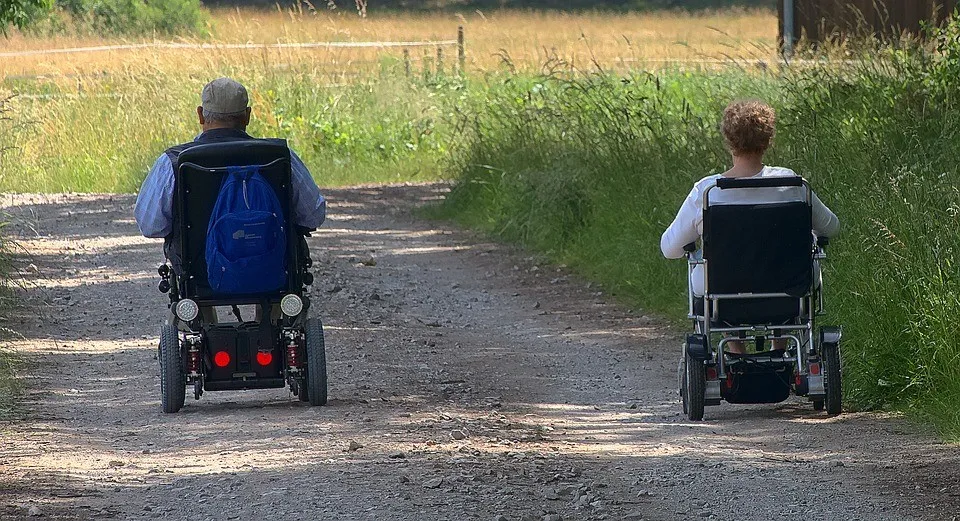
Mobility scooter insurance cover
Mobility scooter insurance is compulsory if you want to use your mobility scooter on the public road. You must choose at least third-party liability (WA) cover. This cover protects you against liability claims. You can also opt for all-risk cover, which offers even more protection. In both cases, you do not build up no-claims years and there is no no-claims discount.
Third-party liability (WA) cover in mobility scooter insurance
If you take your mobility scooter on the road, you are required to have third-party liability insurance (WA). It does not matter whether it is your own mobility scooter or a mobility scooter provided by the municipality. A mobility scooter is a motorised vehicle with which you can seriously injure others or cause a lot of damage. With the WA cover in mobility scooter insurance, you are insured for damage you cause with your mobility scooter and for which you are liable. Only damage to others is covered by the third-party liability insurance (WA) for the mobility scooter, not your own damage. Joyriding, vandalism and mobility scooter theft are in principle also not covered if you only choose WA cover.
WA+ cover in mobility scooter insurance
For most motorised vehicles, it is possible to take out WA+ cover, also known as limited casco (third party, fire and theft plus). This offers extra protection compared to WA cover. For example, vandalism is also covered, as is storm damage. Within mobility scooter insurance, however, WA+ cover is hardly ever offered; most insurers only offer the choice between WA cover and all-risk cover.
All-risk cover in mobility scooter insurance
All-risk cover is also sometimes called “fully comprehensive insurance” (volledig casco). This is the most extensive cover within mobility scooter insurance and, of course, also the most expensive option. You are then insured not only for damage to others, but also for your own damage in a collision that is your own fault. Other situations, such as theft or vandalism, are also covered. Please note: insurers will often require you to prevent theft yourself, for example by storing the mobility scooter safely.
Additional cover for mobility scooter insurance
In addition to the standard cover (WA or all-risk), it is possible to add additional cover to the insurance for the mobility scooter. This provides extra peace of mind and ensures that you go on the road extra well insured. Various types of additional cover are available for the mobility scooter. Of course, these additional types of cover also come with a price tag.
Accident insurance
Accident insurance is additional insurance that pays out a one-off lump sum if you become disabled or die as a result of an accident with the mobility scooter. The insured amount is set out in the policy and can differ per insurer. It usually involves amounts ranging from a few thousand to a few tens of thousands of euros. Sometimes damage to clothing caused by an accident is also covered to a limited extent. This is the case, among others, with the mobility scooter insurance from ANWB.
Breakdown assistance
Riders of a mobility scooter are generally not very steady on their feet and therefore cannot easily fix a breakdown themselves. That is why additional breakdown assistance cover is advisable. You then get professional help if you break down on the way, for example with a broken axle or a flat tyre. If a repair on the spot is not possible, the mobility scooter is taken to a repair point and a solution is offered to the rider.
Legal expenses cover
Conflicts sometimes arise in traffic, which can lead to legal proceedings. For example, when a damage claim has to be recovered from another party that is unwilling to cooperate. With what is known as mobility scooter legal expenses cover, you receive legal support, including in court proceedings. This additional cover is sometimes also called legal expenses insurance for recovering damages (verhaalsrechtsbijstandsverzekering) for the mobility scooter.
Accessories insurance
Accessories insurance covers any accessories fitted to the mobility scooter. For most types of mobility scooters, accessories insurance is not necessary, but sometimes it is. For example, if a lot has been invested in extra safety accessories or accessories for improved riding comfort.
Rider insurance
This insurance (opzittendenverzekering) covers, among other things, material damage and personal injury to the person seated on the mobility scooter. This insurance also covers luggage and belongings you carry on your mobility scooter. Rider insurance even covers funeral costs in the event of death and loss of income because it is temporarily no longer possible to work.
Comparing mobility scooter insurance
When comparing mobility scooter insurance, you can on the one hand make a comparison based on the cover. On the other hand, extra factors also play a role, such as the price of the mobility scooter insurance. This can differ considerably. There are various insurers that offer mobility scooter insurance, such as ANWB, Unigarant, Univé and ENRA. Most Dutch insurers offer their website and policy documents in Dutch only. You can request no-obligation quotes from these mobility scooter insurers and then compare them carefully. There are also comparison sites that make it possible to compare mobility scooter insurance. They usually need a number of personal details, such as your postcode, the desired cover, the purchase price of the mobility scooter and the value of any accessories. These comparison sites often focus only on the price and not on the differences in content.
Liability in an accident with a mobility scooter
In the Netherlands, there are more accidents with mobility scooters every year. Many of them are also fatal. This has a lot to do with the ageing of the population, which simply means that more older people, and therefore more mobility scooters, are seen on the road. In an accident with a mobility scooter, the consequences for the victim can be very serious. In most cases, the WA insurer will pay for the damage promptly. It is, of course, important to know who is liable in an accident with a mobility scooter.
Rules for using a mobility scooter
One of the basic rules in liability law is the question of fault. In most cases, you are only liable if you made a mistake and are therefore at fault for the damage caused by the accident. An example of such a mistake is a violation of the priority rules that apply in traffic. In other words, it is very important to be aware of the (traffic) rules for mobility scooters.
All the rules for the mobility scooterA mobility scooter is (not) a vulnerable road user
As a mobility scooter rider, you are very vulnerable. In a collision, the damage can be enormous, and a mobility scooter rider is often already very vulnerable from a medical point of view. Although a mobility scooter is a vulnerable road user in this respect, in liability law the mobility scooter is treated as a motorised road user. According to liability law, the mobility scooter is therefore not a vulnerable road user, unlike a pedestrian or a cyclist, for example.
And that has far-reaching consequences if, for example, a cyclist or a pedestrian is involved in the accident. This can result in substantial damage claims. That is also one of the reasons why third-party liability insurance (WA) is compulsory for the mobility scooter.
| Liable party | Victim | Compensation |
|---|---|---|
| Mobility scooter | Pedestrian (≥ 14 years) | At least 50% compensation |
| Mobility scooter | Cyclist (≥ 14 years) | At least 50% compensation |
| Mobility scooter | Pedestrian (< 14 years) | 100% compensation |
| Mobility scooter | Cyclist (< 14 years) | 100% compensation |
| Mobility scooter | Motorised road user (moped, car, other mobility scooter …) | Apportionment based on causation |
| Motorised road user (moped, car, other mobility scooter …) | Mobility scooter | Apportionment based on causation |
Situations and liability in an accident with a mobility scooter
How liability is arranged in an accident with a mobility scooter depends, among other things, on the classification of the other parties involved in the accident. Like the mobility scooter, they can be a stronger road user, but they can also be a vulnerable road user. And in the latter case, even the age of the victim plays a role.
Collision with a car
A mobility scooter is a motorised vehicle and a car is a motorised vehicle. Although the rider of a mobility scooter is clearly less protected than the driver of the car, the mobility scooter rider is not given extra protection by liability law. This means that only the apportionment based on causation plays a role. Based on the extent to which each party contributed to the accident, a percentage of fault is determined. This percentage of fault determines what percentage of the damage the victim receives. Both the car driver and the mobility scooter rider are required to have third-party liability insurance (WA), so this is settled by the insurers. An excess often applies, though.
Everything about third-party liability insurance (WA)Collision with a bus or tram
In a collision with a bus or a tram, a mobility scooter rider is not given extra protection by the law. Only the question of liability plays a role, as does the apportionment based on causation. The rider of the mobility scooter is not automatically entitled to a certain amount of compensation. In a collision with a tram, the special traffic rules must be taken into account. A tram always has priority.
Liability and public transportCollision with a bicycle or pedestrian
Cyclists and pedestrians are regarded as vulnerable road users, while a mobility scooter is a motorised vehicle and is therefore, according to the law, a stronger road user. In this relationship, cyclists and pedestrians are given extra protection. This means that in an accident, the mobility scooter rider almost always has to compensate at least fifty per cent of the damage, even if the cyclist or pedestrian made (serious) mistakes themselves.
Liability and cyclistsCollision with an electric bicycle or e-scooter
An electric bicycle has a motor and a mobility scooter has a motor, yet the law does not regard a classic e-bike as a motorised vehicle. In law, an electric bicycle is treated as a classic bicycle. This means that the rider of an e-bike always receives at least fifty per cent of their damage in an accident with a mobility scooter. This does not apply to the speed pedelec and the e-scooter, which are simply stronger road users. In that case, the question of fault is decisive.
Liability and the electric bicycleCollision with a child
In some cases, children are given extra protection by liability law. This only applies if the child is younger than fourteen. If a minor pedestrian or cyclist is fourteen or older, this child, just like an adult pedestrian or cyclist, is in principle entitled to compensation of at least fifty per cent of the damage. But if the child is younger than fourteen, it is one hundred per cent of the damage.
Everything about children in trafficFrequently asked questions about insuring a mobility scooter and liability in an accident
Mobility scooter riders often feel very vulnerable in traffic, and yet they are regarded as a stronger road user. This often raises questions. It is certainly not the only question mobility scooter riders have to deal with. Below you will find the answers to frequently asked questions about insuring the mobility scooter, as well as about a number of practical matters and what you can do if you have been hit by a mobility scooter.
Do I have to insure my mobility scooter?
Yes, in the Netherlands you are required to insure your mobility scooter. This obligation to insure only applies to third-party liability insurance (WA), not to other insurance such as all-risk insurance, breakdown insurance and legal expenses insurance. These are certainly useful types of cover, but they are not compulsory.
Do I build up no-claims years with my mobility scooter insurance?
No, with mobility scooter insurance you do not build up no-claims years. You also do not get a no-claims discount, and it is not possible to transfer discounts or no-claims years built up on your car insurance to your mobility scooter insurance.
What is the maximum speed for a mobility scooter?
On the carriageway, you may ride a mobility scooter at up to 45 kilometres per hour. On the cycle path or cycle/moped path within a built-up area, the limit is 30 kilometres per hour; outside a built-up area, it is 40 kilometres per hour. If the mobility scooter is used on the pavement, the maximum speed is 6 kilometres per hour.
Is a mobility scooter a vehicle for disabled people?
Yes, a mobility scooter is a motorised vehicle for disabled people (gehandicaptenvoertuig). This means that it is mainly used by people with a mobility impairment.
When may I ride a mobility scooter?
There is no age requirement for riding a mobility scooter. You only need to be at least 16 years old if the mobility scooter can go faster than 10 kilometres per hour; anyone younger can apply to the road authority (wegbeheerder) for an exemption (Dutch central government, Rijksoverheid). Before you ride, however, you must take out third-party liability insurance (WA) and stick the insurer's sticker on the mobility scooter. A registration (licence plate) or driving licence is not needed for a mobility scooter. Only then may you ride the mobility scooter.
What can I do if I have been hit by a mobility scooter?
A mobility scooter is required to have third-party liability insurance (WA). Fill in the accident report form (aanrijdingsformulier) together with the rider of the mobility scooter. This way, you will receive the compensation you are entitled to. After the collision, always take photos of the situation and collect the details of the parties involved and any witnesses (name, address, insurance details and licence plate). If necessary, contact your own insurer, who will handle the further settlement of the claim.