A transport company needs to pay attention to the right insurance for its lorries. Whether it is a one-person business or a large transport company, you need to know exactly which lorry insurance policies are available and what they do and do not cover. In addition to the compulsory third-party liability insurance (WA) for lorries, which is badly needed because of the strict liability rules, there are a number of additional insurances for lorries that can be very useful. This page describes the situation in the Netherlands.
Lorry insurance
When insuring a lorry, you mainly have the choice between third-party liability insurance (WA) for the lorry, WA+ insurance for the lorry (also called limited casco, or "third party, fire and theft plus") or all-risk insurance for the lorry (also called fully comprehensive). Only third-party liability insurance for lorries is required by law, but the more extensive cover of WA+ or all-risk insurance can be extremely worthwhile.
| Third-party liability insurance (WA) for a lorry | WA+ insurance for a lorry | All-risk insurance for a lorry | |
|---|---|---|---|
| Also known as | Liability insurance for a lorry | Limited casco for a lorry | Fully comprehensive for a lorry |
| Damage to others | Covered | Covered | Covered |
| Theft, joyriding and disappearance | Not covered | Covered | Covered |
| Fire damage | Not covered | Covered | Covered |
| Damage due to vandalism | Not covered | Covered | Covered |
| Damage due to natural disasters | Not covered | Covered | Covered |
| Own damage due to a collision | Not covered | Not covered | Covered |
Lorry body
When you take out lorry insurance, the insurer will always want information about the body of the lorry. That makes sense: the body is part of the lorry. The cover chosen for the lorry also applies to the body.
The body of the lorry affects the risk of an accident and therefore the risk that the insurer has to pay out for damage. Of course, this can also affect the amount the insurer may have to pay, for example in the event of a total loss. It is therefore not surprising that the body of the lorry affects the premium to be paid. In general, a distinction is made between the following types of body:
- Open lorry body
- Closed lorry body
- Closed with curtain sides
- Tanker
- Container
- Refrigerated/freezer combination
- Open with loading and unloading equipment
- Horsebox
It is possible that an insurer uses a different categorisation or offers fewer or more categories to choose from. The body of your lorry may also not fit easily into a particular category. If in doubt, it is important to discuss the situation with the lorry insurer.
Third-party liability insurance (WA) for a lorry
In the Netherlands, you are required to have third-party liability insurance (WA) if a lorry is used on public roads. WA insurance is the insurance that covers legal liability. This means that the insurer will compensate the victim's damage if the driver of the lorry is liable for it, for example because he wrongly failed to give way to another driver. Third-party liability insurance does not cover damage to the lorry itself, only damage to third parties. For damage to your own lorry, limited casco (WA+) or fully comprehensive cover is necessary.
Limited casco for a lorry
In addition to third-party liability insurance, it is possible to choose limited casco insurance or WA+ insurance for a lorry. This insurance offers the same cover as third-party liability insurance, with a number of additional covers. For example, damage to the lorry is covered in some cases, such as damage due to fire or natural disasters, or damage due to theft, joyriding and disappearance. These are types of damage that are not covered by third-party liability insurance for a lorry. Consequential damage from window damage is often also covered if this damage was caused by one of the causes mentioned, for example if someone is injured by shards of glass caused by a natural disaster.
Fully comprehensive for a lorry
This lorry insurance is also sometimes called all-risk insurance for lorries. It is the most extensive cover available. In effect, it covers all types of damage to the lorry, unless excluded by the policy conditions. For example, damage due to wear and tear or poor maintenance is not covered by all-risk insurance for lorries. Own damage due to a collision for which you yourself are liable is covered by this lorry insurance. Because lorries are very expensive, certainly new lorries, this extensive cover is often chosen.
Additional cover for lorry insurance
A standard lorry insurance policy often already offers good basic cover for transport companies, but there is also additional cover available that offers extra protection for specific situations and risks. Legal expenses cover, transport cover and refrigeration and freezer cover are some examples of additional cover that can be very important for modern transport companies.
OVI and SVI insurance for a lorry
One of the most frequently chosen extra covers for lorry insurance is OVI insurance or SVI insurance. OVI insurance, also called passenger accident insurance (verzekering ongevallen inzittenden), is insurance under which the driver or the passengers receive a payment if they die or are injured in an accident. These are fixed amounts stated in the policy. SVI insurance for lorries (passenger damage insurance, schadeverzekering inzittenden) also provides compensation, but it is based on the damage actually suffered.
Legal expenses insurance
Legal expenses insurance for lorries is legal expenses insurance that applies specifically to people involved in a collision with the lorry. This insurance provides assistance in legal disputes, for example when recovering damage caused by a third party. This assistance can take various forms, ranging from legal advice to a lawyer at the insurer's expense.
Transport cover
Not only is a lorry very expensive, the goods transported may be too. It is also possible to insure the cargo. This is also sometimes called transport insurance or goods in transit insurance (transportgoederenverzekering). This is insurance taken out by the owner of the goods when their goods are transported by a third party. Factors such as how easily the goods are damaged, the value of the goods and the measures taken to prevent theft will determine the premium of this transport insurance. In principle, transport insurance is not taken out by the haulier. Some transport companies do act as intermediaries and offer transport cover to their customers themselves.
Breakdown assistance
Lorries cover many kilometres, both on domestic and foreign roads. A breakdown can never be completely ruled out, even if the lorry is well maintained. This can cause deliveries to be late and financial opportunities to be missed. Breakdown assistance cover is therefore recommended. A breakdown service then comes to the scene to fix the problems with the lorry. If necessary, the lorry is taken to a local repairer and a solution is found for the driver.
Transport liability or carrier liability
As a business owner or carrier, you are responsible for the goods you transport. If damage to these goods occurs during transport, you may be liable for it. You must then compensate the damage. Whether and up to what amount you are liable can also be determined by the contract of carriage. With transport liability insurance, you cover the liability risk for damage to or theft of the transported goods. Certain requirements regarding theft prevention do sometimes apply.
There are often also extra optional covers that can be added: container liability cover (damage to the container), refrigeration and freezer cover, cover for stored goods, cover for other activities and so on. Additional conditions may apply to these. With extensive refrigeration and freezer cover, for example, it is required to use a means of transport that is suitable for transporting chilled or frozen goods.
New value scheme
As with car insurance, some insurers offer the option of insuring the lorry at new value. Sometimes this automatically applies for a certain period, and it is possible to extend this period in exchange for a higher premium. Under the new value scheme, for a certain period you receive the new value of a lorry if it is a total loss, instead of its value at the time of the damage. In addition to a time limit, there is often also a limit on the number of kilometres. Whether it is possible to choose an extra favourable new value scheme, and what restrictions or conditions apply to it, varies per insurer.
Other additional cover for lorry insurance
Many other additional covers are possible. For example, you can insure damage to loading and unloading equipment, as well as damage to the vehicle electronics, the working risk and so on. Cover for extra business expenses can also be useful. You then receive compensation for every day you cannot use the lorry during repairs. Damage to the driver's luggage can also be insured. For dangerous substances, additional insurance can often be taken out. In other words, a lot is possible, and it is advisable to discuss your needs with the insurer so that you are sure to have the right cover.
Cost of lorry insurance
The price of lorry insurance is determined by various factors. First and foremost, the type of cover naturally plays an important role. Third-party liability insurance for a lorry is in principle cheaper than all-risk insurance for a lorry. The characteristics of the lorry must also be taken into account. The type of lorry, the make, the weight of the lorry and the value of the lorry, for example, are important elements that influence the price of lorry insurance. What is transported and where to will also determine the price of lorry insurance. A higher or lower excess is of course also a factor.
As with car insurance, there is also a no-claims discount. No-claims years determine how much discount you get on lorry insurance. This discount can be as much as 75%. Let it be clear that it is very difficult to predict what you will pay for lorry insurance. That is why it is advisable to request several quotes, possibly for different covers (WA, WA+ and all-risk), from different lorry insurers. Only in this way will you get a good idea of what lorry insurance will cost.
Comparing lorry insurance
There are quite a lot of providers of lorry insurance. What is and is not covered can differ between them. With every insurer, there are situations in which the damage is not compensated. The excess, for example, can also differ, as can the additional cover offered. And at the same time, the premium is certainly not always the same, quite the contrary.
However, it is not possible to say which lorry insurer is the best or the cheapest. This can differ considerably per situation. That is why it is advisable to request several quotes and compare lorry insurance carefully. This increases the chance of finding the best and/or cheapest lorry insurance for your lorry and body.
A lorry in traffic
A lorry is a large and heavy vehicle that, by its intrinsic characteristics, adds extra risks to traffic. Many efforts have already been made to improve the safety of lorries in traffic, which have also had positive results. With the introduction of the blind spot mirror in 2003, for example, the risks posed by lorries fell sharply. This applies in particular to accidents between lorries and cyclists. The general improvement in road safety has of course also meant that lorries can take part in traffic more and more safely. Nevertheless, a number of particular risks must still be taken into account.
Longer braking distance
The braking distance of a lorry is considerably longer than that of an ordinary car. As speed increases, the difference also increases. At a speed of 50 km/h, the braking distance of a lorry is about 36% longer. At 80 km/h the difference is already 49%, and at 120 km/h as much as 66%.
The braking distance is the distance covered while the brake is applied. This distance depends on the initial speed and the deceleration. Of course, other factors also play a role, such as the weight of the vehicle, the condition of the tyres, the type of road surface, the gradient, the weather conditions and so on. But one fact is that a lorry has a longer braking distance and is therefore more easily involved in a road accident, certainly at higher speeds. Moderating speed and keeping sufficient distance is therefore important.
The mass of lorries
The greater mass of a lorry means that when a lorry is involved in an accident, the damage is often much greater. Liability law takes this into account. If the injured party also contributed to the accident, the damage is divided according to the extent to which the circumstances on both sides contributed to the damage; fairness may require a different division (Article 6:101 of the Dutch Civil Code (Burgerlijk Wetboek, BW)). In that division, it can be taken into account that a heavy lorry brings a greater danger onto the road, the so-called Betriebsgefahr (operational risk). As a result, a larger share of the damage can be borne by the lorry.
Blind spot
The blind spot is an area around a lorry in which the driver cannot see. The driver cannot see whether anyone is in this blind spot. A lorry has a blind spot at the sides, but also at the front, diagonally to the right rear and at the back. Thanks to the use of blind spot mirrors, sensors and cameras, the number of blind spot accidents has fallen sharply in recent decades.
More information about the blind spot of lorriesOvertaking ban
A lorry that overtakes generally does so at a fairly low speed. This causes congestion, and a lot of traffic has to brake and change lanes. All that braking and all those manoeuvres increase the risk of a road accident. Under certain circumstances, lorries are therefore prohibited from overtaking. Similar bans also apply abroad.
More information about the overtaking ban for lorriesUninterrupted driving time
For the logistics chain, it is important that goods arrive at their destination on time. As a result, the workload is often enormous, and drivers are inclined to keep driving for hours on end. The longer you drive, the more your ability to concentrate decreases and the greater the risk of an accident. That is why lorry drivers are required to rest and take breaks sufficiently.
More information about driving times for lorry driversLiability in a lorry accident
The liability rules determine who is liable in a lorry accident. All the circumstances of the case are taken into account, but in practice the traffic rules will of course play a large part. Vulnerable road users enjoy extra protection under liability law and will therefore almost always have part of their damage compensated. This protection applies to pedestrians, cyclists and young children. The driver of a mobility scooter does not enjoy extra protection under liability law.
Collision with a pedestrian or cyclist
Partly because of the blind spot, a pedestrian or cyclist is extra vulnerable in traffic. Lorry drivers do not always notice pedestrians or cyclists easily and may hit them. These vulnerable road users are given extra protection by law. As a result, the driver of the lorry (or their insurer) almost always has to compensate at least fifty percent of the damage to the pedestrian or cyclist, although there are exceptions. In principle, this also applies to an electric bicycle, except in the case of a speed pedelec.
All about pedestrians and liability
Collision with a motorist
In a road accident involving a motorist and a lorry, no special exception applies under liability law. Whoever is liable must therefore compensate the damage. Contributory negligence may be taken into account. In any case, it is the extent to which the parties contributed to the road accident that will determine whether and how much compensation is received.
Rear-end collisions with a lorry
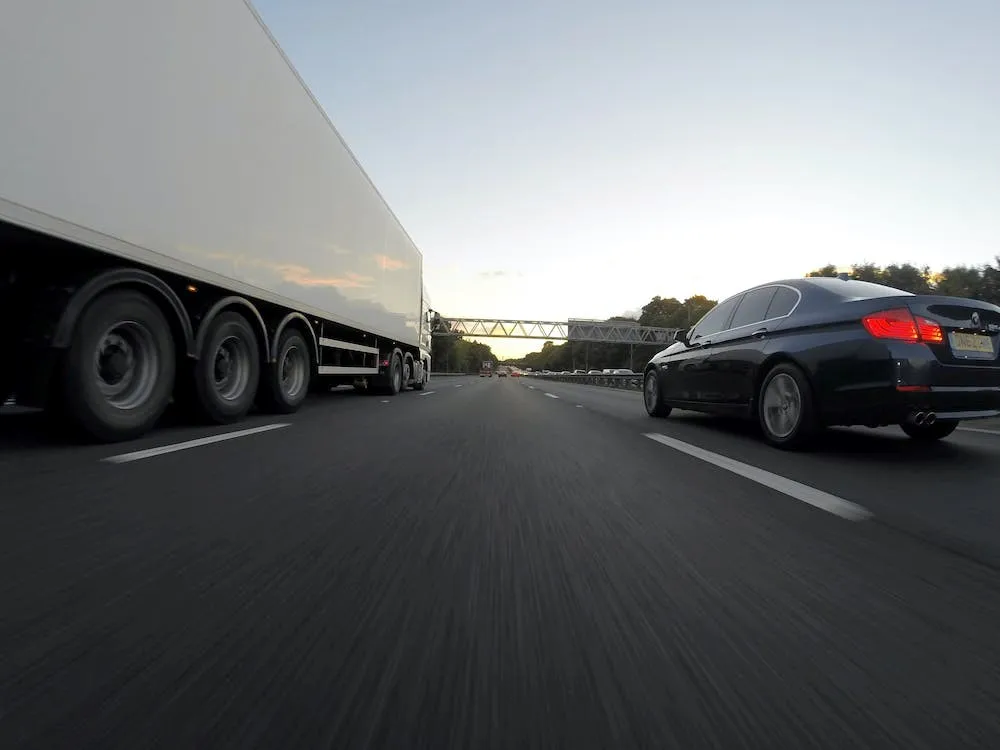
A lorry has a longer stopping time, which has to do with the long braking distance. As a result, lorries are often involved in rear-end collisions. Sometimes several vehicles are involved and there is a pile-up. In such cases, settling the claims is in theory extra complex, because it is not clear who is or is not liable. That is why there is the Overeenkomst Vereenvoudigde Schaderegeling (Simplified Claims Settlement Agreement), an agreement between the insurers in the Netherlands. This makes simplified claims settlement possible in pile-ups.
All about liability in pile-ups
A toddler or child hit by a lorry
Children are extra vulnerable road users. Children cannot always judge risks and speeds very well. Moreover, they often behave unpredictably. Other road users can be expected to be extra careful when they see a child taking part in traffic. That is also the reason why a lorry driver is in principle 100% liable if he hits a child aged fourteen or younger.
All about children in traffic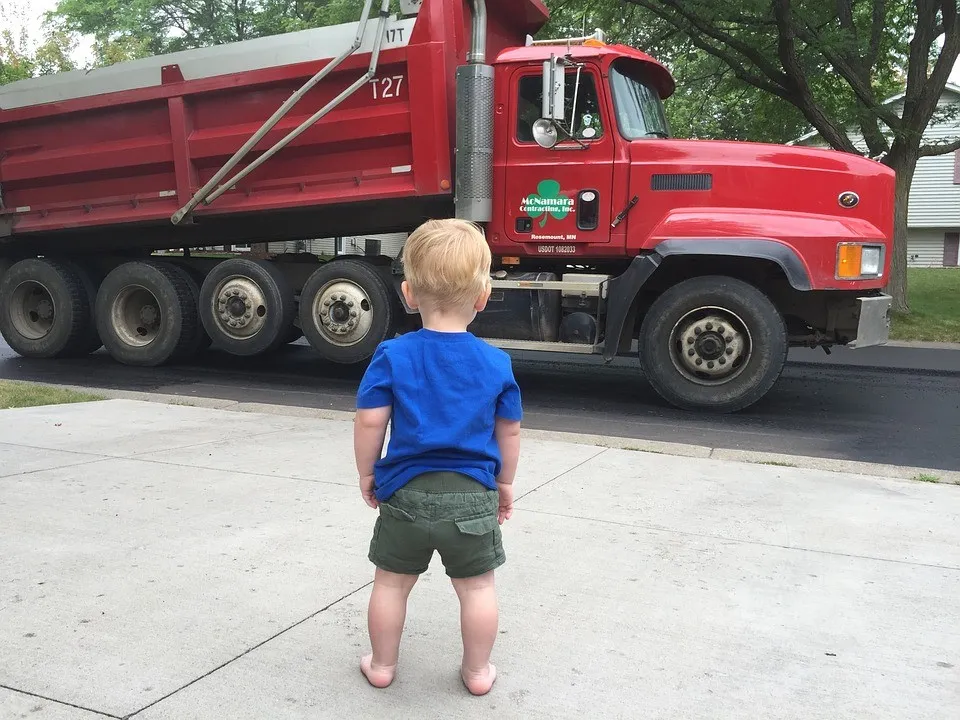
Mobility scooter hit by a lorry
A mobility scooter is not always clearly visible to lorry drivers. This increases the risk of an accident, for example a blind spot accident. It does not help that drivers of a mobility scooter generally have poorer reflexes than other road users, which is simply inherent in the limitations of the driver of a vehicle for people with disabilities. Under liability law, mobility scooters do not enjoy any special protection.
All about liability and mobility scooters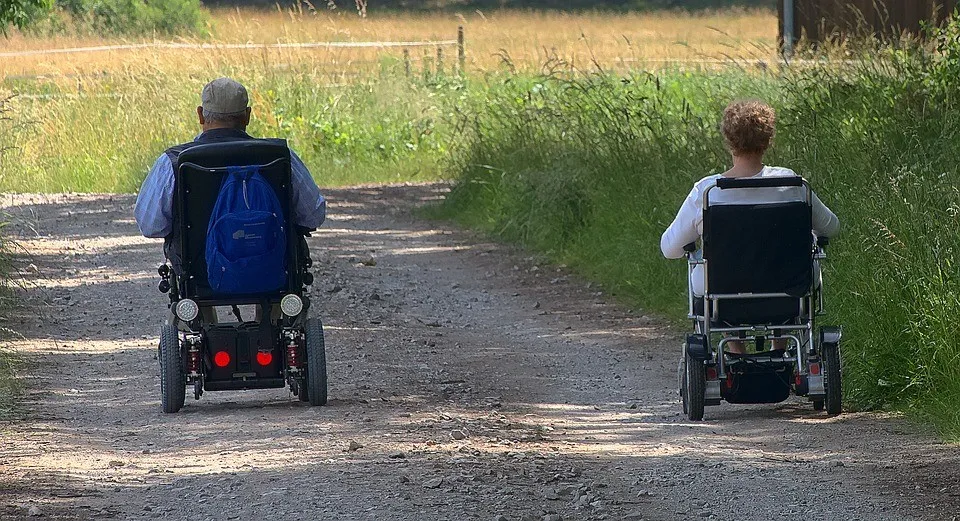
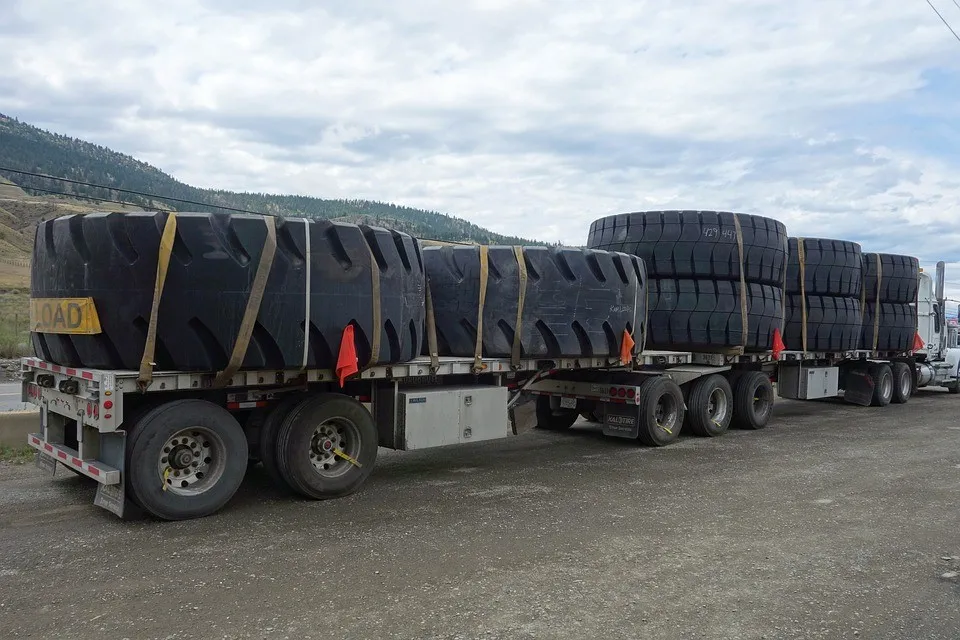
Accident caused by a lorry's load
Not only a lorry can cause damage, but also the lorry's load. To prevent accidents, it is important that the load is properly secured and that the lorry is not overloaded. The driver has a general duty to check, but of course the shipper also bears a heavy responsibility.
It is not only a load that is lost that can cause damage. In a road accident, a dangerous load can also create extra risks, for example if dangerous substances are being transported. That is why it is important to take sufficient preventive measures and to have good liability insurance.
Employer's liability in a lorry accident
Many lorry drivers are employees. If they are involved in a road accident and suffer damage, they can usually rely on employer's liability. The employer must then compensate the personal injury. That is why employers generally take out good insurance to protect the employer against sky-high damage claims resulting from a lorry accident.
All about safety at work and liability
Compensation and costs after accidents with a lorry
In an accident with a lorry, the damage can sometimes be enormous. The personal injury in particular can be huge, but the material damage should not be underestimated either. This includes, for example, damage to the car, but loss of earning capacity also counts as material damage. All damage is eligible for compensation.
Personal injury
Personal injury is a collective term for all damage resulting from physical injuries or psychological problems. Personal injury can arise, for example, from being hit by a lorry. The victim of personal injury is entitled to compensation if another party is liable for it. To do so, the victim must first hold that party liable. If a dispute arises about this, the court will have to give a ruling.
Material damage
Material damage is one of the most important consequences of a lorry accident. It can range from damage to the lorry itself to damage to buildings, infrastructure or other vehicles involved in the collision. This damage can often be expensive to repair or replace and can have major consequences for the parties involved. Compensation is intended, among other things, to cover these costs, so that those affected by the accident can pick up their lives again. In some cases, people can no longer do their work as a result of the accident. This can also be included in the compensation.
Non-material damage: compensation for pain and suffering after being hit by a lorry
Anyone involved in an accident with a lorry may face considerable damage. This damage is not always easy to express in money, for example when there is pain, a loss of enjoyment of life or even a loss of sexual function. Nevertheless, the victim can receive compensation for this non-material damage. This is also called non-material damages (smartengeld).
When awarding non-material damages, case law is often taken into account. Earlier similar rulings help to determine the compensation for being hit by a lorry. That is why we have listed a number of earlier awards of non-material damages below. This gives an idea of the compensation you can expect. The amounts below were last indexed on 23 January 2023.
Cyclist is hit and no longer has an elbow: €10,584
A woman on her bicycle was hit by an articulated lorry. The woman was cycling on the pavement and the lorry came out of a driveway. The woman became trapped under the lorry and was dragged along the road surface for some time. The result: a shattered left elbow and wounds to the upper arm and forearm. The woman no longer has an elbow and has undergone countless operations. Non-material damages of €7,500 were awarded. The indexed amount is €10,584.
Read the full ruling on Rechtspraak.nlSevere crush injury from an industrial accident with a lorry: €18,039
An industrial accident occurs during loading work in the port. A lorry had been tied to the boat that was to be loaded with a rope, which was not permitted. At a certain moment the lorry started to move, trapping the victim between the boat and a container. The victim suffered severe crush trauma to the abdomen, the chest and the lower back. The victim's spleen had to be removed and the victim developed post-traumatic stress disorder. The victim also had to deal with headaches, back pain and scar pain. The victim also experiences all kinds of problems in their private life. The amount originally awarded was €15,147. After indexation, it is €18,039.
Read the full ruling on Rechtspraak.nlVarious complaints and impaired sexual function after being hit by a lorry: €26,882
A 47-year-old man in a van is hit from behind by a lorry. The van ends up in the ditch and the man immediately loses consciousness. In hospital it is found that he has broken several cervical vertebrae, that several ribs are broken, that both shoulder blades are broken and that he has concussion. He also continues to experience neck pain later, a pain that radiates to the shoulder blades. He also suffers from facial pain, headaches, a tingling feeling in the right arm and sometimes a numb feeling in the left hand. He also develops impaired sexual function. Moreover, he can no longer drive a car and can no longer pursue his hobbies (playing the flute and playing the piano). He is awarded an amount of €17,017 (indexed amount: €26,882).
→ Ruling: Rb. Amsterdam, cause list no. 96-2222 (10-07-2002)
Large scar after a moped is hit by a lorry: €17,834
The victim was riding on the back of her father's moped. The moped is hit by a lorry. The victim suffers serious damage to the skin of her lower left leg. Over two months, the victim had to undergo a number of surgical treatments to limit the scar tissue. Afterwards, countless physiotherapy treatments were still needed. Despite this, disfiguring scars remain on the lower left leg, as well as a scar and skin discolouration of 15 x 15 cm on the upper left leg. The latter is a result of the necessary skin graft. The victim also continues to suffer from a nagging pain in the lower left leg. The court took into account, among other things, the painful experience of the victim's youth and the permanent incapacity for work at a young age. Non-material damages of €12,500 were awarded (or €17,834 after indexation).
Read the full ruling on Rechtspraak.nlSpinal cord injury after a car is hit by a lorry: €138,414
The victim had engine trouble, causing the victim's car to come almost completely to a standstill in the right-hand lane of the motorway. A lorry crashed into the victim's car. The victim suffered serious back and neck injuries and a spinal cord injury. As a result, the victim's entire lower body is permanently paralysed. There was fifty percent contributory negligence. The non-material damages amounted to €79,412 (indexed amount: €138,414), half of which could be awarded.
Ruling: Rb. Utrecht, cause list no. 98-771
Various complaints after a van is hit by a lorry: €15,184
A van is hit by a lorry. As a result of the collision, the driver suffers from neck pain and headaches. These include dizziness and a concentration disorder. Other complaints are pain and stiffness in the shoulders. The expert finds a delay in the movement pattern of the neck, as well as problems with the shoulders. The non-material damages amount to €9,076, or €15,184 after indexation.
Ruling: Rb. Den Haag, cause list no. 99-811 (01-11-2000)
Loss of function and neck complaints after being hit by a lorry: €8,704
A telephone salesman is hit from behind in his car by a lorry. This causes neck complaints. The expert finds 4% loss of function. It is also plausible that the man experiences cognitive impairments. The man is awarded non-material damages of €6,000. After indexation, it is €8,704.
Ruling: Hof Amsterdam, case no. 200.003.760 (07-04-2009)
Set builder is hit by wooden panels while unloading a lorry: €24,846
A 51-year-old set builder is hit by heavy wooden panels while unloading a lorry. The set builder falls and suffers a head wound. After the accident, the set builder develops various health complaints. On top of that, his employer goes bankrupt. As a result of all this, he experiences problems with reintegration, as well as psychological problems. Eventually the man becomes fully unable to work. The non-material damages amount to €18,000, or €24,846 after indexation.
Read the full ruling on Rechtspraak.nlBroken jaw and three lost teeth after being hit by a lorry: €14,594
A woman on her bicycle is hit by a lorry and falls as a result. Because of the collision, she suffers a broken jaw and loses three teeth. She also has concussion. In total, she has to undergo two operations and two weeks of complete bed rest. The injuries heal completely, but she continues to suffer from neck and shoulder complaints and impaired cognitive functions. No further improvement is expected. The amount originally awarded was €9,076. The indexed amount is €14,594.
Ruling: Rechtbank Den Haag, cause list no. 96-3309 (05-09-2001)
Back injury and loss of enjoyment of life after being hit by a lorry: €7,591
A 29-year-old man who already had back abnormalities in the past is hit by a lorry. As a result, he suffers a back injury. According to the expert, the back injury would also have occurred without the accident, but the accident made it occur earlier. The man cannot work for some time and has to deal with loss of enjoyment of life and psychological complaints. Before the accident, he was in good shape. An amount of €4,538 is awarded (indexed amount: €7,591).
Ruling: Hof Den Haag, cause list no. 01-542
Serious personal injury after being hit by an oncoming lorry: €36,575
A 42-year-old woman is hit in her own lane by an oncoming lorry. She suffers a comminuted fracture at the level of the upper left leg and the shinbone. In addition, she has a broken nose, a fracture of the kneecap and various abrasions. She is admitted to hospital five times, where she will stay for a total of ninety days and undergo various operations. For three years she will walk on crutches. In the end, she will always have difficulty walking and will no longer be able to do sport. She also has to give up her own shop, and because of osteoarthritis her knee will deteriorate further in the future. She has large, disfiguring scars on her leg. The court awards an amount of €20,420. Indexed, this is €36,575.
Ruling: Rb. Den Bosch, cause list no. 95-440 (13-03-1998)
Cyclist is hit by a lorry and is now in a wheelchair: €38,589
A 47-year-old woman on her bicycle is hit by an articulated lorry turning right. The lorry drives over both of the woman's legs. As a result, the woman has a fracture of the right ankle, a fracture of the left thigh bone and various bruises. This eventually results in local tissue death, with various areas having to be removed under anaesthetic three weeks later. The woman experiences permanent limitations, including limited knee function and reduced muscle function. She can only walk short distances and otherwise depends on a wheelchair. She also has severely disfiguring scars. The court awards an amount of €22,689. After indexation, it is €38,589.
Ruling: Rb. Den Bosch, cause list no. 98-2916 (16-06-2000)
Frequently asked questions about insurance and liability for lorries
Whether you are a lorry driver, the owner of a transport company or simply interested in lorries, there are many questions that remain unanswered. Especially when it comes to insuring a lorry and the liability of lorry drivers, it is simply very complex. Read on to find out more about insurance for lorries, the obligations for lorries and the risks of driving a lorry.
What additional insurance is there for a lorry?
There are various additional insurances aimed specifically at lorries. The list is very long, so we will limit ourselves to a few examples. There is, for example, passenger accident insurance, legal expenses insurance, transport liability insurance and breakdown assistance insurance. In addition, a number of extra options are often available, such as choosing a longer new value scheme.
Is lorry insurance compulsory?
Yes, in the Netherlands you are required to have lorry insurance. However, this only concerns the so-called WA cover for lorries; other additional covers are not compulsory. Taking out third-party liability insurance for the lorry and paying road tax are some of the few obligations inextricably linked to the lorry. This is of course in addition to other general obligations, such as having a valid driving licence.
Is a blind spot mirror compulsory on a lorry?
Yes, in the Netherlands the blind spot mirror is compulsory on lorries. The blind spot mirror is a special type of mirror designed to give the driver a better view of the areas around the lorry, areas that are normally not visible or difficult to see from the cab. This allows the driver to notice pedestrians, cyclists or other road users in the immediate vicinity of the lorry before he or she carries out a manoeuvre.
How much longer is the braking distance of a lorry?
The braking distance of a lorry is proportionally longer than that of a passenger car. Various elements contribute to the longer braking distance of a lorry, including the greater mass of the vehicle. How much longer the braking distance is depends on many factors. Think of the weather conditions, the speed, the condition of the road surface, the condition of the tyres and so on. In general, the braking distance is 36% to 66% longer.
What is the 50% rule in a lorry accident?
This rule means that if the victim of a collision with a lorry is a cyclist, or a pedestrian older than fourteen (a so-called vulnerable road user), the lorry driver almost always has to compensate at least fifty percent of the damage. This applies even if the cyclist or pedestrian contributed to a large extent to the road accident.
In which cases is the lorry driver almost always liable in a collision?
There are a number of cases in which the lorry driver is almost always liable for the damage caused in a collision. This is the case, for example, when running a red light or ignoring the instructions of a police officer. In many cases (including these two), however, all the circumstances must be taken into account. Other road users may also have contributed to the accident, for example by driving under the influence or by driving at excessive speed.
What does SVI insurance cover in an accident with a lorry?
SVI insurance is insurance aimed specifically at insuring the passengers of a vehicle. It is indemnity insurance that provides compensation for personal injury and material costs directly related to the accident. Think, for example, of the costs of domestic help or loss of income. The amount depends on the actual damage, up to a maximum amount agreed in advance with the insurer.