Transport damage can have major financial consequences. Who has to pay for the damage depends on the agreements made, the type of transport and the moment at which the damage occurred. Special rules sometimes apply, such as the General Transport Conditions (AVC) for domestic transport and the CMR Convention for international road transport. Insurance also plays an important role, because the carrier's liability is often limited to an amount per kilogram. On this page you can read how liability for transport damage works and what you need to do to claim for transport damage. This page describes the situation in the Netherlands.
Liability for transport damage
What types of transport damage are there?
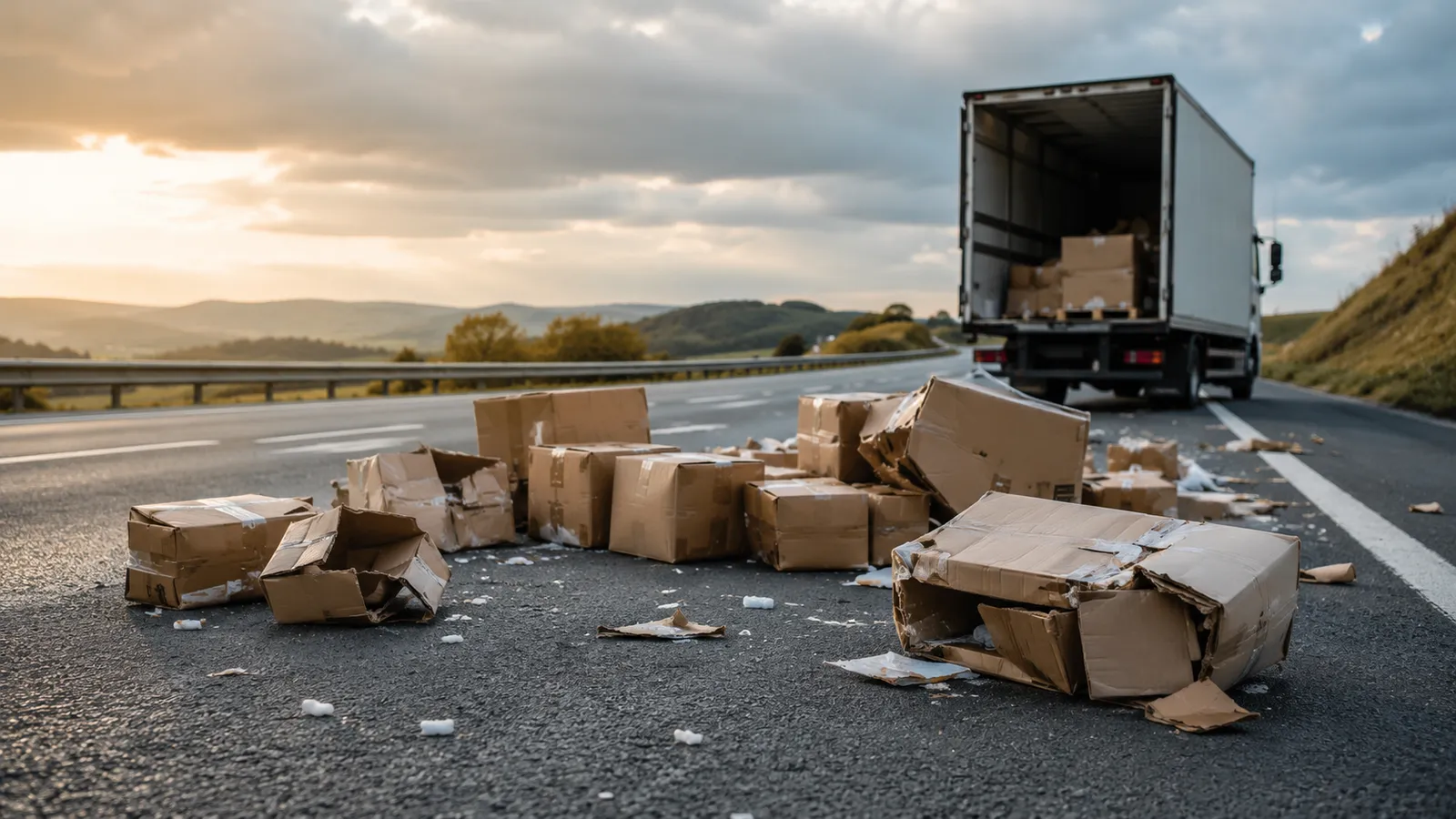
Transport damage can occur in different ways. Sometimes it involves visible damage to goods, for example when products have been broken during transport. In other cases the cargo goes missing, is stolen or arrives late. Damage during loading, unloading or stowing can also count as transport damage, depending on who was supposed to carry out this work. In all of these cases, transport damage can lead to consequential loss, such as production downtime, lost revenue or extra costs for replacement goods. Which damage is compensated depends on the liable party, the contract of carriage, the applicable terms and conditions and the insurance policies that have been taken out.
Damage to goods
Damage to goods is the most recognisable form of transport damage. It concerns goods that are physically damaged during transport. Think of broken glass, dented machines and boxes that have got wet. In transport, the starting point is that the carrier must deliver the goods in the same condition as that in which he received them. This is often summarised as: good in, good out. In the event of damage, it is therefore important to establish in what condition the goods were handed over to the carrier and in what condition they were delivered. The consignment note plays a major role in this. If the carrier made no reservation on receipt about visible damage or poor packaging, it is presumed that the goods were received in good condition. If a dispute arises on delivery, the damage must be recorded immediately.
Loss or theft of the cargo
Transport damage can also consist of loss or theft of the cargo. There is loss when goods are not delivered, are only partly delivered or are delivered to the wrong place. Sometimes it is unclear where the goods have gone, for example because of an administrative error, incorrect addressing or a mix-up in a distribution centre. Theft concerns goods that were deliberately taken during transport. That can happen on the road, but also during storage, transhipment or while the vehicle is stationary. With loss or theft too, the carrier is in principle liable for the goods from the moment he takes them over until the moment of delivery. However, this does not mean that the full value of the cargo is always compensated. The carrier's liability is often limited to an amount per kilo. With valuable but light goods, such as laptops, phones or jewellery, the compensation can therefore be much lower than the actual loss. Only in exceptional cases, for example in the event of intent or wilful recklessness, can the carrier be fully liable.
Delayed delivery
Delay can also result in transport damage. The goods do arrive, but later than agreed or later than could reasonably be expected. That can have major consequences. Think of perishable goods that are delivered too late, parts that are needed for a production process or promotional material that only arrives after an event. The carrier can be liable for damage caused by delayed delivery, but here too the compensation is often limited. Moreover, it must be shown that loss was actually suffered as a result of the delay. The mere fact that a consignment arrives later is not always enough for compensation. What was agreed in the contract of carriage also plays a part. Consequential loss, such as loss of revenue or a business standing still, is also not always compensated.
Damage during loading, unloading and stowing
Loading is putting the goods into the vehicle, unloading is taking them out, and stowing is placing and securing the cargo properly for transport. It is precisely during these operations that things regularly go wrong. Goods can fall, tip over, shift, become trapped or be damaged by a forklift truck, tail lift or ratchet strap. Damage can also occur because the cargo is not secured well enough and shifts on the way. Who is liable mainly depends on who was responsible for the loading, unloading or stowing. Sometimes that is the carrier, for example when he has taken on this work. In other cases the responsibility lies with the consignor or the consignee.
Consequential loss and business loss
Transport damage is not always limited to the value of the damaged or lost goods. Sometimes the damage leads to extra costs or wider financial consequences. Think of production downtime because essential parts do not arrive, or loss of revenue because goods cannot be sold on time. This is called consequential loss or business loss. Consequential loss in particular often leads to disputes. The carrier is usually only liable for direct damage to the goods and certain additional costs. The carrier is often not liable for further consequential loss, such as loss of profit, downtime or missed contracts. That can be different if there is intent or wilful recklessness, but that bar is high. Insurance policies do not automatically cover consequential loss either.
Who can be liable for transport damage?
With transport damage, different parties can bear responsibility. Who is ultimately liable depends on the type of contract, the cause of the damage and the moment at which the damage occurred. With a consumer purchase, the first party to look at is the seller or online shop, while with business transport it is mainly the carrier, consignor and consignee who play a role. A subcontracted carrier or a third party can also be liable, for example with outsourced transport or a road accident.
The seller or online shop
If a consumer buys a product from an online shop, the seller is in principle responsible for correct delivery. That also applies when the online shop uses a parcel service or carrier. With a consumer purchase, the risk only passes to the consumer when he has physically received the product or when a third party designated by the consumer has taken receipt of the product. If the parcel goes missing during transport or arrives damaged, the consumer can hold the seller responsible. So towards the consumer, the seller cannot simply hide behind the parcel service. If the product is damaged, the consumer has the right to repair or replacement. If that is not possible or does not happen within a reasonable period, a price reduction or termination of the purchase contract may come into play. The online shop can then try to recover the loss from the carrier.
The carrier
The carrier is often the first party people look at in the event of transport damage. His main obligation is to deliver the goods in the same condition as that in which he received them. The carrier is in principle liable for loss, damage and delay from the moment he takes over the goods until the moment of delivery. That also applies when the damage was caused by a driver, employee or other person engaged to help. Even so, the carrier's liability is usually limited. In domestic transport and international road transport, limits per kilogram often apply. As a result, the full value of the goods is not always compensated. The carrier can also defend himself, for example by invoking force majeure or if the packaging was poor. In other words, the specific circumstances must be taken into account.
The consignor
The consignor must give the carrier correct and complete information about the goods, the weight, the destination, the packaging and any special characteristics of the cargo. That is particularly important with fragile, perishable or dangerous goods. If the consignor provides incorrect information or conceals important risks, he can be liable for the damage that results. Poor or inadequate packaging is also often at the consignor's expense. Think of goods that are not sufficiently protected against shocks, moisture or temperature differences. In addition, the consignor can be responsible for loading or stowing when, according to the agreements, this is done by him or on his behalf. If the cargo is damaged as a result, or causes damage to other goods, the vehicle or third parties, the carrier can hold the consignor liable. In some contracts the consignor will even explicitly indemnify the carrier against claims from others.
The consignee
The consignee is the party for whom the goods are intended. He is usually not responsible for damage that occurred on the way, but he can play a role in settling the claim. On delivery, the consignee must check the goods. If there is visible damage, part of the cargo is missing or the packaging is clearly damaged, he must report this immediately and preferably make a reservation on the consignment note or delivery note. If he does not do so, a dispute may later arise about whether the damage actually occurred during transport. The consignee can, however, become liable if he is responsible for the unloading himself and causes damage in doing so. Think of goods that fall during unloading, are handled incorrectly or are damaged by a forklift truck. If the consignee gives incorrect unloading instructions or has insufficient facilities for safe unloading, this can also affect liability.
A subcontracted carrier
In the transport sector, (international) transport is regularly outsourced. The party that accepts the order then does not always carry out the transport itself, but engages a subcontracted carrier. For the customer, the main point is that the principal carrier usually remains responsible for the correct performance of the contract of carriage. If the cargo is damaged while a subcontracted carrier is carrying out the actual transport, the customer can often hold the principal carrier liable. The principal carrier can then try to recover the loss from the subcontracted carrier. The agreements made play an important role here. In certain cases the subcontracted carrier can be held liable directly, but he can often rely on the same limitations and defences as the principal carrier. This prevents the interested party from getting around the contractual liability limits by holding another party in the transport chain liable directly.
A third party
Sometimes the cause of transport damage lies outside the direct transport chain. In that case a third party can be liable. Think of another road user who causes a road accident in which the cargo is damaged, or an unauthorised person who steals the cargo. A manufacturer of defective packaging materials or the owner of a faulty loading installation may also come into the picture. In such cases it must be assessed whether this third party acted unlawfully or is liable on another legal ground. For the consignor or owner of the goods, however, it is not always easy to take action directly against a third party. Often the carrier or the owner's own goods insurance is looked at first. The insurer can then take recourse against the third party.
Consumer purchases and the seller's responsibility
With transport damage, the first thing to check is whether it concerns a consumer purchase. That is the case when a consumer buys something from a professional seller, for example an online shop. In that situation, protective rules apply to the consumer. The seller in principle remains responsible for proper delivery, even if he uses a parcel service, courier or transport company for the delivery. If the parcel goes missing on the way, arrives damaged or is left in the wrong place, the consumer usually has to turn to the seller.

Transfer of risk in a consumer purchase
In a consumer purchase, the risk of loss or damage does not pass as soon as the seller hands the parcel to the carrier. The starting point is that the risk only passes to the consumer when the consumer actually receives the product. Receipt by a third party designated by the consumer can also be enough, as long as that third party is not the carrier. Think of a family member, housemate or other person whom the consumer has designated to take receipt of the parcel.
This means that the seller bears the shipping risk as long as the parcel is still on its way. So an online shop cannot hide behind the fact that the carrier has registered the parcel as "delivered". What is decisive is whether the consumer, or a third party designated by him, has actually received the product. There is one important exception. If the consumer chooses a carrier himself and that choice is not offered by the seller, the risk already passes when the carrier receives the goods. In practice, however, this does not happen often.
Parcel damaged or lost during shipping
If a parcel goes missing during shipping or arrives damaged, the seller is the first point of contact in the relationship with the consumer. After all, the consumer has a purchase contract with the seller, not with the parcel service. With damage, the product has not been properly delivered. The consumer may then expect a free solution, for example repair or replacement. If that is impossible, takes too long or the seller does not cooperate, a price reduction or termination of the purchase contract may come into play.
If the parcel is lost, the seller must in principle still deliver or refund the purchase price. The consumer does not have to chase the parcel service himself. The fact that the track and trace shows that the parcel has been delivered is not always enough. Certainly when the consumer disputes with reasons that he received the parcel, the seller will have to make it plausible that delivery actually took place. It is, however, sensible for the consumer to report damage as soon as possible, take photos and keep all correspondence with the seller.
Delivery to neighbours, a driveway or a pick-up point
Many disputes arise when a parcel has not been handed directly to the consumer. If a parcel is left with the neighbours without permission, put in the garden, left on the driveway or placed in a porch, that does not automatically mean it has been delivered correctly. The seller often remains responsible until the consumer has actually received the parcel. That is certainly the case when the consumer has not given permission for this method of delivery.
That can be different when the consumer has given explicit permission in advance for a particular delivery option. Think of permission to leave the parcel, permission for delivery to a specific neighbour or delivery to a safe place chosen by the consumer. In any case, it must be clear exactly what permission was given for.
With pick-up points, the story is different again. We may not assume that a parcel that has arrived at a pick-up point counts as delivered to the consumer. A pick-up point can be seen as part or an extension of the carrier. In that case, the seller must be able to show that the parcel was actually handed to the consumer, for example through an ID check, a signature or a proper collection record.
Recovery by the seller from the carrier
The fact that the seller is responsible towards the consumer does not mean that the carrier is always off the hook in the end. The seller can hold the carrier liable when the damage occurred during transport and the carrier is liable for it. That is based on the contract of carriage between the seller and the carrier. For the consumer this makes little difference: he may hold the seller liable and does not have to wait until the seller has settled his claim with the carrier.
In practice, however, the seller does not always recover the full loss from the carrier. Carriers' liability is often limited by law or by contract. In domestic transport the AVC limit is widely used, and in international road transport the CMR limit. These limits are based on the weight of the damaged or lost goods. Especially with valuable but light products, such as smartphones, laptops, jewellery or medical equipment, the carrier's compensation can therefore be much lower than the sales value.
Liability of the carrier
The carrier is usually the central party in transport damage. He takes over the goods with the obligation to deliver them at the place of destination in the condition in which he received them. For domestic road transport this follows from, among other things, article 8:1095 of the Dutch Civil Code (Burgerlijk Wetboek, BW), as well as from the General Transport Conditions 2002 (Algemene Vervoercondities 2002, AVC 2002). In international road transport, the CMR Convention usually applies, with article 17 CMR as the key provision. However, the carrier's liability is not unlimited. In domestic transport a limit of €3.40 per kilogram applies in principle, and in international CMR transport a limit of 8.33 SDR (+/- 10 euros) per kilogram of gross weight. In addition, the carrier can defend himself in certain cases, for example in the event of force majeure.
Main rule: good in, good out
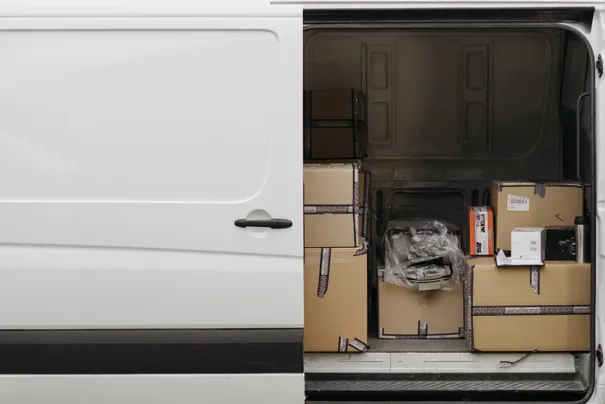
The main rule of carrier liability is often summarised as: good in, good out. The carrier must therefore deliver the goods in the same condition as that in which he received them. If he receives the cargo in good condition and it is damaged, partly lost or not delivered at all, the carrier is in principle liable. The cargo interest (the party with an interest in the cargo) does not have to prove exactly what mistake the carrier made. It is enough to make it plausible that the goods were handed over in good condition and were damaged or lost during the period of carriage. That is why the consignment note is important. If the carrier made no reservation on receipt about visible damage, poor packaging or missing packages, that counts against him in terms of evidence. He is then deemed to have received the goods in good condition. The carrier can still try to escape liability, for example by invoking force majeure or a special risk. In practice, that bar is high.
Liability from taking over to delivery
The carrier's liability in principle runs from the moment he takes over the goods until the moment he delivers them to the consignee. For international road transport this follows from article 17(1) CMR. For domestic transport, article 8:1095 BW is in line with this: the carrier must deliver the goods received for carriage at their destination in the condition in which he received them.
So what matters is when the carrier actually takes the goods into his custody and when delivery has been legally completed. The period of carriage can also include moments when the goods are temporarily stationary, where this still falls within the performance of the contract of carriage. The carrier cannot easily escape liability by arguing that the damage did not occur while actually driving. Theft while stationary, damage during an intermediate stop or damage during a temporary stay at a transhipment location can also fall within the carrier's period.
Liability for damage during loading and unloading
Damage during loading, unloading or stowing requires a separate assessment. The carrier is liable if, according to the contract of carriage, he was responsible for this work and damage occurs in the process. If, for example, it is agreed that the carrier will load or unload the goods with a tail lift, crane or forklift truck, he can be liable when the goods fall, are handled incorrectly or are damaged by careless use of the equipment.
Often, however, the responsibility does not lie with the carrier. Under the AVC, the starting point is that the consignor loads and stows the goods and that the receiver unloads them, unless the parties agree otherwise or the nature of the transport requires otherwise. Article 8:1099 BW and article 17(4)(c) CMR also contain a special rule for damage connected with handling, loading, stowing or unloading by the consignor, the consignee or persons acting on their behalf. In such cases the carrier can invoke a special risk. He must then, however, make it plausible that the damage could have been caused by it. Moreover, the driver can sometimes be expected to notice visible defects and note them on the consignment note.
Liability for delay during transport
The carrier can be liable for delayed delivery. For domestic transport, article 8:1096 BW provides that the carrier must carry the goods received for carriage without delay. Under the AVC, the carrier must deliver within a reasonable period, unless a specific delivery period has been agreed in writing. For international transport, article 19 CMR determines when there is delay: when the goods have not been delivered within the agreed period or, if no period has been agreed, when the transport takes longer than a diligent carrier would reasonably have needed.
Not every delay automatically leads to compensation. Loss must have been suffered as a result of the delay and the carrier must be liable for it. Moreover, the compensation is often limited. Under CMR transport, the maximum compensation for loss caused by delay is in principle no more than the carriage charges. Under the AVC, compensation for delay is limited to once the carriage charges, or twice the carriage charges when a delivery period has been agreed in writing. With time-critical cargo, such as perishable goods, parts for production or trade fair materials, it is therefore sensible to make clear agreements and, if necessary, agree additional insurance or a special interest in delivery.
Limited liability of the carrier
Road transport law has liability limits. These limits are particularly important with valuable goods of low weight, such as electronics, jewellery, medical equipment or branded clothing. The loss can then be much higher than the amount compensated on the basis of weight. As a result, a considerable part of the loss can remain at the expense of the consignor or owner of the goods.
Liability limit in domestic transport
In domestic road transport, the General Transport Conditions 2002 are often used. Under article 13 AVC, the carrier's liability for loss or damage is limited to €3.40 per kilogram of the damaged or lost goods. With a damaged cargo, the weight that counts is that of the part of the goods that was actually damaged or lost. In practice, that can lead to low compensation. If, for example, a box of light but expensive electronics is lost, the statutory or contractual compensation can be much lower than the invoice value. Moreover, the carrier does not simply have to compensate other loss. Consequential loss, business loss, loss of profit or non-material damage in principle fall outside ordinary carrier liability, unless there is intent or wilful recklessness. For delay under the AVC, compensation is usually limited to once the carriage charges. If a delivery period has been agreed in writing, compensation can rise to a maximum of twice the carriage charges.
Liability limit in international transport under CMR
In international road transport, the CMR Convention usually applies. Article 23 CMR provides that compensation for loss of goods cannot exceed 8.33 SDR per kilogram of gross weight short. SDR stands for Special Drawing Rights, a unit of account of the International Monetary Fund. The exact amount in euros therefore changes with the exchange rate, but in this case is roughly around ten euros per kilogram. In addition to the kilogram limit, under article 23(4) CMR the carrier may also have to refund carriage charges, customs duties and other charges incurred in respect of the carriage, in full or in part depending on the extent of the loss. Further consequential loss is in principle not compensated under the CMR Convention.
When is the liability limit broken?
The liability limit does not always apply. Under both the AVC and the CMR Convention, the carrier can lose his right to limitation when the damage was caused by intent or wilful recklessness. For CMR transport this follows from article 29 CMR. That provision states that the carrier may not limit his liability when the damage results from his wilful misconduct or from default which, under the law of the court dealing with the case, is considered equivalent to wilful misconduct. In principle, this mainly concerns wilful recklessness. The threshold is, however, very high. It is not enough that the carrier acted carelessly, negligently or sloppily. There must be conduct where the carrier knew that the chance of damage was considerably greater than the chance that no damage would occur, and acted that way anyway. Think of ignoring very serious safety instructions with valuable cargo, deliberately taking a major risk or actively cooperating in a theft. If intent or wilful recklessness is proven, the kilogram limit no longer applies and wider compensation for all consequential loss can also be claimed.
Theft by an employee, driver or auxiliary
Theft of cargo often leads to disputes in practice. If the cargo is stolen by unknown third parties, the carrier is not automatically fully liable. He can still try to invoke force majeure or limited liability. In the Netherlands, however, force majeure is not readily accepted. A professional carrier is simply expected to take appropriate security measures, especially with valuable goods or goods that are attractive to thieves.
With theft by a driver, employee or auxiliary, the distinction between domestic transport and CMR transport is important. In international CMR transport, the limit can be broken when the theft was committed by the carrier himself or by persons whose services he makes use of for the performance of the carriage. Think of a driver, subcontracted carrier or other auxiliary involved in the theft. Article 29 CMR can then mean that the carrier can no longer rely on the limit of 8.33 SDR per kilogram.
In domestic transport under the AVC this is more difficult. There, breaking the limit mainly depends on intent or wilful recklessness of the carrier himself. With a legal entity, that usually means the board of directors or senior management. If a driver steals without the involvement of the carrier himself, this does not automatically mean that the AVC limit is broken.
Liability of the consignor or consignee for transport damage
It is not only the carrier who can be liable for transport damage. The consignor or consignee can also play an important role. That is particularly the case when the damage is caused by incorrect information, defective packaging, incorrect addressing, incorrect labelling or incorrect loading, stowing or unloading. In such situations the carrier can invoke a special risk. For domestic transport this follows from, among other things, article 8:1099 BW and article 11 AVC. For international road transport, article 17(4) CMR is relevant.

Incorrect addressing or labelling
Incorrect addressing or labelling can have major consequences. Think of a parcel that is taken to the wrong delivery address, packages that are sorted incorrectly in a distribution centre or dangerous substances that are not correctly marked. The consignor must make sure that the carrier has the correct details. That applies not only to the delivery address, but also to, among other things, the nature of the goods, the number of packages, any coding and special instructions. With dangerous or fragile goods, that information is even more important. Under the AVC and the BW, incomplete addressing or coding can constitute a special risk. Under article 17(4) CMR, too, the carrier can defend himself when damage is connected with insufficient or inadequate marks or numbers. The carrier must, however, make it plausible that the damage could have been caused by it. If the consignor provides incorrect details, he can be liable for the damage that results. That also includes, among other things, extra costs for storage, return shipping, delay, correcting documents or damage to other goods.
Poor or inadequate packaging
The consignor must deliver the goods in a condition suitable for the agreed transport. That means the packaging must suit the nature of the goods, the method of transport and the normal risks of transport. Fragile products must be packed differently from steel, machines or textiles. Goods that are sensitive to moisture, temperature, shocks or pressure must be sufficiently protected against them. If goods are handed over unpacked or poorly packed, the damage can be at the consignor's expense.
In international transport, article 10 CMR is relevant. It states that the consignor can be liable to the carrier for damage to persons, equipment or other goods, and for costs, resulting from defective packaging. In addition, article 17(4)(b) CMR names missing or defective packaging as a special risk. In Dutch road transport, defective packaging is also recognised as a special risk, among other places in article 8:1099 BW and article 11 AVC. The carrier's role does remain relevant, though. If the driver clearly sees that the packaging is inadequate, he may not simply ignore it. He must then make a reservation on the consignment note or warn the consignor.
Incorrect or incomplete consignment note
The consignment note is not just an administrative document. It has an important evidential function. It states, among other things, which goods were handed over, how many packages are involved, who the consignor and consignee are, where loading and unloading take place and which particulars are relevant to the transport. For domestic transport, article 5 AVC provides that the consignor must fill in the consignment note completely, sign it and hand it to the carrier together with the goods. Article 8:1115 BW also places obligations on the consignor regarding the documents and information needed for the transport. If the consignment note is incorrect or incomplete, the consignor is responsible for this. As a result, the carrier may take the wrong measures and use the wrong equipment. For CMR transport, article 7 CMR is relevant: the consignor can be liable for damage and costs resulting from incorrect or incomplete particulars in the consignment note.
Loading, stowing or unloading by the consignor or receiver
A lot of transport damage does not occur while driving, but during loading, stowing or unloading. Loading is putting the goods into the vehicle, stowing is placing and securing the cargo, and unloading is taking the goods out of the vehicle. If these operations are carried out by the consignor, the consignee or persons on their behalf, damage resulting from them can be at their expense. Think of pallets that are stacked incorrectly, goods that are not secured, overloading, incorrect weight distribution or damage by a forklift truck during unloading. For international transport, article 17(4)(c) CMR names handling, loading, stowing or unloading by the consignor, the consignee or persons acting on their behalf as a special risk. Article 11 AVC and article 8:1099 BW follow the same idea. Under the AVC, the starting point is also that the consignor must load and stow the goods and have them unloaded, unless the parties agree otherwise or the nature of the transport requires otherwise. So the carrier is not automatically liable for damage during these operations. He can, however, be liable if he loads or unloads himself, or if he sees clear errors in loading or stowing and still leaves without warning.
Contributory negligence and indemnification of the carrier
When transport damage was partly caused by the consignor or consignee, there may be contributory negligence or a special risk that is not at the carrier's expense. The carrier can then defend himself against a claim. In doing so, he must make it plausible that the damage may have been caused by, for example, poor packaging, incorrect information or incorrect addressing. The cargo interest can then try to prove that the damage occurred in a different way after all. In addition, the consignor may be obliged to indemnify the carrier. Indemnification means that the consignor must bear the loss for which the carrier is held liable by a third party, when that loss ultimately results from an error by the consignor. Article 8:1117 BW is important here: the consignor must compensate the carrier for the extraordinary damage that the goods or their handling cause the carrier, except insofar as the cause is at the carrier's expense. The AVC also contains indemnification rules.
Liability of a third party for transport damage
Transport damage is not always caused by a mistake by the carrier, consignor or consignee. Sometimes a third party is the direct cause of the damage. Even so, this does not automatically mean that the cargo interest will hold that third party liable directly. Often the carrier is looked at first, because he is contractually obliged to deliver the goods properly. The carrier or his insurer can then try to recover the loss from the party that actually caused the damage.
Transport damage and a road accident
When cargo is damaged in a road accident, the carrier in principle remains the first point of contact under the contract of carriage. Under article 17 CMR, the carrier is liable for loss, damage and delay between taking over and delivery. For domestic transport, a similar starting point follows from article 8:1095 BW. So the fact that the damage was caused by a collision with a third party does not automatically mean that the carrier is off the hook towards the cargo interest.
The carrier can, however, try to invoke force majeure. To do so, he must show that the damage was caused by circumstances that he could not avoid and the consequences of which he could not prevent. That bar is high. With an ordinary road accident, for example, it will be examined whether the driver was driving defensively, kept enough distance, chose the route responsibly and took all reasonable measures to prevent damage. If force majeure is accepted, the cargo interest may have to rely on the party that caused the accident or on its own goods in transit insurance. If force majeure is not accepted, the carrier can remain liable and then take recourse himself against the liable road user or their third-party liability (WA) insurer.
Damage caused by another carrier or subcontracted carrier
In practice, transport is often outsourced. The contractual carrier accepts the order, but has the transport carried out wholly or partly by another carrier. For the customer, this does not mean that he automatically has to go to that subcontracted carrier. The principal carrier in principle remains responsible for the correct performance of the contract of carriage. Under article 3 CMR, the carrier is responsible for the acts of his employees and other persons whose services he makes use of for the carriage, as if they were his own acts. In international transport there may also be successive carriage within the meaning of article 34 CMR. If the actual carrier takes over the goods and the CMR consignment note, he can in certain circumstances himself be regarded as a successive carrier. Article 36 CMR then gives the cargo interest the option of holding not only the original carrier but also the successive carrier liable. If the principal carrier pays for the damage, he can then take recourse against the subcontracted or successive carrier that caused the damage. In practice, it will therefore be important in claims to map out the entire transport chain.
Holding a party other than the carrier liable
Sometimes the cargo interest does not want to hold the contractual carrier liable, but another party. That could be, for example, the actual carrier, driver, subcontracted carrier, warehouse keeper, transhipment company or the party that caused a road accident. In transport law, such a route is also called a "knight's move" (paardensprong): the injured party as it were jumps over his contractual counterparty and holds another party liable, usually on the basis of tort (onrechtmatige daad).
That makes pursuing a claim extra complex, but it can still be useful. This is the case, for example, when the contractual carrier is bankrupt, is not insured or is only liable to a limited extent. Bear in mind: the party held liable can often rely on the same limitations as the carrier. For CMR transport, article 28 CMR provides that a carrier who is held liable outside the contract can still rely on the liability limitations and defences of the CMR Convention. Auxiliaries can also invoke that protection under certain conditions.
Liability and the contract of carriage
With transport damage, the contract of carriage is the starting point for the question of liability. In that contract, the carrier undertakes to carry goods by road, while the consignor pays, or has someone else pay, the carriage charges for this. The contract of carriage determines, among other things, who has which task, who loads or unloads, which goods are carried, which time limits apply and which terms and conditions apply to the order. In the event of damage, you should therefore look not only at the damaged goods, but also at the agreements made before the transport.

Content of the contract of carriage
The contract of carriage contains the core of the transport order. It states or shows who the consignor and carrier are, which goods are carried, where and when the goods must be loaded, where they must be delivered and which particulars apply to the transport. Think of weight, quantity, temperature requirements, fragility of the goods, dangerous substances, loading and unloading instructions, time windows, storage on the way and any subcontracting.
A contract of carriage does not always have to be set out in one formal contract. In practice, it often consists of a combination of an order confirmation, quotation, email, consignment note, general terms and conditions and actual performance. For international CMR transport, article 4 CMR provides that the contract of carriage is confirmed by a consignment note, but the absence, loss or irregularity of the consignment note does not affect the existence or validity of the contract of carriage. This means that there can still be a contract of carriage even without a correct consignment note. In terms of evidence, however, the consignment note is important.
Liability agreements in the contract of carriage
In the contract of carriage, the parties can make agreements that are important for liability. For example, they can set out who is responsible for loading, stowing and unloading, whether the carrier must follow special instructions, whether a firm delivery period applies and whether certain goods may only be carried under specific conditions. It can also be agreed that the consignor declares a higher value or a special interest in delivery. For CMR transport, article 24 and article 26 CMR offer options for this, provided this is correctly stated in the consignment note and a surcharge is paid for it.
That contractual freedom is not unlimited, however. The carrier cannot simply exclude his liability entirely if mandatory transport law applies. For CMR transport, for example, article 41 CMR provides that stipulations that directly or indirectly derogate from the convention are in principle null and void. For domestic transport, article 8:1108 BW in turn provides that the carrier cannot rely on liability limitations when damage was caused by his own intent or wilful recklessness. Liability agreements must therefore always be read alongside the applicable legislation and the extent to which it is possible to derogate from it.
General terms and conditions and the AVC
General terms and conditions play a major role in Dutch road transport. For domestic carriage of goods, the General Transport Conditions 2002 are often used. These are standard general terms and conditions that the consignor and carrier can declare applicable. The AVC set out, among other things, the consignor's obligations, the carrier's liability, special risks, loss caused by delay, payment of carriage charges and limitation periods. The AVC limit for loss or damage discussed earlier is €3.40 per kilogram. In international transport the AVC can sometimes be used in addition, but only insofar as they do not conflict with mandatory CMR rules.
Force majeure and special risks
A carrier is not always liable for transport damage. The BW, the AVC and the CMR Convention all provide defences. One of these is force majeure. Force majeure concerns circumstances that a diligent carrier could not avoid and the consequences of which he could not prevent. The bar for force majeure is high. An ordinary traffic jam, breakdown, theft or collision does not automatically amount to force majeure. The carrier must show that he took all reasonable measures to prevent damage.
There are also special risks. These concern damage connected with circumstances that are more at the expense of the consignor, the consignee or the nature of the goods. Think of transport in an open vehicle when that was agreed, missing or defective packaging, loading, stowing or unloading by the consignor or consignee, the natural nature of the goods, sensitivity to temperature or moisture, live animals or defective addressing and labelling. If an appeal to force majeure or special risks succeeds, the carrier does not have to compensate the damage, or not in full.
Role of the CMR consignment note
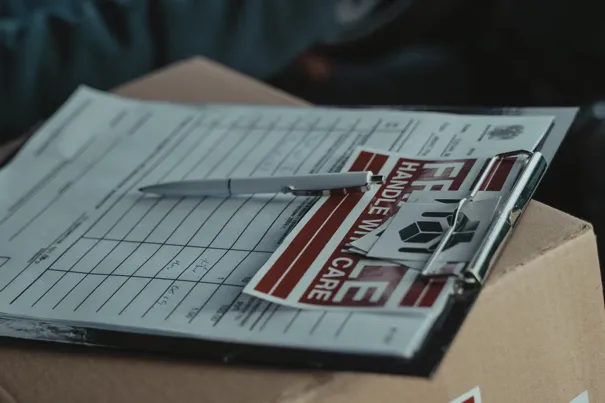
The CMR consignment note plays a central role in international road transport. The document confirms the contract of carriage, contains the most important details about the consignment and has an important evidential function in the event of transport damage. So the consignment note is more than a practical transport document. In a dispute about damage, loss, delay or delivery, the CMR consignment note is often the first thing people look at. If it contains a clear reservation, that can strongly affect the position of the carrier, consignor or consignee. If such a reservation is missing, presumptions of evidence may follow from that. A correct and complete consignment note is therefore essential for anyone who later wants to recover damage or, on the contrary, wants to dispute liability.
Content of the CMR consignment note
Article 6 CMR determines which particulars must be stated on the CMR consignment note. In practice, these include the basic details of the transport order, the parties involved, the goods and any instructions. The consignment note must make sufficiently clear what is being carried, by whom, from where to where and under what conditions. Incorrect or incomplete particulars can later lead to problems of evidence or to liability. A CMR consignment note contains, among other things:
- The place and date of making out the consignment note;
- The name and address of the consignor;
- The name and address of the carrier;
- The name and address of the consignee;
- The place and date of taking over the goods;
- The place designated for delivery;
- The description in common use of the nature of the goods;
- The method of packing;
- For dangerous goods: their generally recognised description;
- The number of packages and their special marks and numbers;
- The gross weight or quantity of the goods;
- Charges relating to the carriage, such as carriage charges, supplementary charges and customs duties;
- Instructions for customs and other formalities;
- A statement that the carriage is subject to the CMR Convention, notwithstanding any clause to the contrary in the contract of carriage.
Additional particulars can also be included where they are relevant. Article 6(2) of the CMR Convention even states that, where applicable, the following particulars must also be included in the consignment note:
- A statement that transhipment is not allowed;
- The charges that the consignor undertakes to pay;
- The amount of "cash on delivery" charges to be collected on delivery of the goods;
- The declared value of the goods and the amount representing special interest in delivery;
- The consignor's instructions to the carrier regarding insurance of the goods;
- The agreed time limit within which the carriage must be carried out;
- A list of the documents handed to the carrier.
Finally, the parties can include other matters in the consignment note that they consider useful, but this is not mandatory.
Evidential function of the consignment note
The CMR consignment note has a strong evidential function. Article 9 CMR provides that the consignment note, in the absence of proof to the contrary, is full evidence of the conditions of the contract of carriage and of the receipt of the goods by the carrier. This means that the consignment note is often the first point of reference in disputes. However, the evidential function of the consignment note does not stand alone. It can be supplemented with other evidence, such as photos of the cargo, packing lists, invoices, emails, loading reports, temperature records, GPS data, witness statements and expert reports.
Making a reservation on receipt
When the carrier takes over the goods, he must check whether the number of packages, the marks, numbers and the apparent condition of the goods and packaging correspond with the consignment note. This follows from article 8 CMR. If the driver sees damage, poor packaging, differing quantities or other noticeable problems, he must enter a reasoned reservation on the consignment note. Even when checking is not possible, for example because the cargo is sealed or the driver is not allowed to be present during loading, this must be stated clearly.
A general reservation, such as "subject to reservation" or "not checked", is often insufficient. The reservation must be specific. Think of: "two packages missing", "film torn", "pallet stacked crooked", "boxes wet", "cargo taken over sealed, contents could not be checked" or "driver not present during loading". The more specific the remark, the more useful it is later as evidence.
Making a reservation on delivery
The consignment note is also very important on delivery. Article 30 CMR provides that, in the case of apparent loss or apparent damage, the consignee must make a reservation no later than at the time of delivery. The general nature of the damage must be indicated. So it is not enough to say only afterwards that the consignment was damaged. The damage must be noted on delivery, for example on the consignment note or delivery note, and preferably supported with photos.
A different rule applies to damage that is not apparent. If the damage is only discovered after unpacking, the consignee must protest in writing within seven days of delivery, with Sundays and public holidays not counting. Here too, it must be clearly described what damage is involved. If this does not happen, the consignee is deemed, in the absence of proof to the contrary, to have received the goods in the condition described in the consignment note. That does not always mean a claim is impossible, but the position in terms of evidence becomes much weaker.
Visible and hidden damage
With transport damage, the distinction between visible and hidden damage is important. Visible damage is damage that can be established immediately during a normal check on delivery. Think of torn film, broken boxes, missing packages, wet packaging, dents, breakage or a pallet that has clearly fallen over. This damage must be noted immediately on delivery. If the consignee accepts the goods without comment, the presumption arises that the goods were delivered in the correct condition.
Hidden damage is damage that only becomes apparent later, for example after opening boxes, testing machines or unpacking fragile products. In that case, too, action must be taken quickly. Under article 30 CMR, a reservation must be made in writing within seven days for hidden damage. Evidence remains important here. So keep the packaging, take photos of the outside and inside, record when the damage was discovered and note who unpacked the goods. The better the damage is documented, the greater the chance that it can be shown that the damage occurred during transport.
Liability in the transport of dangerous goods
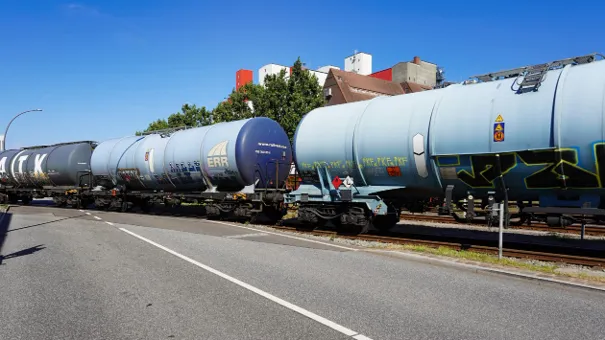
With the transport of dangerous substances, the question of liability is often more complex than with ordinary transport damage. It is then not only about damage to the cargo itself, but also about possible personal injury and environmental damage. This means that settling the claim is more complex than with ordinary transport damage. For this type of transport, in addition to ordinary transport law, the ADR rules also apply: the European rules for the carriage of dangerous goods by road. These rules impose obligations on all parties involved, including the consignor, carrier, packer, loader, unloader and consignee. In the event of damage, it must therefore always be examined who had which ADR obligation and whether that obligation was complied with.
Obligations of the consignor
The consignor plays a crucial role with dangerous substances. He must inform the carrier fully and correctly about the nature of the dangerous goods. This means, among other things, that the substance must be classified correctly, that the correct UN number must be given, that the correct packing group and hazard class are stated and that the required documents are present. The consignor must also ensure suitable packaging, labelling and marking. On the basis of that information, the carrier must be able to assess whether he may carry the cargo and which safety measures are needed.
This duty to inform follows not only from the ADR, but is also in line with article 8:1114 BW. That article states that the consignor must give the carrier as completely as possible the information that is relevant to the intended transport. For international transport, article 22 CMR is also relevant. If the consignor hands over dangerous goods, he must inform the carrier of the exact nature of the danger and, if necessary, of the precautions to be taken. If that does not happen, the consignor can be liable for costs and damage resulting from the transport. In serious cases, liability can even shift from the carrier to the consignor, for example when the carrier did not know, and did not need to know, that dangerous substances were involved.
Obligations of the carrier
The carrier also has his own obligations. He may not blindly rely on the order, but must check whether the dangerous goods are authorised for carriage in accordance with the ADR and whether the prescribed information and documents are present. In addition, the vehicle must be suitable, the driver must be qualified and sufficiently instructed, and the required equipment, marking and safety measures must be in place. So ADR transport is not just about driving from A to B, but about complying with a complete safety regime.
Under civil law, ordinary carrier liability also continues to apply. The carrier is in principle liable for loss, damage and delay of the cargo between taking over and delivery. With dangerous substances, a much greater risk can come on top of that. The operator of the vehicle can be liable under article 8:1213 BW for damage suffered by third parties as a result of dangerous substances on board the vehicle. That is a form of strict liability: liability can therefore arise without a specific mistake by the carrier first having to be proven. There are exceptions, however, for example when the consignor did not disclose the dangerous nature of the substance and the carrier did not need to be aware of it either.
Damage to third parties and environmental damage
With ordinary transport damage, it is often about damage to or loss of the cargo itself. With dangerous substances, the damage can go much further. A leaking drum can contaminate the road, soil or groundwater. A flammable substance can cause fire to other vehicles, buildings or infrastructure. With toxic or corrosive substances, bystanders, emergency workers or employees can be injured. Such damage does not always fit neatly within the normal CMR or AVC limits for cargo damage.
Book 8 BW therefore has a separate set of rules for damage caused by dangerous substances on board a vehicle. The operator of the vehicle is in principle liable for third-party damage caused by the dangerous substance. In certain situations, however, that liability can end up with the consignor or receiver. That can happen, for example, when the consignor did not disclose the dangerous nature of the cargo and the carrier did not need to know it either. When the accident occurs during loading or unloading under the sole responsibility of the consignor or receiver, liability can also shift to that party.
ADR transport and additional insurance
With ADR transport, standard insurance is often insufficient. Carrier's liability insurance generally covers the carrier's liability for damage to other people's goods during transport, for example loss, damage, delay or damage during loading and unloading insofar as this falls under the policy. However, that does not mean that all risks with dangerous substances are automatically insured. Policy conditions can contain restrictions for certain substances or for failure to comply with certain statutory requirements. For environmental damage, separate environmental damage insurance or environmental liability insurance is often needed. Depending on the policy, that can provide cover for remediation costs, investigation costs, clean-up costs and the costs of legal assistance.
Liability and postal delivery in the Netherlands
With damage or loss during postal delivery, liability depends heavily on the type of item. Different rules apply to ordinary letters than to parcels or registered items. With a consumer purchase, the seller usually remains responsible until the consumer has actually received the product. If a parcel goes missing on the way or arrives damaged, the consumer should therefore first turn to the online shop or seller. With business shipments, more attention is paid to the contract with the carrier or postal service and to the shipping method chosen. An ordinary letter usually offers little evidence and limited options for recovery. With registered items there is more evidence of sending and receipt, but conditions, limits and exceptions still apply. Anyone sending important or valuable goods would do well to send them by registered post and possibly also insured.
All the rules on postal delivery in the Netherlands →
What should I do in the event of transport damage?
With transport damage, acting quickly and carefully is important. The better the damage is recorded straight away, the stronger your position in a claim against the carrier, seller, consignor or insurer. So do not wait until later, but check the goods immediately on receipt.
- Check the goods immediately on receipt
On delivery, check straight away whether the goods are complete and undamaged. Look not only at the products themselves, but also at the packaging, pallets, film, seals and labels. Watch out for visible damage, wet boxes, tears, dents, missing packages or signs of opening. If in doubt, ask for the damage to be recorded together with the driver or delivery person.
- Make a reservation on the consignment note or delivery note
Is there visible damage? Then note this immediately on the consignment note, CMR consignment note or delivery note. A general remark such as "subject to reservation" is often insufficient. Describe specifically what is wrong, for example "box torn", "pallet damaged", "two packages missing" or "goods delivered wet". Preferably have the driver or carrier countersign the remark.
- Take photos and keep the packaging
Take clear photos of the damage before the goods are moved, unpacked or repaired. Photograph the outer packaging as well as the contents, labels, pallets, seals and the place where the damage was found. Do not throw the packaging away straight away, because it may later be important for assessing whether the damage occurred during transport. With larger claims, an expert may want to inspect the goods and packaging.
- Keep invoices, packing lists and transport documents
For a claim you need not only evidence of the damage, but also evidence of the value and size of the consignment. So keep the consignment note, packing list, invoice, order confirmation, photos, emails and any track and trace details. Also note the number of damaged or missing packages and the gross weight of the damaged or lost goods. These details are important, because the carrier's liability is often calculated per kilogram.
- Report the damage to the carrier quickly
Report transport damage to the carrier in writing as soon as possible. With visible damage, the reservation must in principle be made immediately on delivery. With hidden damage, the report must follow quickly as soon as the damage is discovered, especially with CMR transport where short time limits apply. Describe the damage clearly and attach photos, documents and an initial calculation of the loss.
- Also report the damage to the insurer
Also inform your own insurer quickly (if applicable). The insurer can assess whether the damage is covered, whether an expert needs to be brought in and against whom recovery may be possible. Never admit responsibility before the insurer has assessed the case.
- Limit further damage
Try to prevent further damage as far as possible. Think of securing goods, drying wet products, separating damaged and undamaged cargo or storing it temporarily in a safe place. Do take photos first, though, and with major damage consult the carrier or insurer.
- Build a complete claim file
Collect all the information in one file. Note the date and place of delivery, the name of the carrier, the driver, the registration (licence plate), the parties involved and the moment the damage was discovered. Also keep correspondence about the transport order, any complaints, responses from the carrier and messages from the insurer. A complete file makes it easier to prove liability and receive compensation.
Insurance for transport damage
With transport damage, liability is only one side of the story. At least as important is the question of which insurance actually absorbs the loss. The carrier is often only liable to a limited extent. As a result, the actual loss can be much higher than the amount that can be recovered from the carrier. For the owner or consignor of the goods, goods in transit insurance is usually useful. For the carrier himself, carrier's liability insurance is what matters.
Goods in transit insurance
Goods in transit insurance insures the goods themselves during transport. This insurance is mainly intended for parties who own the goods or run a financial risk if the cargo is damaged, lost or stolen. The big advantage is that goods in transit insurance does not depend on the carrier's limited liability. Depending on the policy, the owner of the goods can then insure the actual value of the goods. That is important with valuable goods of low weight. Goods in transit insurance usually provides cover for damage caused by, for example, theft, fire, collision, falling, getting wet or other external causes. However, the exact cover differs per policy. Consequential loss and business loss are not always covered as standard.
Carrier's liability insurance
Carrier's liability insurance is intended for businesses that carry other people's goods or arrange the transport. This insurance does not cover the goods as such, but the carrier's liability when, under the applicable transport rules, he has to pay for loss, damage or delay. In practice, this insurance is also called CMR insurance, AVC insurance or transport liability insurance. The cover is in line with the carrier's statutory and contractual liability. The insurance can provide cover for damage to the cargo, loss or theft, loss caused by delay, legal assistance and the costs of clearing away or destroying damaged goods. Some insurers offer additional cover (at extra cost) for outsourced transport and refrigerated and frozen transport.
Difference between goods in transit insurance and carrier's liability insurance
Goods in transit insurance and carrier's liability insurance are often confused, but they do not cover the same risk. The first mainly looks at the value of the goods themselves, while the second covers the carrier's liability. The table below sets out the main differences.
| Goods in transit insurance | Carrier's liability insurance | |
|---|---|---|
| For whom? | Owner, consignor, seller, buyer or importer/exporter of goods | Carrier or logistics service provider |
| What is insured? | Damage to or loss of the goods themselves | The carrier's liability for damage to other people's goods |
| Starting point | Insurance of the value of the cargo | Insurance of liability under CMR, AVC, BW or contract |
| Dependent on liability? | Usually not, or not fully | Yes, in principle the carrier must be liable |
| Compensation | Often based on the insured value or invoice value, depending on the policy | Often capped by liability limits, policy limits and conditions |
Time limits for transport damage
Time limits play a major role in transport damage. Anyone who complains too late or waits too long to bring a claim can run into problems of evidence or even lose their claim. A distinction must be made between complaint periods and limitation periods. A complaint period is about reporting damage or loss in time, while limitation is about the final deadline for enforcing a claim legally. Because the time limits in transport are short, it is sensible always to report damage in writing straight away.
| Situation | Time limit | What should you do? | Consequence if you are too late |
|---|---|---|---|
| Visible damage in CMR transport | Immediately on delivery | Make a specific reservation straight away on the CMR consignment note or delivery note. | The goods are presumed to have been delivered correctly, unless you provide proof to the contrary. |
| Hidden damage in CMR transport | Within 7 days of delivery | Report the damage to the carrier in writing and describe the general nature of the damage. | Your position in terms of evidence becomes weaker. You must show that the damage occurred during transport. |
| Delay in CMR transport | Within 21 days of the goods being placed at the consignee's disposal | Make a written reservation for loss caused by delay. | Without a timely reservation, compensation for delay is in principle not possible. |
| Visible damage in domestic transport under the AVC | On or immediately after acceptance | Report the damage in writing and make a specific reservation. | The carrier is presumed to have delivered correctly. |
| Hidden damage in domestic transport under the AVC | Within 1 week of acceptance | Report the damage to the carrier in writing. | It becomes more difficult to prove that the damage occurred during transport. |
| Delay in domestic transport under the AVC | Within 1 week of acceptance | Report in writing that delivery did not take place within the reasonable or agreed period. | The carrier can argue that no complaint was made in time. |
| Limitation for ordinary transport damage | 1 year | Bring the claim in time or interrupt the limitation period correctly. | The claim can no longer be successfully enforced. |
| Limitation in CMR transport with wilful misconduct or equivalent default | 3 years | Bring the claim in time or interrupt the limitation period correctly. | After the limitation period has expired, the claim can no longer be enforced. |
Complaint periods for transport damage
With visible damage, the consignee must respond immediately on delivery. If the packaging is torn, goods are wet, packages are missing or it is clear that the cargo is damaged, this must be noted straight away on the consignment note or delivery note. State specifically what is wrong.
With hidden damage, a short written notification period applies. Under CMR transport, loss or damage that is not apparent must be reported in writing within seven days of delivery, indicating the general nature of the damage. Under the AVC, too, damage that is not externally visible must be reported to the carrier in writing within one week of acceptance. If no complaint is made in time, this does not always mean that a claim is impossible, but it does mean that the goods are presumed to have been delivered correctly. The injured party must then still prove that the damage occurred during transport.
Notification rules also apply to delay. Under CMR transport, compensation for delay is only possible if a written reservation has been made within 21 days of the goods being placed at the consignee's disposal. Under the AVC, the consignee must report in writing within one week of acceptance that delivery did not take place within the reasonable or agreed period. Anyone who misses these time limits considerably weakens their position in terms of evidence.
Limitation of the claim
In addition to complaint periods, a short limitation period applies to transport damage. In domestic transport under the AVC and Book 8 BW, the main rule is that claims under the contract of carriage become time-barred after one year. For cargo damage, that period starts on the day after the day on which the goods were delivered or should have been delivered. Once the claim is time-barred, it can no longer be successfully enforced, even if the claim for the damage was justified in itself.
In international road transport under CMR, a limitation period of one year also applies. In the case of wilful misconduct or default considered equivalent to wilful misconduct, such as wilful recklessness under the applicable law, article 32 CMR provides for a period of three years. The starting point differs per situation. With partial loss, damage or delay, the period in principle runs from the day of delivery. With total loss, other starting points apply, depending on whether a delivery period was agreed.
A limitation period can sometimes be interrupted or extended, but that must be done correctly and in time. A simple complaint is not always enough to prevent the claim from becoming time-barred. With larger claims, it is therefore sensible to seek legal advice well before the end of the period. That way you avoid a claim that is strong on its merits being brought too late.
Frequently asked questions about liability for transport damage
With transport damage, liability, evidence and insurance come together in a complex way. The carrier is often liable, but his liability is usually limited. As a result, it is not always enough to hold only the carrier liable. If you have questions about this, it is a good idea to go through the FAQ below on transport damage and carrier liability.
What is goods in transit insurance?
Goods in transit insurance insures the goods themselves during transport. This insurance is mainly intended for the owner, consignor, seller, buyer, importer or exporter of the goods. The advantage is that compensation for the damage does not depend entirely on the carrier's liability. That is important, because the carrier is often only liable to a limited extent per kilogram.
What does goods in transit insurance cost?
The price of goods in transit insurance differs per situation. Insurers look at, among other things, the value of the goods, the type of goods, the destination, the method of transport, the number of shipments, the claims history, the chosen cover and the excess. Businesses that regularly transport goods more often take out an open (ongoing) policy.
What does goods in transit insurance cover?
Goods in transit insurance can cover damage to or loss of goods during transport. Think of damage caused by theft, fire, collision, falling, getting wet, incorrect handling or other events during transport. Depending on the policy, loading and unloading, temporary stays, storage, clean-up costs or additional costs may also be covered.
What does carrier's liability insurance cost?
There is no fixed price for carrier's liability insurance. The premium depends on, among other things, annual turnover, business activities, the type of goods, the number of vehicles, the area of cover, the excess, additional cover and the claims history. A carrier who only transports standard goods within the Netherlands has a different risk from an international carrier of electronics, refrigerated goods or dangerous substances. This means that the premium will also differ greatly.
What does carrier's liability insurance cover?
Carrier's liability insurance covers the carrier's liability for damage to other people's goods during transport. This includes, for example, loss, damage, theft, delay or damage during loading and unloading, insofar as the carrier is liable for it under the BW, AVC, CMR or the contract of carriage. So the insurance does not automatically cover the full value of the cargo.
What is transport damage?
Transport damage is damage that occurs during the transport of goods. It can involve damage to products, loss of cargo, theft, delayed delivery or damage during loading, unloading or stowing.
How can I claim for transport damage?
Record the damage straight away and report it in writing to the right party. Take photos, note visible damage on the consignment note or delivery note and keep invoices, packing lists, transport documents and correspondence. Also report the damage to your own goods in transit insurer. Do not wait too long, because short complaint and limitation periods apply to transport damage.
How can I prevent transport damage?
Transport damage can never be ruled out completely, but the risk can be reduced. Make sure of good packaging, clear labelling, correct addressing, complete consignment notes and clear loading and unloading instructions. Choose a reliable carrier with experience of the type of goods. For valuable goods, consider extra security, insured shipping or goods in transit insurance.
What is carrier liability?
Carrier liability is the carrier's liability for damage to, loss of or delay of goods that he carries. The main rule is that the carrier must deliver the goods in the condition in which he received them. This liability is in principle limited, for example to €3.40 per kilogram for transport under the AVC.
Who is responsible for transport damage to a new car?
With transport damage to a new car, responsibility depends on the agreements and the moment at which the risk passed. If a consumer buys a new car from a professional seller, the seller in principle remains responsible until the consumer actually receives the car. With business transport, the contract of carriage, the consignment note, the condition of the car at taking over and delivery and any reservations are taken into account.
Where should I report transport damage?
Report transport damage to the party with whom you have the contract. A consumer who buys something from an online shop first reports damage or loss to the seller. A consignor or consignee in business transport reports damage to the carrier and possibly to their own goods in transit insurer. A carrier who is held liable must report the damage to his carrier's liability insurer as soon as possible and may not simply admit liability.