Strict liability (risicoaansprakelijkheid) is a special form of liability in which someone is responsible for damage without fault or blameworthiness playing a role. This means that the injured party does not have to prove that the person who caused the damage made a mistake. The mere fact that a certain situation occurs can be enough to establish liability. Think, for example, of parents who are liable for damage caused by their children. Owning animals, hazardous substances or defective buildings can also lead to strict liability. This form of liability is intended to protect victims better and to place responsibility with the person who has the most control over the risk. It therefore encourages this person to take sufficient precautions and to be properly insured. This page describes the situation in the Netherlands.
What is strict liability?
Strict liability is a form of liability in which someone is held responsible for damage without fault or blameworthiness playing a role. This means that the injured party does not have to show that the liable party acted carelessly. The legislator introduced strict liability to protect victims better, particularly in situations where it is difficult to prove a specific mistake. Strict liability plays an important role in protection against damage to people and property. Think, for example, of the liability of parents for damage caused by their minor children, or the liability of employers for mistakes by their employees. Unlike fault-based liability, in which fault is central, strict liability focuses on bearing risks that arise from certain capacities or situations, such as owning dangerous objects or animals.
Importance of strict liability
Strict liability plays a crucial role in liability law and has both a legal and a social function. The core of this form of liability lies in the idea of risk allocation and protecting injured parties. In many cases, it is difficult or even impossible to prove that someone actually made a mistake, while the damage is real. Strict liability then offers a solution by protecting victims and giving them the right to compensation without them having to prove fault. This applies in particular to situations in which a certain activity is useful to society but risky at the same time, such as the use of motor vehicles, putting goods on the market and working with hazardous substances.
Another important aspect of strict liability is that it distributes the costs of damage more fairly. Instead of a random victim being left with the financial consequences, the burden is placed on the person who creates the risk. It is a general principle that it is not society as a whole, but precisely those directly involved who should bear the negative consequences of an activity.
In addition, strict liability plays a role in spreading losses. In many cases, the burden of liability is not borne by a single individual, but by a group of premium payers who have liability insurance. This spreads the risk collectively and prevents a single person or business from being financially overburdened by a damage claim. This makes it possible for businesses to continue their (risky) activities without constantly having to take possible liability risks into account. Think, for example, of a manufacturer who passes on the costs of product liability insurance in the sales price of a product. As a result, all manufacturers and consumers contribute together to the risks of product development. That is fairer than it seems: after all, manufacturers make products because consumers want to buy them.
Legal basis of strict liability
Strict liability is a form of legal liability. This means that the law explicitly determines in which cases someone is liable without fault. The core of strict liability lies in the Dutch Civil Code (Burgerlijk Wetboek, BW), which names specific situations in which liability arises from the mere fact that someone holds a certain position or owns a certain item. The idea behind this is that whoever enjoys the benefit of a certain situation or activity should also bear the burdens and risks. The law therefore distinguishes between strict liability for objects, people and activities. There is also an intermediate form: fault-based liability with a reversed burden of proof. In these cases, liability is presumed unless the person held liable proves that they are not to blame. The important statutory provisions on strict liability are listed below. Several of these articles are discussed in more detail further down this page.
- Article 6:169 BW: Liability of parents for damage caused by their children.
- Article 6:170 BW: Liability of employers for mistakes by their employees.
- Article 6:171 BW: Liability for non-subordinates, such as contractors.
- Article 6:172 BW: Liability for representatives in legal acts.
- Article 6:173 BW: Liability for defective objects.
- Article 6:174 BW: Liability for defective structures, such as buildings and bridges.
- Article 6:175 BW: Liability for hazardous substances.
- Article 6:179 BW: Liability of the possessor of an animal for damage caused by that animal.
- Article 185 WVW: Liability of motorised road users for damage to more vulnerable road users (such as pedestrians and cyclists), under the Road Traffic Act 1994 (Wegenverkeerswet, WVW).
- Article 6:197 BW: Limitation of rights of recourse for insurers and other risk bearers when strict liability applies.
Strict liability in practice
With strict liability, liability is established on the basis of objective criteria, without the question of whether the person responsible is actually to blame playing a role. This means that a person or entity is held responsible for damage arising from a certain activity or capacity, even if this person has not been negligent themselves. Examples of this are the liability of an employer for mistakes by their employees, or the liability of the possessor of an animal for damage caused by that animal. The idea behind this is that whoever benefits from an activity (for example a financial benefit or a mental benefit) should also bear the associated risks, so that the damage does not end up with a random victim.
In a broader sense, this means that someone can also be held legally responsible for damage purely on the basis of the existence of a certain situation or capacity. This means that the question of whether there was a blameworthy mistake, or even any conduct at all, is no longer even relevant. This form of liability is mainly applied in situations where the legislator does not want certain risks to be passed on to individual victims. Think of strict liability for defective objects or hazardous substances. The idea here is that the person who has control over the risk should also bear the damage if that risk materialises. This not only strengthens the victim’s position, but also creates a strong incentive to take preventive measures. Insurers also encourage the latter, for example by requiring a Scope 10 inspection.
Fault and strict liability
Although strict liability is in principle separate from fault or blameworthiness (an important difference from fault-based liability, which we will come back to later), elements of fault still play a role in many cases. Pure strict liability, in which liability is completely separate from any mistake, is extremely rare in practice. In many cases, strict liability also contains traces of fault-based liability. This is the case, for example, in the situation where parents are liable for the mistakes of their children. It is assumed that this must be the result of a shortcoming in upbringing or supervision, which therefore also implies a mistake.
Sometimes the elements of fault are more hidden, for example with strict liability for defective objects or structures. In theory, there may be a mistake here, because, for example, the owner did not check often enough whether the building was still in good condition. However, this is difficult to prove. In such cases, the victim therefore does not have to prove a mistake, but only has to show that there is a defective condition that leads to liability. The absence of a specific, provable reproach does not always mean that liability is completely independent of negligence or defective conduct; it simply does not have to be proven.
Difference from fault-based liability
Strict liability and fault-based liability are often seen as opposites, but in practice they have important points of contact, one of which was already mentioned above. The fundamental difference is that with fault-based liability, liability is based on blameworthy conduct, whereas strict liability does not depend on fault or negligence. This means that with fault-based liability the injured party must show that the person responsible acted carelessly or incorrectly, whereas with strict liability the mere materialisation of a dangerous risk can already lead to liability. As mentioned above, in practice it is not so black and white and the distinction is usually not so sharp.
In some cases, fault-based liability shifts towards a form of strict liability, for example through the reversal of the burden of proof. This can de facto create a form of strict liability, because the party held liable has to provide proof to the contrary, which can be very difficult or even impossible. In certain situations, on the other hand, the court can set high requirements for precautions, so that liability in fact arises as soon as a risk materialises. This occurs, for example, in cases where a person or institution has a higher duty of care, such as hospitals or road authorities. In that sense, fault-based liability and strict liability can merge into each other in practice, depending on the legal assessment and the specific circumstances of the case.
Types of strict liability
Strict liability takes various forms, each relating to specific situations in which someone is liable without fault or blameworthiness playing a role. The legislator introduced these grounds for liability to protect victims better and to place responsibility with the person who has the most control over the risks. Parents are liable for their children, employers for their employees and road authorities for the safety of infrastructure. There are also strict liabilities for dangerous situations, such as liability for defective structures and hazardous substances. In all these cases, the injured party does not have to prove a mistake, but only has to prove that the damage occurred in a situation in which strict liability applies.
Liability of parents for damage caused by their children
Parents and guardians are liable for damage caused by their children, because they are responsible for their upbringing and supervision. The law distinguishes between children under the age of fourteen and children between fourteen and sixteen. For children under fourteen, strict liability applies, which means the parents are always liable, regardless of whether they were negligent in their supervision. For children between fourteen and sixteen, there is a presumption of liability, which means that the parents are liable unless they can show that they are not to blame. These rules prevent victims from being left with the damage and encourage parents to supervise their children sufficiently.
More information about the liability of parents (Art. 6:169 BW)Liability of employers for mistakes by their employees
Employers are liable for mistakes their employees make while carrying out their work. This means that if an employee causes damage to a third party while working, the employer is liable for it. The reasoning behind this is that the employer benefits from the work of their employees and should therefore also bear the risks. In addition, it is assumed that employers have a certain degree of control over their employees and can instruct them to prevent damage. They can, for example, train employees adequately or provide supervision. Towards the third party, the employer cannot escape this liability by showing that they took sufficient precautions (Article 6:170 BW). Intent or conscious recklessness on the part of the employee does matter for the question of whether the employer can recover the damage from the employee (Article 6:170(3) and Article 7:661 BW). The defence that the employer took sufficient measures only applies to damage suffered by the employee themselves (Article 7:658(2) BW).
More information about employer’s liability (Art. 6:170 BW)Liability for non-subordinates
In some cases, a client can be liable for mistakes by an independent contractor (such as a building contractor), even though there is no employment relationship. This applies when the contractor makes a mistake in work that is regarded in society as part of the client’s business. The idea behind this is that a business cannot evade its liability by outsourcing work to third parties. Think, for example, of a shop that hires an external cleaning company, where a customer slips on a wet floor. In that case, the shop can still be held liable, even though the cleaner was not an employee.
Liability for representatives in legal acts
A representative who performs a legal act on behalf of someone else can create liability for the represented party. This means that if someone enters into a contract or performs another legal act in someone else’s name, the represented party is also responsible for any damage arising from this legal act. This principle is of great importance in commercial law and prevents representatives from acting on behalf of others without consequences. Here too, it prevents a kind of outsourcing of risks and liabilities to third parties.
Liability for defective objects
The possessor of an object is liable for damage caused by a safety defect in that object. This means that if an item, machine or appliance is defective and causes damage as a result, the possessor is held responsible for it. This does not concern normal wear and tear or unintentional incorrect use, but situations in which the object does not meet the safety requirements that can reasonably be expected of it. Suppose, for example, that someone lends a drill to their neighbour, but the drill’s cable is damaged and the neighbour gets an electric shock. Then the person who lent the drill may be liable. This ground for liability encourages owners to maintain their belongings properly and to repair unsafe defects in good time.
Liability for defective structures
A structure (opstal) is a construction that is permanently attached to the ground, such as a house, a bridge or a public road. The owner or manager of a structure is liable if it has a defect and causes damage as a result. This may be the case, for example, when a balcony collapses, a loose roof tile falls on a passer-by or a poorly maintained bridge causes damage to a vehicle. The liability applies regardless of whether the possessor was aware of the defect, which creates a strong incentive to maintain structures properly. For public infrastructure, such as roads and bridges, the liability may lie with the government or the road authority. This makes strict liability for structures an important instrument for ensuring safety in the built environment. It also encourages people to take out buildings insurance.
More information about liability for defective structures (Art. 6:174 BW)Liability for hazardous substances
Working with hazardous substances involves considerable risks, both for those directly involved and for the surroundings. That is why the law has a special liability regime for damage caused by such substances. This includes chemicals, explosives, fireworks and other substances that can cause serious damage if used incorrectly or in unforeseen circumstances. A factory that processes harmful gases or a transport company that carries chemicals can be held liable for damage caused by leaks, explosions or other incidents, even if there was no negligence. The legislator has chosen to apply strict liability here, so that victims do not have to prove that a mistake was made. This creates a strong incentive for businesses to take strict safety measures and to handle hazardous substances with care.
More information about liability for hazardous substances (Art. 6:175 BW)Liability of the possessor of an animal
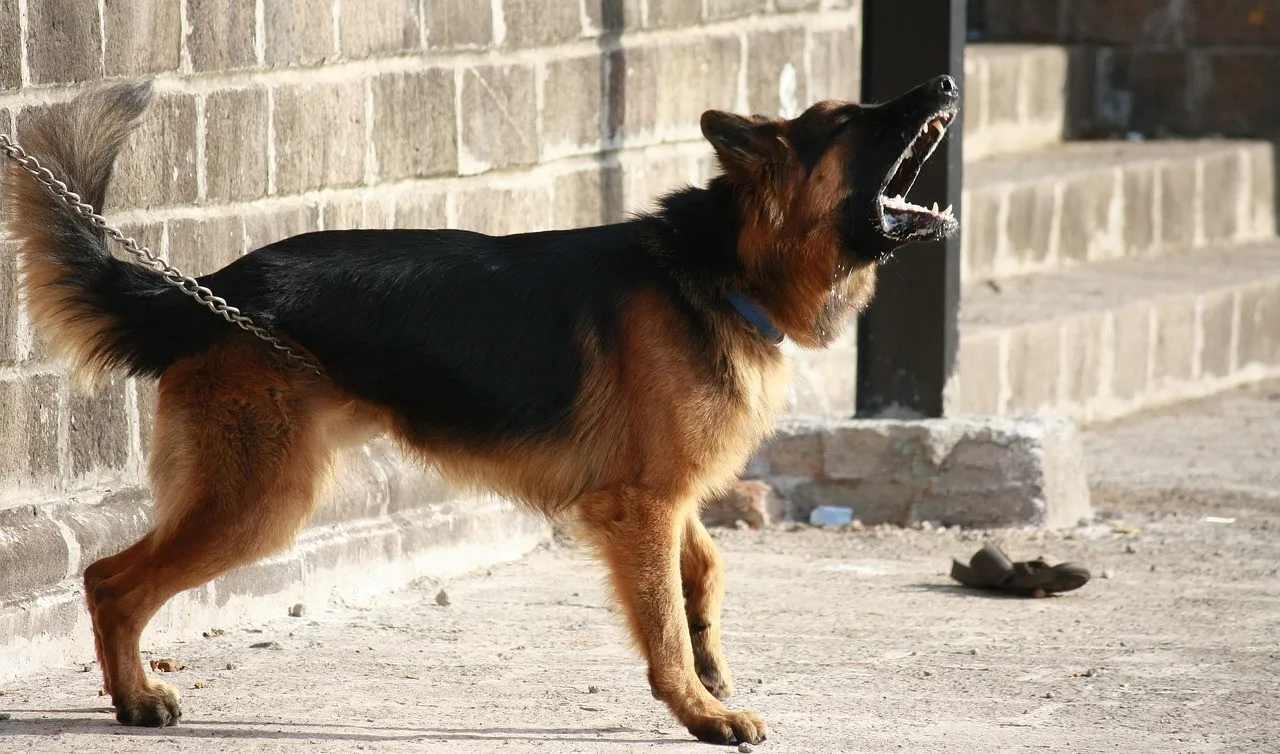
Animals can behave unpredictably and cause damage, even when their owner tries to keep them under control. For this reason, the law provides that the possessor of an animal is liable for the damage caused by the animal. This means that if a dog bites someone, a horse bolts and injures a passer-by, or a cow breaks out and causes a traffic accident, the owner is responsible for the damage. The principle behind this liability is that the possessor bears the risks that come with keeping animals. This prevents victims from being left with the damage and encourages owners to take sufficient precautions, such as keeping dogs on a lead and properly fencing off fields.
More information about liability for animals (Art. 6:179 BW)Liability of motorised road users for damage to more vulnerable road users
In traffic, a special form of strict liability applies to drivers of motor vehicles in relation to more vulnerable road users, such as cyclists and pedestrians. This means that if a motorist hits a cyclist or pedestrian, they are liable for the damage in almost all cases. Only in exceptional situations can the driver escape liability. These rules are intended to give vulnerable road users extra protection and to encourage motorists to drive carefully. After all, a cyclist or pedestrian has less protection than a motorist and often suffers serious injuries in an accident. It also underlines the importance of good car insurance.
More information about traffic liabilityStrict liability and compensation
When someone suffers damage because of a situation in which strict liability applies, he or she can claim compensation from the liable party. Because there does not have to be any fault or blameworthiness, this process is often simpler than with fault-based liability. Even so, the injured party still has to show that certain requirements have been met.
- Establishing which strict liability applies
The first step is to check whether the damage occurred in a situation in which strict liability applies. This may involve, for example, damage caused by an animal, a defective structure or an employee who made a mistake while working. The relevant statutory provisions, such as Article 6:179 BW (liability for animals) or Article 6:170 BW (employer’s liability), determine whether a certain situation falls under strict liability. If there is no statutory basis, strict liability cannot be relied on. Fault-based liability may then offer a solution.
- Proving the damage
Next, the injured party must show that damage has actually been suffered. This can be material damage, such as medical costs or damage to property, as well as non-material damage, such as pain and suffering. The damage must be concrete and demonstrable. A vague claim without evidence will not be accepted. That is why it is important to gather evidence, such as medical reports, repair invoices or witness statements.
- Proving the causal link
There must be a causal link between the situation that gives rise to strict liability and the damage suffered. This means that the damage must be the direct result of, for example, a defective object, a hazardous substance or a mistake by an employee. If the link is too far-fetched or if other factors played a bigger role, the claim may be rejected. The principle is that it must be reasonably possible to attribute the damage to the liable party.
- Holding the liable party responsible
The injured party must first formally hold the party that is responsible on the basis of strict liability liable. This is done by means of a letter holding them liable (aansprakelijkstelling), in which the damage is explained and a request is made to pay the compensation. At this stage, the liable party can decide to pay for the damage voluntarily, propose a settlement or dispute liability.
To the sample letters - Submitting a damage claim to an insurer
In many cases, the liable party is insured, for example through liability insurance or employer’s insurance. The damage claim can then be submitted directly to the insurer. Insurers use their own assessment criteria and may ask for additional evidence before they pay compensation. The advantage of this is that the injured party receives compensation for their damage more quickly and does not have to go to court.
- Taking legal action if the claim is rejected
If the liable party or the insurer refuses to pay for the damage, the injured party can take legal action. This often starts with out-of-court negotiations, possibly with the help of a lawyer or a legal expenses insurer. If necessary, court proceedings can be started, in which the court gives a binding ruling on liability and the amount of compensation.
Calling in the legal expenses insurer
Strict liability and insurance
Because strict liability means that a person or organisation is liable for damage without fault playing a role, the financial consequences of an accident can be considerable. Fortunately, most forms of strict liability are covered by liability insurance. For private individuals, personal liability insurance (AVP) provides cover for strict liability, for example if a child causes damage (Art. 6:169 BW) or if a pet injures someone (Art. 6:179 BW). For motor vehicles, there is third-party liability insurance (WA), which is compulsory and provides cover for traffic liability. Employers can protect themselves against employer’s liability (Art. 6:170 BW) with business liability insurance (AVB), while businesses often have insurance for damage caused by defective structures or hazardous substances. Thanks to this insurance, risks become manageable and damage claims can be handled more efficiently.
Limitation of rights of recourse for insurers and other risk bearers when strict liability applies (Art. 6:197 BW)
When strict liability applies, this can have consequences for the rights of recourse of insurers and other risk bearers. Recourse means that an insurer that pays for the damage then tries to recover it from the liable party. This is only possible in certain situations. In some cases, the law also limits this option, for example to prevent the liable party from being burdened disproportionately. The legislator has, for example, provided in Article 6:197 BW that recourse is not possible in certain cases, to ensure a fair distribution of burdens within liability law.
Read also: Liability for adults.
Frequently asked questions about strict liability
Strict liability is an important part of liability law, but it is certainly not the simplest part. When does strict liability apply? Can a private individual also have to deal with it? And what about situations in which several parties seem to be liable? In this FAQ, we answer some frequently asked questions about strict liability.
Does strict liability only apply to private individuals or also to businesses?
No, strict liability applies to private individuals as well as businesses. Private individuals can, for example, be liable for damage caused by their children or pets, while businesses can be liable for damage caused by defective products, structures or employees. Employers, manufacturers and road authorities are regularly held liable on the basis of strict liability.
Can force majeure be invoked in the case of strict liability?
With strict liability, fault plays no role, which means that force majeure or ignorance are usually not valid defences either. The owner of an animal, for example, remains liable even if they could not have foreseen that their dog would bite someone. Only in exceptional situations, such as extreme forces of nature, can force majeure play a role after all.
Can there be shared strict liability?
Yes, in some cases several parties can be liable at the same time on the basis of strict liability. In such situations, the obligation to pay compensation can be divided between these parties.
How does strict liability differ from product liability?
Product liability is a specific form of strict liability that relates to defective products. Under the law, a manufacturer can be held liable for damage caused by a defective product, without the consumer having to prove that the manufacturer was negligent. This is a stricter form of liability intended to protect consumers.
Can someone be held liable for damage caused by their property, even if they are not using it?
Yes, the possessor of an object or structure can be liable for damage, even if they are not actively using it. This applies, for example, to a house that is empty, but from which a loose roof tile causes damage. The owner remains responsible for the maintenance and safety of their property, even if they are not there themselves.
How does strict liability relate to liability in sport and play?
In sport and play, there is a higher threshold for liability. Participants accept a certain degree of risk, which means that not all damage automatically leads to liability. Even so, there may be strict liability, for example if a sports facility is defective.
Are the rules on strict liability the same all over the world?
No, the rules on strict liability differ from country to country. Some countries apply stricter forms of strict liability, while other legal systems give a greater role to fault and blameworthiness. Within the European Union, there are harmonised rules for a number of very specific forms of liability, such as product liability, but even then there are still national differences in interpretation and application.