Buildings and other structures always carry a risk. A building can collapse, for example, or flying roof tiles can damage cars. There is also the risk that others cause damage to a building, such as the neighbours' children playing a game of football or tennis. It is good to know who is liable in such cases for damage to buildings or caused by buildings. This page describes the situation in the Netherlands.
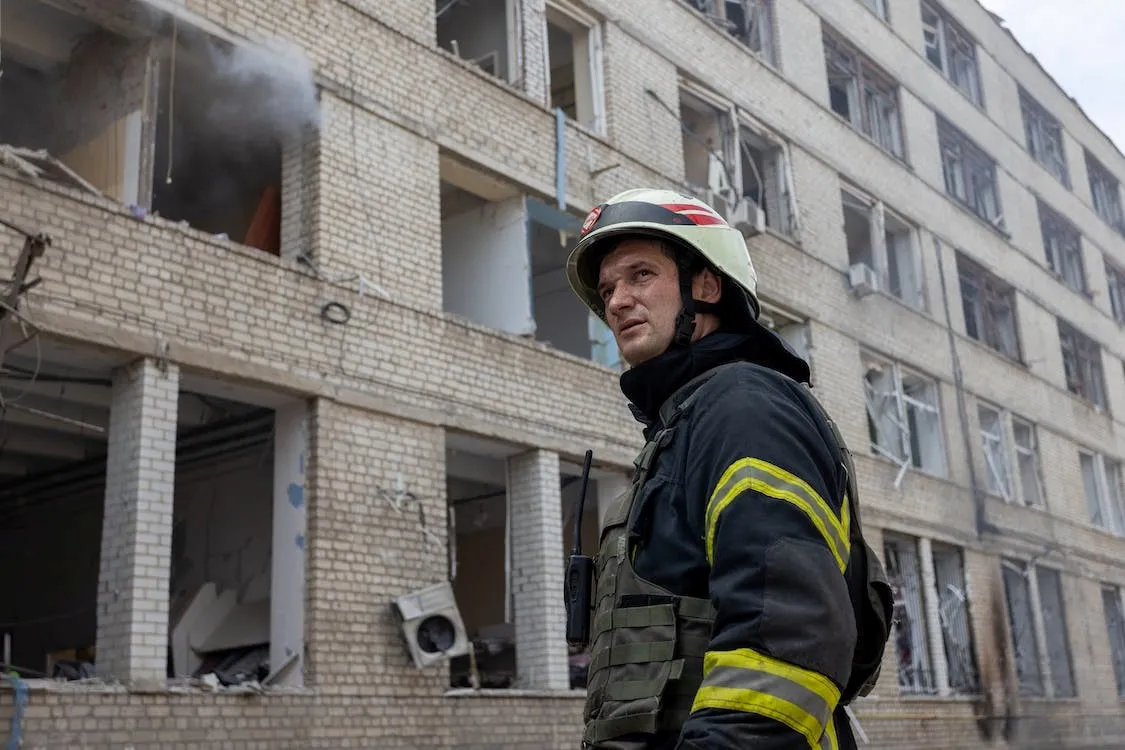
Buildings and fault-based liability
Fault-based liability means that someone can be held liable for damage caused by a mistake or negligence. A tenant of a building, for example, can be held liable if they have not maintained the building properly and damage has occurred as a result. This form of liability is separate from strict liability, which rests on the mere possession of something (such as a building or an animal) and does not require any fault. Below, a number of situations are discussed that clarify fault-based liability.
Liability of the tenant for damage to a building
When a tenant takes a building into use, they can be held responsible for damage that results from their actions or omissions within the rented property. This falls under fault-based liability, where the tenant is liable if the damage is the result of a mistake or negligence on their part. This also means that if the tenant carries out insufficient maintenance and the building is damaged, the tenant must compensate the landlord for that damage. This fault-based liability can also apply towards other parties. In the case of a water leak, for example, the downstairs neighbours can also suffer water damage. If the tenant knew about the leak and did not take action, the tenant may be required to compensate the downstairs neighbours for their damage. The tenant will also have to compensate the landlord for the damage to the rented property.
Liability of contractors and architects
Fault-based liability does not only extend to owners and tenants of buildings, but can also apply to contractors, painters and other parties carrying out work on a building. This form of liability means that when damage occurs as a result of a mistake in carrying out their work, they can be held responsible for it. If a contractor causes defects or unsafe situations during the construction or renovation of a building through negligence or a mistake in the work, they can be held liable for any resulting damage. An architect who has made a mistake can also be held liable on the basis of that mistake.
Fault-based liability and fire damage
When a fire starts through negligence or a mistake, such as failing to comply with fire safety standards or carelessness when carrying out work that may pose a fire hazard, the party responsible for the fire can be held liable for the fire damage. This can have consequences for, among others, the owner of the building, a tenant, a contractor or even third parties who contribute to the fire starting through their actions (or omissions). Establishing fault-based liability usually requires an investigation into the cause of the fire and the circumstances in which it started.
Fault-based liability and glass damage
In the case of glass damage to a building, fault-based liability also plays an important role. If the damage to glass is the result of a mistake, for example when the neighbours' children kick a ball over the fence and the ball breaks a window, the party responsible for that mistake can be held liable. In this example, it is possible to hold the parents liable. The parents' personal liability insurance (AVP) will then pay for the glass damage. A contractor or a tenant who causes glass damage can also be held liable, for example. This requires proving the mistake (or negligence) that led to the damage.
Strict liability for defective buildings
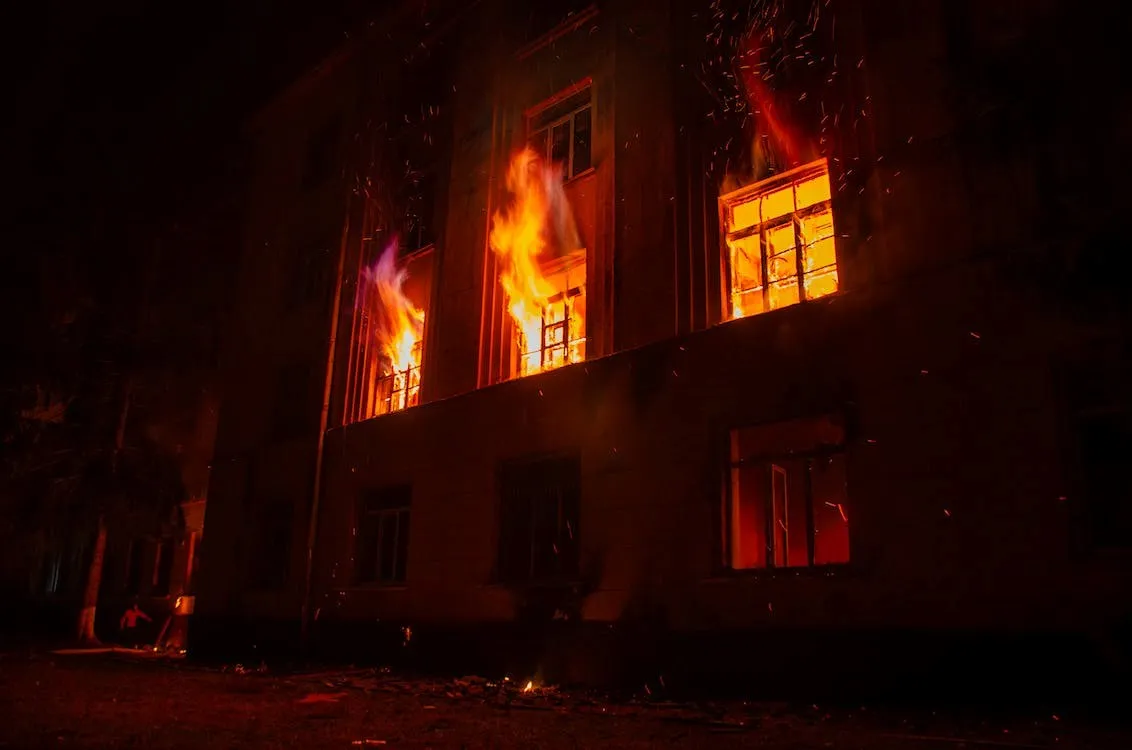
Besides fault-based liability, which is a general rule in liability law, there is also strict liability for damage caused by a defect in or on a building or structure. This strict liability falls on the possessor of the building and follows from Article 6:174 of the Dutch Civil Code (Burgerlijk Wetboek, BW). With fault-based liability, it must always be shown that the liable party made a mistake or was negligent. In the case of fire damage, for example, it must be shown who started the fire. This can sometimes be very difficult to prove. With strict liability, such a fault does not need to be shown. The requirements as set out in the Civil Code must, however, be met. These legal requirements are discussed below.
There is a building or structure
Strict liability under Article 6:174 BW first of all requires that there is a building or structure (opstal). A building or structure is a construction placed on the ground by a person. This is a very broad concept. It covers not only a house, for example, but also an office building, a shed, a fence, a path or a road. A characteristic of a building or structure is that it cannot be removed without damage. Temporary works that are removed afterwards, such as scaffolding or a prop, do not fall under the definition of a building or structure. So in the case of damage caused by scaffolding, strict liability will not apply. There may, however, still be fault-based liability.
There is a defect
It is not enough that there is damage caused by a building or structure. The Civil Code also states that the building or structure must be defective. This means that it does not meet the requirements that may be expected of it in the specific circumstances, and that this poses a danger to other people or property. This has to be assessed case by case.
In doing so, account is first taken of the preventive measures that may be expected to be taken. The owner of a business, for example, may be expected to take fire protection measures if flammable materials are used. On the other hand, we do not expect the possessor of a house to install fire-resistant insulation and fire-retardant doors simply because they occasionally use a deep fryer. The possessor of a house may, however, be expected to have something done about a visibly poorly maintained roof with loose roof tiles.
Secondly, account is taken of statutory regulations. If, for example, statutory building regulations or statutory fire safety regulations apply to the building, the possessor may be expected to comply with them. A breach of these regulations therefore constitutes a defect, which can result in strict liability.
Note that in theory no fault needs to be shown for strict liability, but that in practice something must still be attributable to the possessor of the building, for example a failure to take preventive measures or a failure to comply with statutory regulations. It is not necessary, however, to show that the possessor was aware of this, which (sometimes) does have to be shown for fault-based liability.
The defect must pose a danger
The Civil Code requires not only that the building or structure is defective, but also that this defect poses a danger and that this danger materialises. It is not required that the possessor is aware of the danger this may pose. Nor is it required that the possessor was aware of the defective condition (see above). The mere presence of the defect and the dangerous condition is sufficient.
Damage must occur
It is not enough that there is simply a dangerous situation. According to the article of law mentioned, this danger must also actually have materialised. This is a fairly logical requirement, because to obtain compensation there must always be damage. It is not possible to obtain compensation if no damage has occurred.
The "unless" clause
Strict liability for defective buildings and structures is not absolute and can lapse. The law contains an "unless" clause. In practice, this means that there is a ground of justification for the possessor, who is then not liable after all. This applies, among other things, in the case of force majeure and self-defence. The burden of proof does lie with the possessor: they are liable unless they can show that the condition of the "unless" clause has been met.
Suppose, for example, that you have always maintained your roof properly and suddenly, due to stormy weather, a roof tile flies off the roof and lands on the head of a passer-by. There is then no fault, so fault-based liability does not come into play. Because there is a building, a defect, a danger and damage, the passer-by can rely on strict liability. You can, however, invoke force majeure and put forward the "unless" clause.
Liability of the possessor
The strict liability mentioned rests on the possessor. This is the party that possesses the building or structure. Contrary to what people sometimes think, this is not a synonym for owner. Someone who has unlawfully taken possession of a piece of land without the owner's permission, for example, can be its possessor and face strict liability.
The possessor can also be a public body, for example. It is the government, as possessor of the roads, that must maintain the road. The liability for buildings and structures of the road authority was confirmed by the Supreme Court of the Netherlands (Hoge Raad) in 2014 (HR 4 April 2014, ECLI:NL:HR:2014:831). The possessor can also be a legal entity. Think, for example, of a water park where part of the ceiling comes down because stainless steel was used that is known to be affected by chlorine fumes. The legal entity that owns the swimming pool can be held liable in this case.
With apartment complexes, it must also always be carefully checked who the possessor is. This may be the individual owner or the apartment owners jointly, who together form the owners' association (VvE). With a broken water pipe, for example, it must be checked whether this water pipe serves one apartment (the possessor of that apartment is the possessor and is liable) or the building (the apartment owners jointly are the possessors and are liable). If the apartment owners jointly are liable, there are several possessors. A characteristic of this situation is that all possessors are then jointly and severally liable (Article 6:180(1) BW). This means that the victim can claim the full damage from each co-possessor, after which they have to settle matters among themselves.
Compensation for damage to or caused by buildings
In the case of damage to or caused by buildings and structures, the victim is in many cases entitled to compensation. The calculation of this compensation depends on various factors, including the nature and extent of the damage. In essence, the compensation should put the injured party as far as possible in the position they would have been in if the damage had not occurred. This can include both material damage (such as repair costs and loss of value) and non-material damage (such as pain and suffering).
Burden of proof for damage to or caused by buildings
In theory, it is always important for the victim to show that there is a causal link between the damage and the act or omission of the liable party. This means that the victim must prove that the damage is the direct result of the other party's mistake or negligence. However, this is only the case when invoking fault-based liability. If there is strict liability, the victim must show that the requirements set out earlier have been met (building or structure, defect, danger and materialisation of that danger). The possessor may then still try to invoke the "unless" clause. The burden of proof for the "unless" clause lies with the possessor.
In addition, the victim must show the extent of the damage, for example by means of invoices, quotes and independent expert reports. Calculating the compensation can be complex and depends on the specific circumstances of the case. Legal assistance can be essential in such situations to obtain adequate compensation. For this, you may be able to rely on legal expenses insurance.
Insurance and damage to or caused by buildings
If you are held liable for damage to or caused by buildings and structures, it is a good idea to check whether there is an insurance policy that covers this. For damage to buildings, personal liability insurance (AVP) plays an important role. This insurance covers the liability of private individuals for damage they cause to others or to other people's property, including damage to other people's buildings. Buildings insurance, on the other hand, is intended for damage to the building itself. This insurance covers the cost of repairs in the event of damage to the building. Other insurance can also be relevant, such as third-party liability insurance (WA). Third-party liability insurance (WA) will pay for the damage if you damage a building with a car, for example a house.
Frequently asked questions about liability for buildings
Possessors and owners would do well to be familiar with the liability rules for buildings and structures. Fault-based liability and strict liability, among others, are two complex concepts that often raise questions. The most important questions about liability for buildings and structures are answered below.
What is strict liability for buildings and structures?
Strict liability for buildings and structures means that the possessor of a building or structure can be liable for damage caused by a defect in it. This means that if a building or construction does not meet safety requirements and causes damage as a result, the possessor can be held responsible.
How is the liability of the owner of a building regulated?
The liability of a building owner can fall under both fault-based liability and strict liability. With fault-based liability, there must be a mistake or negligence on the part of the owner that led to damage. With strict liability, the owner is held liable for damage caused by defects in the building, even if no mistake was made.
How is liability for damage caused by buildings regulated?
Damage caused by buildings and structures falls under strict liability. This means that the possessor of a building or structure can be held liable for damage caused by dangerous defects in the building, regardless of whether there is any personal fault. This liability is not absolute, however. There are situations in which the possessor can invoke force majeure or other grounds of justification.
Which article of law covers liability for buildings and structures?
Liability for buildings and structures is regulated in Article 6:174 of the Dutch Civil Code. This article provides that the possessor of a defective building or structure is liable for damage caused by a dangerous defect, unless there is force majeure, for example. It makes no difference whether or not the possessor was aware of the defect.
Can a tenant be liable for damage caused by buildings?
Yes, a tenant can be liable for damage caused by buildings and structures. This does fall under fault-based liability and not under strict liability, because the tenant is not the possessor. This means that the tenant is responsible for damage resulting from their own mistake or negligence, such as insufficient maintenance of the rented property or failing to report a dangerous electrical problem to the landlord.