If you own a scooter, it is sensible and mandatory to insure it. That way you can count on financial help if you are involved in a scooter accident or if your scooter is stolen. What exactly does scooter insurance cost, and what are the options for insuring your scooter? We answer these questions and also discuss liability in scooter accidents. That way you can take out insurance that suits you, well informed. This page describes the situation in the Netherlands.
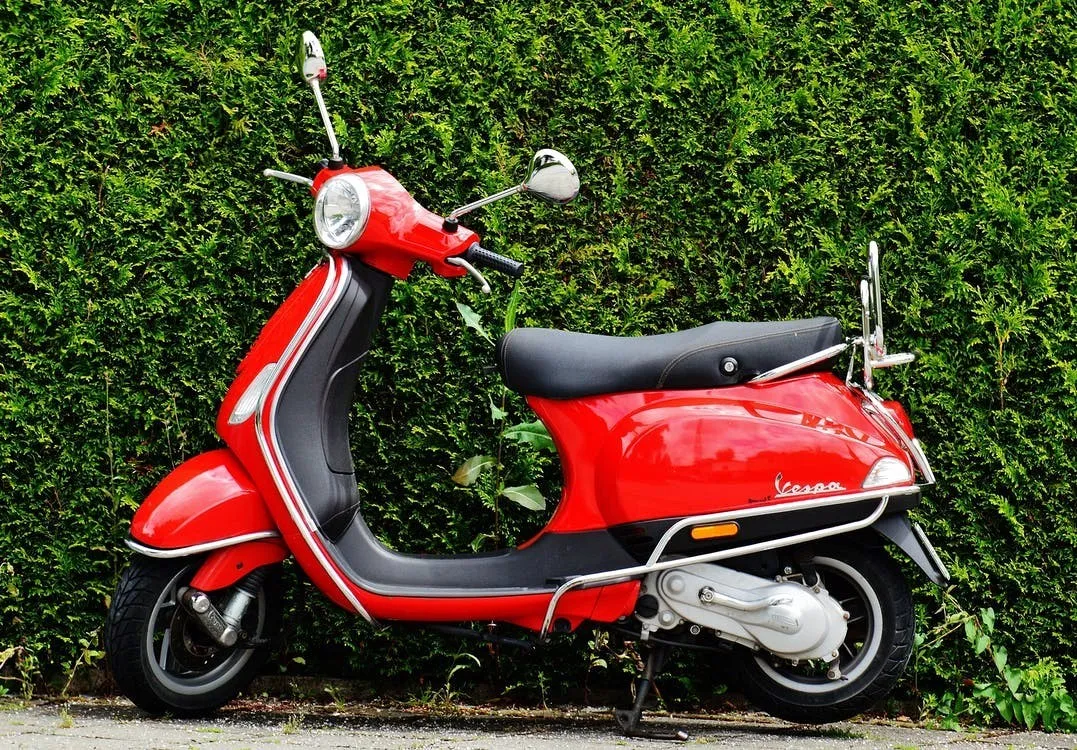
Scooter insurance for vehicles with a blue or yellow licence plate
Scooter insurance is insurance for people who own a scooter. As with any means of transport, it is sensible to insure your scooter. That way you can count on financial help, for example if you hit a pedestrian and are liable. There are different types of scooter insurance, and with most insurers it is also possible to add extra cover to your scooter insurance. Of course, this affects the cost of the scooter insurance. Let it be clear: there are many things to consider if you are planning to insure your scooter.
Different types of scooter insurance
When taking out scooter insurance, you can choose from different types of cover. You can choose third-party liability insurance (WA) for scooters, WA+ insurance for scooters (limited casco) or all-risk insurance for scooters. There are big differences between these three types of scooter insurance. Some knowledge of them is important, because only then can you decide which scooter insurance suits you best. Only third-party liability insurance is mandatory when you buy a scooter or have the registration transferred.
Third-party liability insurance (WA) for scooters
An MOT (APK) inspection is not mandatory for scooters, but third-party liability insurance is. Third-party liability insurance for scooters is mandatory if you want to ride a scooter on Dutch public roads or park it on a public road. This insurance, also called statutory liability insurance (wettelijke aansprakelijkheidsverzekering), covers the damage you cause to others with your scooter. This may be, for example, damage to another scooter or to other people's property, such as a parked car.
Third-party liability insurance for scooters is an important insurance, because after a scooter accident you may have to pay very high damages. To be able to guarantee compensation for victims, it is a legal requirement to take out third-party liability insurance if you want to ride a scooter on public roads. If you do not have third-party liability insurance, you can get a fine.
WA+ insurance for scooters
WA+ insurance for scooters (limited casco, also "third party, fire and theft plus") is an extension of the mandatory third-party liability insurance for scooters. In addition to the damage you cause to others, this insurance also covers certain types of damage to your own scooter. This may be, for example, damage due to theft or storm damage.
So the difference from third-party liability insurance for scooters is that with WA+ insurance you are also insured for certain types of damage to your own scooter, but this cover for your own damage does not go as far as all-risk insurance for scooters. Like all-risk insurance for scooters, WA+ insurance for scooters is not mandatory; only third-party liability insurance for scooters is mandatory.
All-risk insurance for scooters
All-risk insurance for scooters (fully comprehensive) is the most extensive scooter insurance you can take out. In addition to the damage you cause to others (WA) and the damage to your own scooter from fire and theft (WA+), this insurance also covers damage to your own scooter in an accident that you caused. Sometimes the insurer also adds extra cover, for example for accessories or luggage.
All-risk insurance does offer the most financial security, but it is also the most expensive. It is above all a good scooter insurance for anyone who has just bought a (relatively expensive) scooter, for example to meet the increasingly strict requirements that municipalities set in terms of emission classes. Once the scooter gets a little older, people often switch to WA+ insurance or to third-party liability insurance for scooters.
Additional scooter insurance
In addition to the basic insurance for your scooter, such as third-party liability insurance for scooters or all-risk insurance for scooters, you can also choose additional insurance. This additional insurance offers extra security on top of the basic insurance. An example is breakdown assistance cover, which gives you help if you break down on the road.
Accident insurance
Accident insurance for scooters is additional insurance that focuses on the personal consequences of accidents, for example if you become permanently disabled or die. Accident insurance for scooters pays out an amount in the event of permanent disability. Exactly what you receive depends on the cover and the damage (degree of permanent disability or death). For an amputated little finger, for example, you will receive less than if you lose a leg. With some insurers, the accident insurance also applies to the people riding on the scooter.
All about accident insurance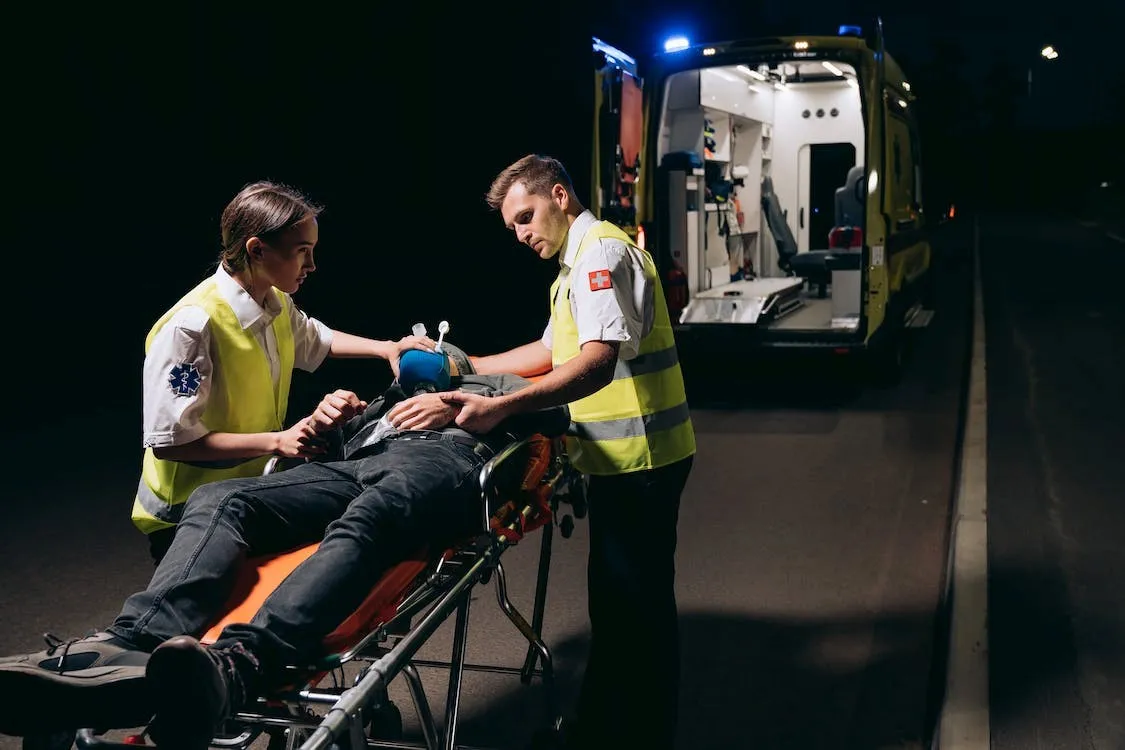
Breakdown assistance for scooters
Breakdown assistance insurance for scooters is additional insurance that focuses on fixing breakdowns on the road. If your scooter breaks down, for example because the engine stalls or because you have a flat tyre, breakdown assistance insurance for scooters can make sure you can quickly get going again. Think, for example, of help with changing a flat tyre, starting the engine if it stalls, or transporting your scooter to a garage if there is a major problem. Exactly how much help you get and in which area you get help, for example only in the Netherlands or also abroad, depends on the terms of your insurance. You can read this in the policy conditions.
Legal assistance
Legal assistance or legal expenses insurance for scooters is additional insurance that focuses on legal help with legal disputes or damage claims. For example, you get legal help with drafting a letter of defence, or a lawyer will defend your case in court. Exactly how much help you get depends on the terms of your legal expenses insurance. It is therefore important to consider carefully which cover best suits your situation and to read the terms of the legal expenses insurance carefully.
All about legal expenses insurance
Costs of scooter insurance
Scooter insurance is generally cheaper than car insurance. Third-party liability insurance for scooters costs on average €15 to €20 per month. All-risk insurance for scooters costs on average €30 to €50 per month. The price of scooter insurance depends on various factors.
- The type of scooter
- The value of the scooter
- The age of the scooter
- The age and riding behaviour of the insured person
- The type of insurance
- The term of the insurance
- Any commercial discounts
- Any additional scooter insurance
- The excess in the event of an accident
In addition, every insurer is free to set its own rates. Comparing scooter insurance can help you save money.
Comparing scooter insurance
Comparing scooter insurance is important because it can help you save money. In addition, the exact cover can sometimes differ greatly. By comparing different scooter insurance policies with each other, you can check which scooter insurance suits you best and at the same time has the lowest premium. When comparing scooter insurance, it is advisable to take into account the cover, the price and the type of insurance. Since the mandatory helmet rule for all scooters, it is also important to check to what extent the helmet and other accessories are covered or not.
You can compare scooter insurance yourself by requesting quotes from different insurers, or you can use a comparison site for scooter insurance. If you use a comparison site for scooter insurance, check carefully which insurers are and are not being compared. Sometimes only a limited number of scooter insurers are included in the comparison, so the result does not give a complete picture.
Saving on scooter insurance
Scooter insurance takes a bite out of your available budget every month. That is why it can be worth saving on scooter insurance. Even if the saving is only €5 a month, over a year it still adds up to €60. You can already do something nice with that. There are different ways to save on scooter insurance.
- Comparing scooter insurance
- Choosing lower cover (e.g. WA+ instead of all-risk)
- Staying claim-free
- Choosing a higher excess
- Paying for a full year at once
- Taking out several insurance policies with one insurer in exchange for a package discount
Enquiries with the best-known scooter insurers have shown that a winter break is unfortunately not possible, something that is possible with motorcycle insurance, for example. With motorcycle insurance this is a popular way to save. Temporarily cancelling your scooter insurance is a lot of hassle, because you then also have to have the scooter's registration suspended with the Netherlands Vehicle Authority (RDW). Otherwise you are uninsured and can get a fine.
Insurers that offer scooter insurance
There are various insurers with which you can take out scooter insurance. It is advisable to request quotes from different scooter insurers and to compare the cover. Only then can you choose scooter insurance that fits your budget and offers the right cover. Bear in mind that some insurers set extra requirements, for example regarding the use of a scooter lock. Also be aware that all insurers require a scooter to meet the legal requirements. After a WOK notice (a "Wachten op Keuren" or awaiting inspection status), you are no longer insured. Riding a scooter with a WOK status is a criminal offence.
Most Dutch insurers offer their website and policy documents in Dutch only.
- A.s.r.
- ANWB
- Centraal Beheer
- InShared
- Unigarant
- Univé
- ZLM Verzekeringen
- Interpolis
- Klaverblad
Some well-known insurers do not offer scooter insurance. OHRA, among others, does not offer insurance for scooters or light mopeds (snorfiets). However, anyone with OHRA home contents insurance does have cover if the scooter is stolen from the home or the shed. Other insurers do offer scooter insurance, but under a different name. This is the case, for example, for Klaverblad, which calls it moped insurance (brommerverzekering). Scooter insurance can also be taken out through an intermediary. Aon, for example, describes itself as an insurance broker (verzekeringsmakelaar) and is therefore not an insurer.
If a scooter causes an accident and flees, the Motor Insurers' Guarantee Fund (Waarborgfonds Motorverkeer) may award compensation to the victim.
Insuring a delivery scooter
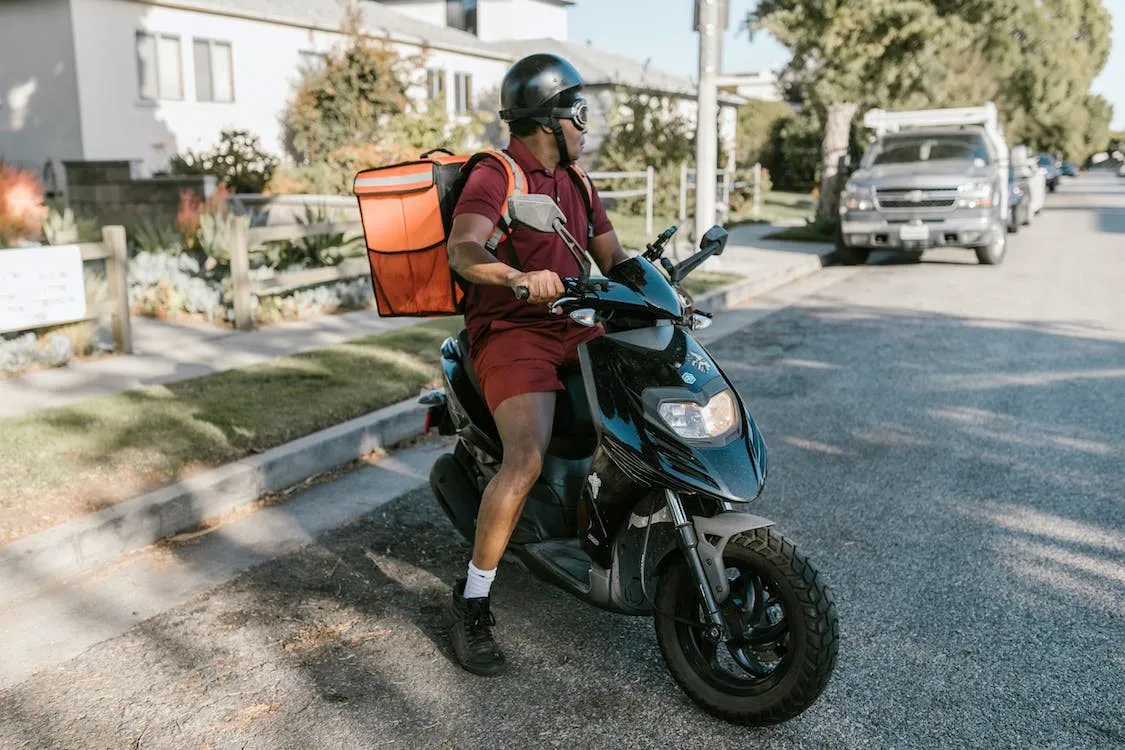
Delivery scooter insurance is insurance aimed specifically at delivery scooters that are used professionally, for example for delivering meals or parcels. Because a delivery scooter is used professionally, standard scooter insurance is not enough. The policy conditions often include exclusions: situations in which private scooter insurance does not apply. In addition to an exclusion for tuned scooters, a scooter used professionally is also often excluded. This means that you will not receive any compensation if, for example, your delivery scooter is damaged while delivering, or if you cause an accident during a delivery and are held liable.
That is why it is important to take out specific delivery scooter insurance if you deliver professionally with your scooter. Many insurers do not want to insure a delivery scooter, but there are exceptions. For example, according to its own statement, the intermediary Alpina compares various insurers and offers delivery moped insurance (bezorgbrommerverzekering). Bear in mind that insuring a delivery scooter is more expensive than insuring a scooter for private use.
Liability and compensation in different types of scooter accidents
When a scooter is involved in an accident, the people riding it often suffer quite a few injuries. Just like, for example, a pedestrian who is hit. After all, a scooter can reach quite a speed. The protection of traditional scooter clothing cannot be compared with the expensive suits that motorcyclists wear, and certainly not with the airbags found in cars. Moreover, a scooter rider cannot count on extra legal protection.
Not a protected road user
Liability law distinguishes between vulnerable and strong road users. The most important distinguishing factor is the engine: a bicycle has no engine and is therefore a vulnerable road user that is protected by liability law. A car does have an engine and is a strong road user that is not protected by liability law.
Although e-bikes are in most cases regarded as vulnerable road users, there are exceptions. With a scooter, however, there is no exception and the rider is never regarded as a protected road user. This means that liability law is not favourable to scooter riders, and that is why third-party liability insurance for a scooter is very important (and mandatory). The same applies to an electric scooter, which is also regarded as a strong road user.
Collision with a scooter and liability
Something can always happen when you ride your scooter. For example, you could be involved in a collision. In a collision with a scooter, it is important to know how liability is arranged and what you need to do or arrange. Or what you had better not do.
In some cases the owner of the scooter can also be held liable, for example if they lent the scooter to the rider and it was clear that the rider was not fit to ride the scooter. It is important to remember that liability is always assessed on the basis of the specific circumstances of the accident.
Collision between a scooter and a cyclist or pedestrian
A scooter is relatively unprotected. Even with a helmet and protective clothing, a scooter rider will have less protection in an accident than the driver of a car, van or lorry. Nevertheless, legally a scooter is on exactly the same level as other motorised road users. A scooter is, after all, simply a strong road user too.
In the relationship between a scooter and a cyclist or a pedestrian, a scooter must therefore be treated just like the other motorised road users. This means that:
- The scooter rider is always at least 50% liable in a collision with a cyclist or pedestrian aged 14 or over.
- The scooter rider is always at least 100% liable in a collision with a cyclist or pedestrian under the age of 14.
This means that the scooter rider always has to pay for (part of) the damage of cyclists or pedestrians. This is also the case when a cyclist rides into the scooter and the scooter rider has made no mistake. The reasoning is that motorised road users must always be alert to mistakes by non-motorised road users. Only if the scooter rider can prove force majeure (overmacht) can they escape liability.
Collision between a scooter and an e-bike or speed pedelec
In principle, an e-bike is treated the same as an ordinary bicycle, so the same liability rules apply as in a collision with a standard bicycle or a pedestrian. But a speed pedelec, an e-bike that can reach higher speeds, is regarded as a strong road user. This has consequences for liability in an accident and for the mandatory insurance that must be taken out for it.
Liability in an accident with an e-bikeCollision between a scooter and another motorised road user
In a collision between a scooter and other motorised road users, such as another scooter or a lorry, the standard liability rules apply. The party that made a mistake must pay for the damage. If the lorry driver and the scooter rider both contributed 50% to the accident, they will each have to pay 50% of the other's damage. In principle, this is also the case when the scooter rider's personal injury is much greater than the lorry driver's damage.
When determining liability, however, a court can always apply an equity correction (billijkheidscorrectie) and adjust the apportionment based on causation. This has happened before, for example, when the apportionment based on causation pointed to 50/50. In that case the scooter rider was a self-employed person (zzp'er) who had not insured himself against a loss of earning capacity, who had limited assets of his own, who could not work for a long time and who was left with serious physical consequences of the accident. In the end the court decided to hold the driver of the vehicle 60% liable after all, instead of the 50% that would follow from the apportionment based on causation.
A scooter rider who hits a child
When a scooter rider hits a child, they can be held liable for the damage the child has suffered. This can mean that the rider is required to pay financial compensation to the child. The rider's liability may arise, for example, from the fact that they were not paying enough attention or were going too fast. A young vulnerable road user, under the age of fourteen, is in principle always entitled to compensation of 100% of the damage.
Single-vehicle accident with a scooter
In an accident involving only one vehicle, such as a single-vehicle scooter accident, it is in principle assumed that the rider is responsible for the accident. As a result, the third-party liability insurance will not pay for the damage. However, other insurance, such as health insurance, may still pay out. Taking out all-risk cover remains useful in any case.
When a scooter passenger is injured, the situation is different. The passenger may then hold the scooter rider liable, for example because the rider made a steering error or was going too fast. In that case the scooter rider's third-party liability insurance will pay for the passenger's damage. Here, too, there may be contributory negligence, for example because the passenger was riding on the scooter without a helmet.
Read also: Liability and compensation in different types of scooter accidents.
Scooter accident in which the scooter rider drives off
It happens quite often that a scooter rider flees after an accident. Scooter riders are often fairly young and can panic. What they do, however, is a criminal offence and is punished. If the identity of the fleeing scooter is not established, the victim cannot hold anyone liable. In that case it is possible to ask the Motor Insurers' Guarantee Fund (Waarborgfonds Motorverkeer) for compensation. This is also possible if the scooter rider is not insured, something that still happens far too often. To do so, follow the step-by-step plan below.
- Collect evidence

It is important to collect evidence immediately after the scooter accident. That means: taking photos of the damage, of any tyre marks and of the pieces that have fallen off the scooter. Also be sure to write down the details of witnesses.
- Report it to the police
Report the accident to the police (aangifte) immediately afterwards. This is necessary to be able to get compensation from the Motor Insurers' Guarantee Fund. A report can be made online via the website www.politie.nl/aangifte. Of course, you can also go to the police station in person.
Report it to the police - Submit a claim to the Motor Insurers' Guarantee Fund

Submitting a claim can be done entirely online, via the website waarborgfonds.vereende.nl. Bear in mind that there is an excess of €250 for material damage.
Submit a claim to the Waarborgfonds - Receive payment

The Motor Insurers' Guarantee Fund handles the rest of the file. They will contact the victim and make the necessary payments. If the identity of the scooter rider is established later, the fund can try to claim the amount paid from the scooter rider. The victim can also still claim any excess not covered by the fund from the scooter rider.
Compensation after a scooter accident
The rule remains that the actual damage is eligible for full compensation. This includes not only material damage, but also psychological damage, a loss of earning capacity, the loss of a school year and so on. So it is not only about the damage that arises during or immediately after the scooter accident, but also about all consequential damage. Even travel costs for a visit to the doctor are eligible for compensation, as are the costs of any legal assistance.
Of course, contributory negligence and the apportionment of liability must be taken into account. If, for example, there is 30% contributory negligence, the other driver's insurer only has to pay 70% of the scooter rider's damage.
The status of the victim also plays a role. In some cases the victim is automatically entitled to higher compensation because they are a vulnerable road user. This adjustment of the obligation to pay compensation is what we call the general equity correction. There are also situations in which a specific equity correction is applied.
| Victim | Scooter rider's obligation to pay |
|---|---|
| Pedestrian | At least 50% of the damage |
| Speed pedelec | Apportionment based on causation |
| Child < 14 years | At least 100% of the damage |
| Cyclist | At least 50% of the damage |
| E-bike | At least 50% of the damage |
| Car | Apportionment based on causation |
| Other scooter | Apportionment based on causation |
Frequently asked questions about scooter insurance and liability in an accident
Scooter insurance is there to protect you against the financial consequences of damage to your scooter or of liability for damage you cause to others with your scooter. The exact cover differs per scooter insurance policy. It is therefore important to know exactly what scooter insurance does and does not cover. We answer a number of frequently asked questions about scooter insurance and the liability of scooter riders.
Do I also build up no-claims years with scooter insurance?
Yes, you also build up no-claims years if you have insured a moped or a scooter. The more no-claims years you build up, the less you will pay for your scooter insurance. With most insurers, however, these no-claims years only apply to the scooter and you cannot transfer them to car insurance.
Is there an excess on scooter insurance?
Most scooter insurers apply an excess to scooter insurance, for example in the case of scooter theft. If the amount of the damage is higher than the excess, the insurer will pay the amount of the damage minus the excess.
What kind of lock do I need for my scooter?
The insurer can set its own requirements for the lock that the scooter must have. This is generally done when there is theft cover. For scooters this is usually an ART3 lock, the lock that the ART Foundation (Stichting ART) also recommends for scooters. Of course, you can always choose a better lock (ART4). There are even insurers that require such an ART4 lock, particularly in regions with a high risk of theft. So check with the insurer and make sure you use the right lock.
Can I take out casco insurance for a scooter?
It is indeed possible to take out casco insurance or all-risk insurance for scooters. The insurer will then also pay for damage in a single-vehicle accident or due to stormy weather. Preferably choose such all-risk scooter insurance. Then theft, for example, is also covered.
Can I take out passenger insurance for a scooter?
Yes, there are various insurers with which you can insure "occupants" (or rather, riders). The passenger insurance (inzittendenverzekering) then pays for the damage to the rider and the passenger. Bear in mind, however, that almost no passenger insurance pays for damage if the scooter rider is under the influence of alcohol, drugs or medication.
Can the parents of an underage scooter rider be liable?
Children may ride a scooter from the age of 16. Moreover, these young people cause a large number of accidents in the Netherlands. The parents can be liable for this, but it must then be proven that they did something unlawful. That will be the case if, to the extent that it was in their power, they did not stop their child from causing damage. Examples are children who ride a souped-up scooter. Yet parents who know nothing about the scooter, for example because the child is riding a friend's scooter, can still be liable. This is particularly the case for children whose parents are aware of behavioural problems: where special attention is required to prevent damage caused by their child. In practice, however, it is often not that easy to hold the parents liable on this basis. This must be assessed case by case. A personal injury specialist can advise you on this.
Can the school of an underage scooter rider be liable?
It can. Schools are required to take reasonable measures to protect others against the behaviour of their pupils at times when those pupils are under their supervision. What reasonable measures are depends, among other things, on the nature of the child (e.g. behavioural problems), the age of the child (in principle an older child is given more freedom than a younger child) and so on. In the case of Kayak v Turkey, it was ruled that the school's duty of supervision extends to the immediate surroundings of the school grounds.
Can the road authority be liable for a scooter accident?
In exceptional cases this can happen. The road authority is responsible for the construction and maintenance of Dutch roads and road equipment. So when the road authority has made a mistake, it makes sense that the road authority can be liable. Think, for example, of not making it sufficiently clear that a particular road is a slip road onto a motorway, after which a scooter rides onto that slip road and is hit there by a lorry. In practice, however, the road authority is not quickly held liable.