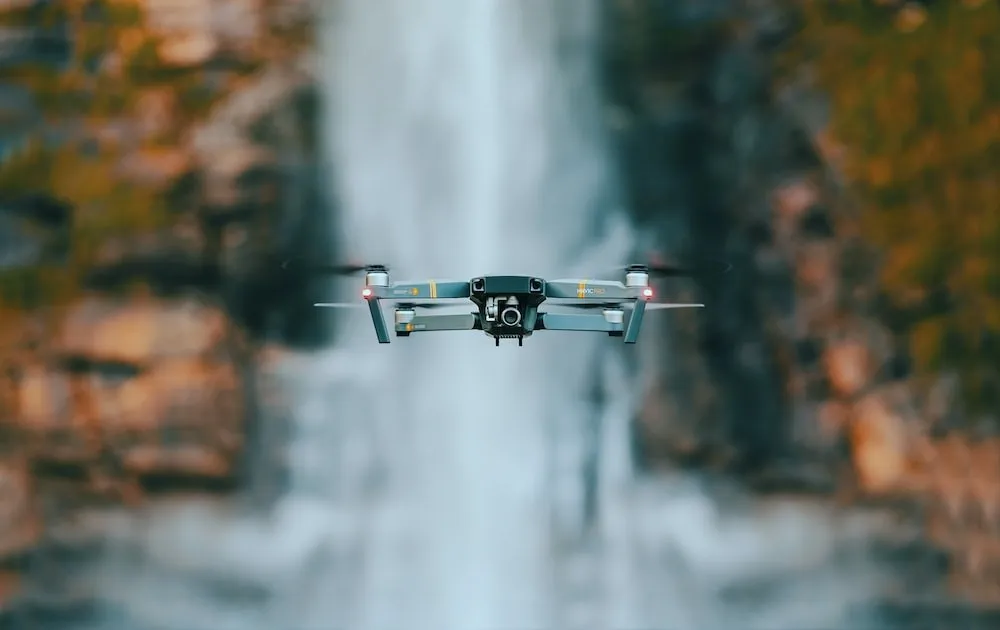
These days it is very trendy to take a drone on a trip. You can take the best holiday snaps with it and, for example, get to know nature in a completely different way. Still, it is not always wise to take a drone on a trip. Some countries ban it, and there are quite a few points to note that you cannot simply ignore. This page is written for drone users who live in the Netherlands.
Rules per country
You can take amazing footage with a drone almost anywhere in the world, but that does not mean it is also permitted. Every country simply has its own rules and restrictions that you need to take into account. These rules are not always easy to find. If in doubt, contact the country's embassy in the Netherlands. It is not possible to show all drone rules on this page. We have, however, included the drone rules of holiday destinations that are popular with Dutch travellers.
Please note: these rules only concern flying drones. Strict rules may also apply to taking photos and filming in public spaces, and these are not included here. In other words, it remains important to inform yourself properly.
Drone rules in Europe
In the past, every country in Europe had its own drone rules. That made things enormously complex. However, Europe is working towards a single market. That is why the drone rules have to be similar in all countries. Among other things, Europe introduced the drone pilot certificate and the associated exam. If you obtain the drone pilot certificate in the Netherlands, you may also fly your drone in the other European countries. However, restrictions apply in Europe too, and you cannot simply fly your drone anywhere.
The full European drone legislation
Drone rules in the United States
In the United States, the drone rules differ per state. There are, however, a number of basic federal rules. For example, you are required, even as a tourist, to register with the Federal Aviation Administration. You will then receive a registration number that you must attach to the outside of your drone. You may only use your drone for recreational purposes, and the drone must always remain within your line of sight.
Never fly over events, stadiums with spectators or groups of people, and never fly when you are under the influence of drugs or alcohol. Important: under the federal rules, flying a drone in the national parks is prohibited. The same applies in various state parks, but this depends on the rules of the state concerned.
Drone rules in Thailand
Flying a drone is legal in Thailand, but you do have to take the drone legislation in Thailand into account. For example, drones must be registered if they have a camera or weigh two kilograms or more. As a drone pilot, you must also always keep the drone in sight, and you may not fly too close to vehicles, people, structures or buildings. Drones may also not fly within a radius of nine kilometres of airports, and they may not fly higher than ninety metres.
In practice, the rules for drones with a camera are so strict that it is difficult for tourists to comply with them. Anyone caught flying a drone illegally in Thailand can be given a hefty fine and a prison sentence.
Drone rules in Indonesia
According to the Directorate General of Civil Aviation, Indonesia's national aviation authority, flying a drone in Indonesia is legal. It is, however, important to take the drone legislation in Indonesia into account. Under this Indonesian drone legislation, drones may not fly higher than 150 metres. In addition, it is only permitted to fly drones that weigh no more than 7 kilograms. You must keep a distance of at least fifteen kilometres from airfields, and you may not fly over crowds or densely populated areas.
Drones may also not be used at night in Indonesia, and it is not permitted to control a drone while you are in a moving vehicle. Finally, drone pilots must always maintain a direct line of sight to their drone. Be aware that the penalties for this are very severe, with fines of up to €66,000 and even prison sentences.
Drone rules in Morocco
Bringing drones into Morocco without an import licence is prohibited. On arrival in Morocco, customs will confiscate the drone. On payment of a fine and a storage fee, you will get the drone back when you leave.
Even if you do manage to smuggle a drone into the country illegally, it is still not a good idea to use the drone in Morocco. Drones are illegal there. Heavy fines and even prison sentences are possible. Moreover, in that case the drone is taken away permanently and forfeited. You will then not be able to get the drone back.
Drone rules in Egypt
In theory, drones are legal in Egypt, but only on condition that you have permission from the Civil Aviation Authority. In practice, it is virtually impossible for a tourist to obtain such permission. The penalties for violations are extremely severe. For example, in 2019 a Dutchman was detained after he had made recordings of Tahrir Square in Cairo with a drone. The man had unsuspectingly launched his drone from the roof terrace of his hotel. A hotel employee had seen this, and not long afterwards he was put in handcuffs by the Egyptian police.
Drone rules in Brazil
According to the Brazilian Civil Aviation Authority (ANAC), flying a drone is legal in Brazil, provided that you respect the Brazilian drone legislation. Among other things, this means that a pilot must be at least eighteen years old and that you may never operate more than one drone at the same time. You must also always maintain a visual line of sight with the drone. Furthermore, you may not fly over prisons, military facilities and other critical infrastructure. It is also not permitted to fly within thirty metres of buildings. Nor is it permitted to fly over people.
The applicable drone rules in Brazil depend on the weight of your drone, as is also the case in the Netherlands. Once a drone weighs more than 250 grams and is therefore not a mini drone, you must, for example, have liability insurance. You must also register the drone. Furthermore, these drones must keep a distance of at least thirty metres from people who are not involved in the flight.
Drone rules in Suriname
Suriname has very complex drone legislation that is highly fragmented. The conclusion, however, is very clear and has been confirmed by the civil aviation watchdog, the Civil Aviation Safety Authority Suriname (CASAS): launching drones is prohibited by law in Suriname. This follows from the Civil Aviation Safety and Security Act (wet Veiligheid en beveiliging burgerluchtvaart). Only the Minister of Transport, Communication and Tourism can grant an exemption. In addition, drones are explicitly prohibited in the vicinity of the ministries, military sites, the Central Bank of Suriname, the presidential palace and the offices of the president and the vice president.
Drone rules in Iceland
The Icelandic Transport Authority (ITA) confirms that it is legal to fly a drone in Iceland. You do, however, have to take the drone legislation in Iceland into account. The handy thing is that the European drone legislation also applies in Iceland. The European drone legislation applies not only in the member states of the European Union, but also in Iceland, Norway, Switzerland and Liechtenstein.
The full European drone legislation
Countries where it is illegal to fly a drone
Flying a drone is not permitted everywhere in the world. There are in fact quite a lot of countries where drones are banned completely. There are many countries that ban drones in the Arab world and in Africa, among other places, but drones are also banned in Vatican City. That is because it is a so-called NFZ (No Fly Zone). Below are countries and areas where, according to earlier overviews, flying a drone is banned or heavily restricted. These rules change regularly; always check the current situation with the country's aviation authority or embassy.
- Azerbaijan
- The Bahamas
- Bahrain
- Barbados
- Belize
- Botswana
- Cuba
- Egypt
- Gibraltar
- Iraq
- Kenya
- Kosovo
- Lebanon
- Madagascar
- Morocco
- Monaco
- Montenegro
- Nicaragua
- Nigeria
- North Korea
- Oman
- Qatar
- Saudi Arabia
- Serbia
- Syria
- Tunisia
- Turkey
- Vatican City
- Venezuela
- Belarus
Please note: in some countries it is not strictly illegal to fly a drone, but the rules are extremely strict and simply not realistic for tourists. That is the case, for example, in Suriname, where an exemption is possible in theory, but is not easy to obtain. Moreover, the rules change all the time, and in many countries drone legislation is still very much developing. That is why it remains important to obtain information in advance, for example from the embassy of the country concerned.
Taking a drone on a trip and your insurance
More and more Dutch people are taking their drone on holiday. In practice, it turns out that these drones are by no means always properly insured. People often do not think it through, while insurers explicitly exclude the drone from cover. This can have far-reaching consequences if an accident happens.
Liability insurance
If you cause damage with your drone, you have to pay compensation. A liability insurer will do this for you. Dutch personal liability insurance (AVP) rarely offers good cover when it comes to liability for drones abroad. And that while good liability insurance is even expressly compulsory in some countries. So be sure to discuss the situation with the insurer.
More about drone insuranceTravel insurance
Travel insurance offers various types of cover, for example for luggage that has been lost. If you take an expensive drone with you, travel insurance is therefore always advisable. With travel insurers, drones are sometimes explicitly excluded from cover. It may also be that, for example, the camera is insured but the drone is not. Only a few insurers state explicitly that the drone is insured. On the other hand, a great many state that the drone is not insured. And then there are quite a few insurers that are somewhere in a grey area. It is therefore wise to give the insurer a quick call before your trip and ask about it explicitly. Most Dutch insurers offer their website and policy documents in Dutch only.
More about travel insuranceStep by step: taking a drone on a holiday by plane
How nice that you want to take your drone with you on a trip. You are guaranteed to be able to make beautiful videos of the nature, the people and the buildings. The drone can also reach places that you cannot reach. Still, we advise you not to pack your drone straight away. There is quite a lot to check, and often also to arrange.
- Check the drone legislation

If you are travelling to an EU country, Iceland, Norway, Switzerland or Liechtenstein, you do not need to worry for now. The European drone rules simply apply in all these countries. So if you comply with the rules that also apply in the Netherlands, you will also be in order in your holiday destination. If you are not travelling to one of these countries, you have to take the national rules into account. Sometimes, for example, you have to register your drone or complete other formalities. In a number of countries, drones are even simply banned. If necessary, obtain information from the embassy in the Netherlands, so that you are not faced with unpleasant surprises.
- Check your insurance

In some countries you are required to have liability insurance. If you already have insurance for your drone, you would do well to check whether this insurance also applies at your holiday destination. A lot can go wrong during your trip, and your drone may get lost, for example. That is why good travel insurance is advisable. Contact your insurer and check together whether you are sufficiently insured.
- Go through the luggage rules
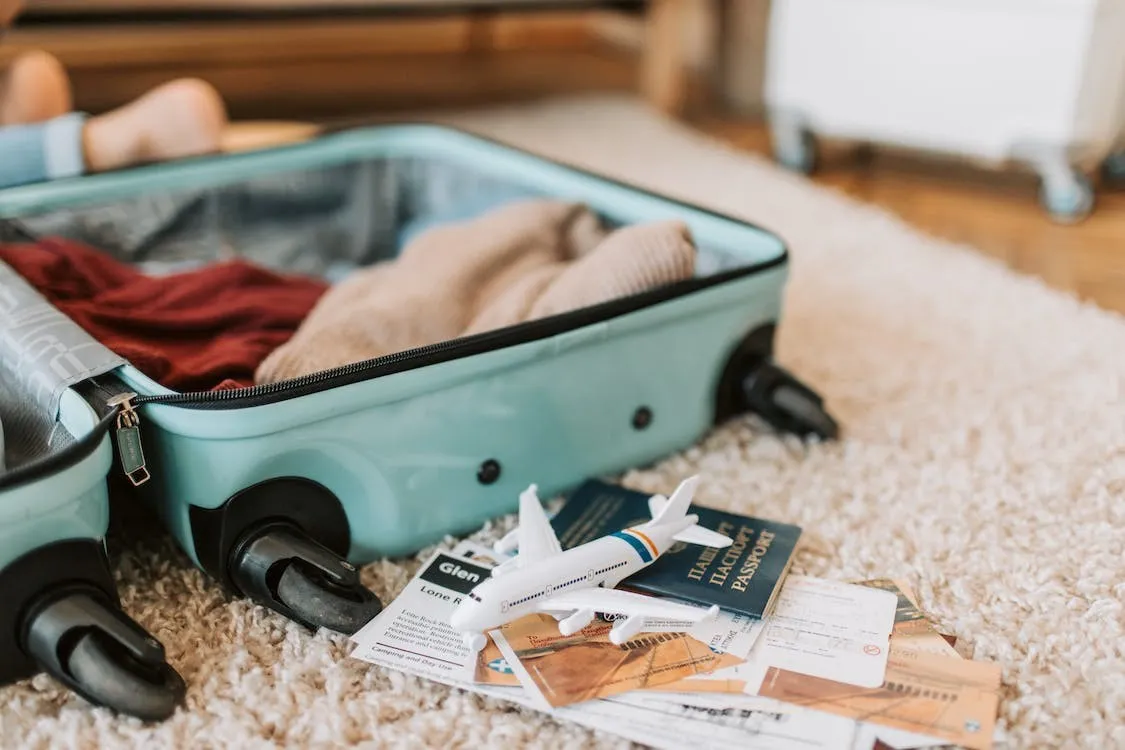
A drone can be fairly large and heavy. So check whether you can actually take the drone with you on the airline concerned. Sometimes you will have to pay extra. In addition, you may never carry your drone's battery in your hold luggage. It is allowed in your hand luggage. You may also be able to take the drone itself as hand luggage.
- Pack the drone
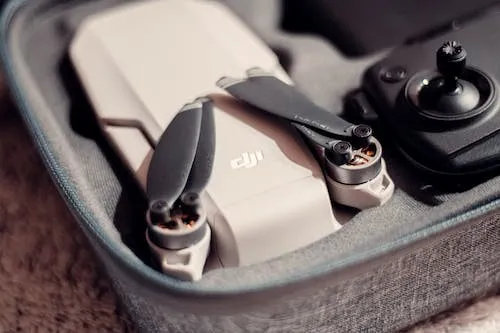
A drone comes with a hefty price tag. That is why it is advisable to transport your drone in a suitable and safe way. Ideally, the drone can go with you as hand luggage. In that case, put it in a special shockproof case. You always take the battery with you as hand luggage. Because of the fire risk, you must pack the battery carefully. It is advisable to use the original packaging for this. A heat-resistant pouch made of woven fibreglass is also a good choice. You can also tape over both terminals with non-conductive tape. Finally, it is recommended to let the battery run completely flat first.
Handy apps with flight maps for drones
As mentioned earlier, a drone is not legal in every country. Moreover, where a drone is permitted, there are often regional restrictions as well. Flying is then not possible in certain places. That makes things extra complex. Fortunately, there are handy apps with maps that show where you may or may not fly a drone. In addition to the Dutch apps for use within the Netherlands, there are also international apps that you can use during your trip.
The GoDrone App and the ASR Vlieg Veilig App are mainly useful for flights in the Netherlands and are less suitable for anyone using the drone during a holiday abroad. For the widest coverage, we refer you to the AirHub App and the Guardian App. One advantage of the AirHub App is that it also takes local regulations into account. The app is particularly comprehensive and is recommended by many.
| App | Area | Availability |
|---|---|---|
| GoDrone App | The Netherlands | iOS and Android |
| ASR Vlieg Veilig App | The Netherlands | iOS and Android |
| AirHub App | Worldwide | iOS and Android |
| AirMap App | 20 countries | iOS and Android |
| Guardian App | Worldwide | iOS and Android |
Frequently asked questions about taking your drone on a trip or holiday
It seems a good idea to take a drone on holiday. In practice, however, you are guaranteed to face challenges and questions. Drones are not permitted everywhere, and strict rules sometimes apply. And then there are the insurance issues as well. These FAQs about drones on a trip or on holiday answer a number of frequently asked questions.
Can I take a drone on a plane?
Yes, but do bear in mind any restrictions regarding luggage. Moreover, batteries may only be carried in hand luggage, and it is strongly advisable to take them with you flat. That is because there is a fire risk. Check the rules in advance, as additional conditions or restrictions may apply. Under the guidelines of the International Air Transport Association (IATA), spare lithium-ion batteries of up to 100 Wh may be carried in hand luggage. Spare batteries of more than 100 and up to 160 Wh require the airline's approval (a maximum of two per person), and batteries of more than 160 Wh may not be taken as luggage. An airline may apply stricter rules.
Can I fly a drone in every country?
No, flying a drone is not permitted in every country. It is prohibited in Morocco, Qatar and Madagascar, among other places. Bear in mind that strict rules apply to flying drones in many countries, even where it is permitted.
Is the ASR Vlieg Veilig App linked to the insurer a.s.r.?
Yes, this app is offered by the insurer of the same name. The app offers a clear map with all No Fly Zones, as well as checklists with the applicable legislation. You will also find a logbook, and you can share flights on social media. With the app, a.s.r. mainly wants pilots to fly their drones safely and responsibly. The insurer does not store any data, does not track you, and the app cannot in any way be linked to a premium or an insurance policy from a.s.r.
Can I fly a drone in Thailand?
Yes, but the rules there are extremely strict. In virtually all cases you are required to register your drone. Moreover, countless restrictions apply, and you cannot simply fly anywhere you like. As a result, in practice it is virtually impossible for a tourist to fly a drone in Thailand. On arrival in Thailand, there is no check on whether you have the necessary permits.
Why are drones banned in Morocco?
The Moroccan drone ban was announced in early 2015. According to the Moroccan government, this is for security reasons. The ban was announced by the ministries of the interior and of trade. In addition to the threat to security, a possible invasion of privacy is also given as a reason. Many countries that ban drones fear that they will be used to carry out attacks, for espionage, for drug smuggling, for human trafficking and so on.
Where is it prohibited to film with a drone?
It is prohibited to film military sites or certain designated buildings. Be aware too that there are places where you may never fly a drone, and therefore may not film either. It is important to check before the flight whether or not there is a no-fly zone. In addition, you have to take privacy legislation into account. As a result, you may only film in places where you would also be allowed to film without a drone. This means that it is not permitted to film on enclosed premises or in gardens, except with the owner's permission.
Where is it permitted to fly a drone in France?
The use of a drone is permitted in France. However, it is prohibited to fly near airports. You also have to take into account the restrictions associated with the type of drone and the risk of the flight. Furthermore, there are many no-fly zones in France where flying a drone is always prohibited. Sometimes flying a drone is permitted there, but restrictions apply. You may then, for example, not fly higher than 100 metres. On the website www.geoportail.gouv.fr/donnees/restrictions-uas-categorie-ouverte-et-aeromodelisme you can find the drone map showing the no-fly zones and the zones where restrictions apply.
How high is the fine for a drone?
That depends on various factors. For example, a company is fined more heavily than a private individual. The type of violation also plays a role. If, for example, you do not have a European drone pilot certificate, you can be given a fine of €800 (private individual) to €1,600 (company). The same fine is also imposed if you do not have an operator registration number, if you do not give way to another aircraft, if you fly with a false operator registration number and if it concerns a prohibited night flight. Flying in a no-fly zone results in a fine of €425 (private individual) or €800 (company). For some offences no fixed fine is set, and the court will decide on the sentence. The court has fairly wide discretion to arrive at an appropriate penalty. That is the case, for example, if you actually endanger aircraft. The drone may also be confiscated.
What is the so-called 1:1 rule for drones?
This is a rule of thumb for flying a C2 drone in subcategory A2. It means that the distance kept from uninvolved people is as great as the height at which you are flying. So if you are flying 50 metres high, you also keep 50 metres away from people. By law, a horizontal distance of at least 30 metres from uninvolved people always applies in subcategory A2 (Implementing Regulation (EU) 2019/947, Annex, UAS.OPEN.030). If the drone's low-speed mode is active, this distance may be reduced to at least 5 metres.