In the past, every country in Europe had its own drone rules. As a result, it was not always possible for a Dutch drone pilot to fly abroad. The situation was very confusing and often caused problems. That is why Europe has drawn up drone rules that apply in all EU countries. The European drone rules are good for drone pilots, but also for drone manufacturers. They make drone innovations and new drone applications easier. This page describes the European rules and how they apply in the Netherlands.
Basic concepts in the European drone rules
As is often the case, Europe uses its own concepts. Such concepts may be new to Dutch drone owners. Some knowledge of these concepts is important to understand the European drone legislation.
Geozone
Geozones are defined zones to which restrictions apply. These concern, for example, which aircraft you may fly in a particular zone and which rules you must follow when doing so (for example, the height at which you may fly). All kinds of geozones have been designated in the Netherlands too. These are no-fly zones in which you may not fly, zones where you may only fly with the permission of the manager, low-flying areas and Natura 2000 areas where flying is prohibited.
To the Dutch map with geozones
C class
The C class is a classification for drones. A drone falls within a particular C class based on its weight, among other things. Drone manufacturers must take specifications and standards into account for each class. The C class also determines which legislation applies. With some classes, for example, you first have to take an exam before you are allowed to fly the drone.
More about the Cx label and the C class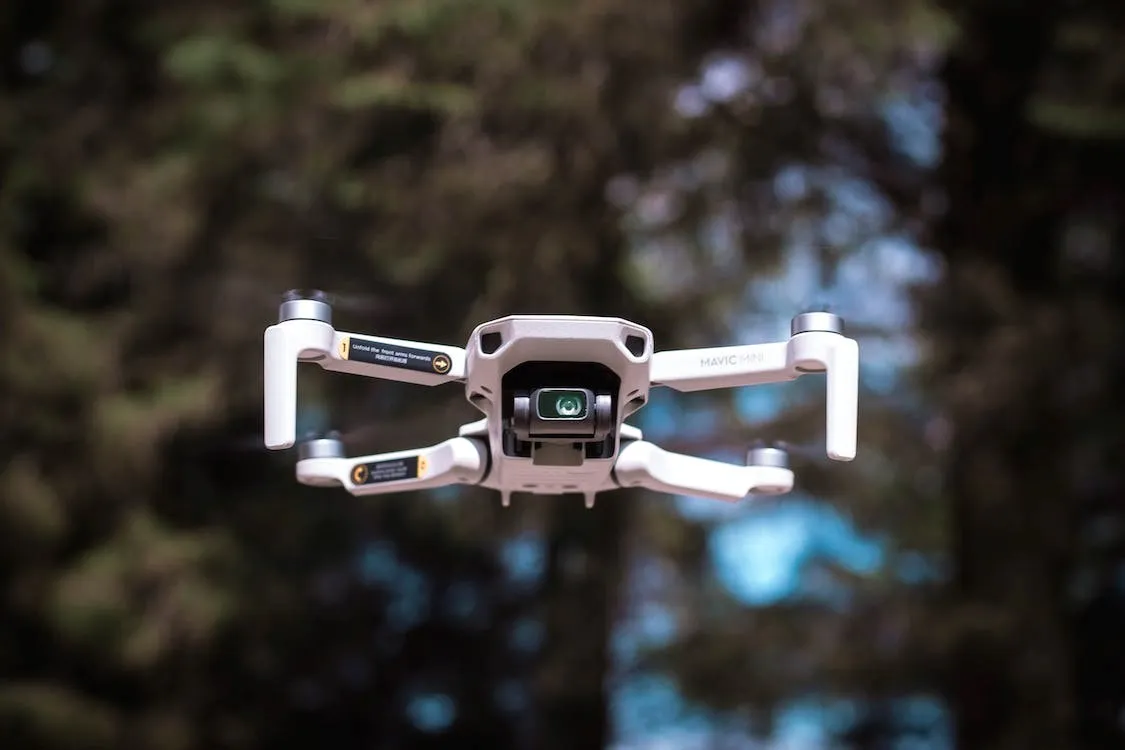
Operator
Many people think that the operator is the pilot of the drone, but that is not always the case. The operator is the party responsible for the flight. This can be either a company or a person. The operator must ensure that the pilot has the necessary knowledge, has taken the right exam and so on. The operator therefore bears a great deal of responsibility.
Drone pilot certificate
In many cases, the drone pilot must have a drone pilot certificate. To get one, the pilot first has to complete a training course and then take an exam. After passing the exam, the pilot can apply for the licence. This licence is valid for a period of five years.
More about the drone pilot certificate
Certificate of competency
In addition to the drone pilot certificate, a pilot also needs an additional certificate of competency for some flights. That is particularly the case for anyone flying in subcategory A2. You can only obtain this certificate of competency if you already have the drone pilot certificate. An additional knowledge test is also required. This test covers flight performance and weather conditions, among other things.
More about the certificate of competency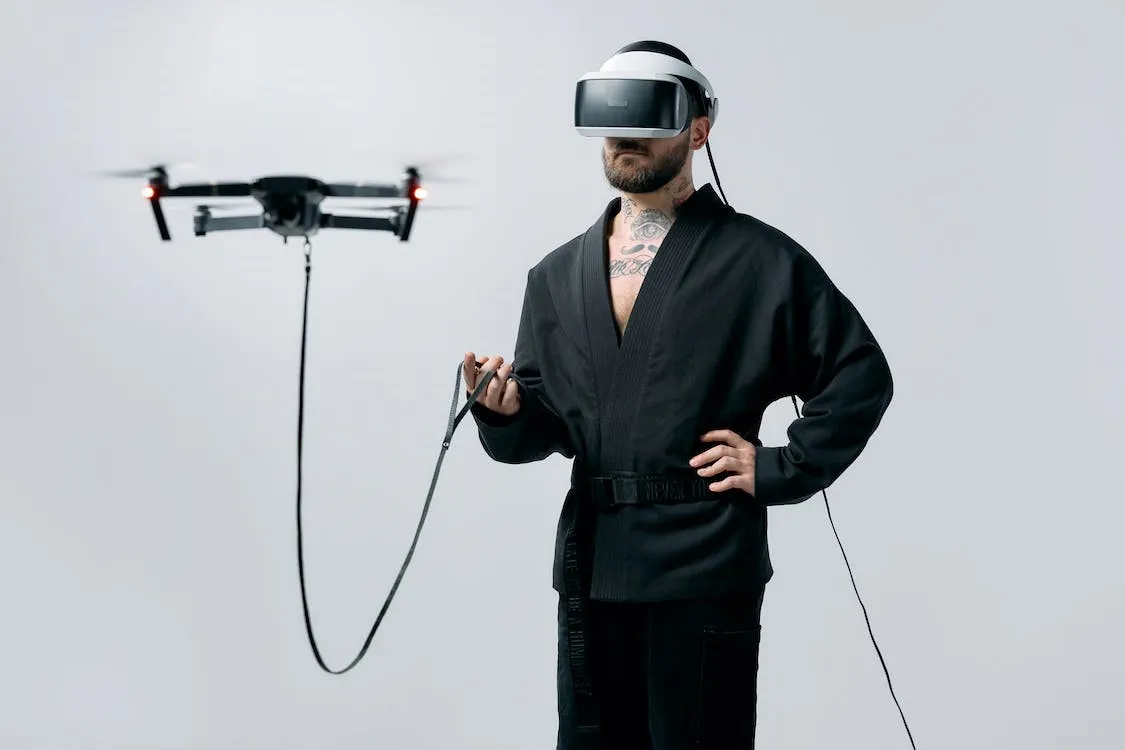
Low-risk flights
Low-risk flights are flights where the risk of an accident with (serious) injuries is limited. Among other things, the drone may not weigh more than 25 kilograms at take-off, and you may not fly higher than 120 metres. Quite a few other requirements apply as well. Only if all requirements are met is it a low-risk flight.
More about low-risk flights
Open category
The European drone legislation distinguishes between various categories that are linked to the flight operation. In addition to the open category, these are the specific category (for example, autonomous flights) and the certified category (for example, parcel delivery over people). However, most drones fall under the open category. These include drones used by private individuals and photography drones. The open category is divided into subcategories. Each subcategory has its own rules, both for the manufacturers of drones and for the users of these drones.
Requirements for drones
Drone manufacturers must take into account a number of minimum requirements that the drones have to meet. The requirements that apply depend on the C class the drone falls within. Requirements are set in areas such as geo-awareness (knowing exactly where the aircraft is) and electronic ID (a transmitter that continuously sends out a signal with information). This is something drone owners in principle do not need to worry about. If a drone has the right Cx label, you can assume that it meets the requirements of the class concerned.
Open category
The open category applies to drones used for low-risk flights. In that case, no authorisation or notification of the flight is needed. Only drones weighing no more than 25 kilograms fall under this category. Examples are hobby drones, photography drones and self-built drones. Automated flights can also fall under this open category, provided that the pilot is able to intervene. The applicable rules depend on the subcategory that applies.
General rules for flying drones
A pilot who wants to fly must be at least sixteen years old. In some cases you may be younger than sixteen, namely if you fly with an observer who holds a drone pilot certificate. Anyone flying a drone must always carry their drone pilot certificate. You must also check the geozone map in advance to make sure you are actually allowed to fly in the area.
The pilot may not be under the influence of alcohol or drugs. It is also prohibited to fly near emergency services, and the drone must land immediately if other air traffic approaches. Finally, you must always respect other people's privacy. Only film and photograph people if they have given their permission.
Subcategory A1 (drones up to 0.25 kg)
For mini drones that weigh less than 250 grams at take-off, the general flight rules apply. In addition, the pilot only needs to register with the Netherlands Vehicle Authority (RDW) if the drone has a camera. A knowledge test is not required. For toy drones up to 250 grams, the rules are even more relaxed. There is then not even a minimum age. A toy drone is understood to be a drone designed for children under 14.
More about mini dronesSubcategory A2 (drones up to 4 kg)
If you want to fly closer to people with a drone with a C2 label (maximum take-off mass less than 4 kg, Delegated Regulation (EU) 2019/945, Annex, Part 3), the flight falls under subcategory A2. The general rules for low-risk flights apply here. In addition, the pilot must have a certificate of competency and keep a horizontal distance of at least 30 metres from uninvolved people, or 5 metres if the drone's low-speed mode is active (Implementing Regulation (EU) 2019/947, Annex, UAS.OPEN.030).
Subcategory A3 (drones up to 25 kg)
If a drone weighs a maximum of 25 kg at take-off, you fall under subcategory A3. The general rules for flying drones apply to this category too, with a number of extra rules on top. You may only fly in an area without people, and you must always keep a distance of at least 150 metres from residential areas, recreational areas, commercial areas and industrial areas.
Specific category
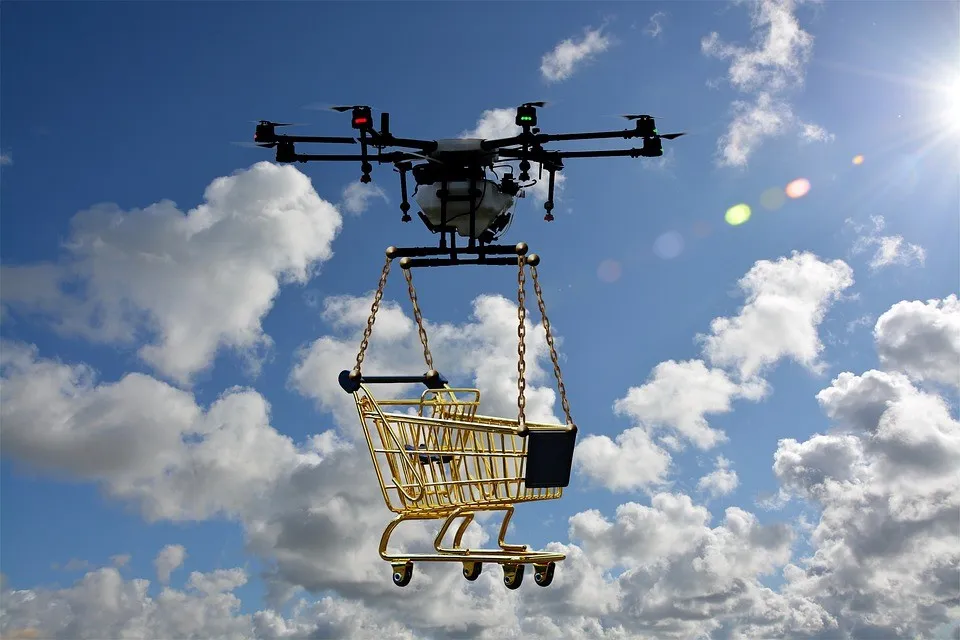
If a flight falls outside the restrictions of the open category and no people or dangerous substances are transported, the drone flight will probably fall within the specific category. Within the specific category, we no longer speak of a low-risk flight, but of a flight with increased risk. Logically, extra requirements apply. For example, the pilot must have a number of minimum competences.
Before you fly your drone, you need a permit, which you can apply for from the Human Environment and Transport Inspectorate (Inspectie Leefomgeving en Transport, ILT). Three permits are available for this category. Which permit you need depends on the situation in practice. The ILT keeps an overview of all UAS operators.
Consult the overview of all UAS operatorsOperational authorisation (OA)
The operational authorisation (exploitatievergunning) is a permit that you can apply for from the ILT. With the application, the applicant must include an assessment of the operational risks, as well as a list of risk-mitigating measures and a CONOPS (concept of operations). Finally, proof of suitable drone insurance is required.
Light UAS Operator Certificate (LUC)
If an organisation holds an LUC, it is permitted to approve flights in the specific category itself, within certain limits. It is then not necessary to submit a declaration or apply for an operational authorisation each time. For an organisation to be allowed to use an LUC, strict conditions must be met. The main point is that there must be a properly functioning safety management system.
Standard scenario declaration (STS)
The standard scenario declaration (STS) is a declaration stating that the set of requirements belonging to a standard scenario, a description of a particular type of drone flight, has been met. Since 2024, there have been European standard scenarios (STS-01 and STS-02) for which such a declaration can be submitted (veiligdronevliegen.nl).
Certified category
This category covers high-risk flights, where the risk is as great as with a manned flight. In this case, authorisation is required. The certified category covers, among other things, the carriage of people and the transport of dangerous goods.
Also read: All about the mini drone rules.
Frequently asked questions about European drone laws and regulations
On the one hand, the European drone legislation has made the situation simpler, because there are now uniform rules for all EU countries. On the other hand, it also changes a number of things. And that in turn makes it extra complex. Many people have questions about this, and that is certainly not illogical.
Can I get a fine if I break the European drone legislation?
Yes, the European member states have the option of imposing hefty fines. The maximum fine is up to €8,700 per offence.
Is insurance compulsory under the European drone legislation?
If you fly a drone weighing less than 20 kilograms, insurance is not compulsory. However, it is still advisable to get insured. In many cases personal liability insurance (AVP) will be sufficient, but that is not always the case. If a drone weighs more than 20 kilograms, insurance is compulsory.
Can I get an exemption in a no-fly zone?
No, all flights are prohibited in this zone. Exceptions are not possible, and even flights with toy drones are prohibited. Besides no-fly zones, there are also zones with restrictions in the Netherlands. Flying is permitted there, but subject to a number of restrictions. The current zones are shown on the official flight maps (veiligdronevliegen.nl).
What if a European drone pilot certificate has expired after five years?
After five years it is possible to renew the drone pilot certificate. You do this by completing a refresher seminar or by doing a new training course and knowledge test. If you do nothing, you may no longer fly a drone.
Which category do drones that were sold without CE certification fall under?
Drones that weigh less than 250 grams automatically fall under subcategory A1. Other drones fall under subcategory A3. This means that you must keep a distance of at least 150 metres from residential areas, recreational areas, commercial areas and industrial areas.