Anyone who wants to fly a drone professionally has had to deal with constantly changing rules in recent years. The old regulations made it enormously complex to fly a drone professionally. There were a great many administrative obligations. In 2016, the mini drone rules (minidrone-regeling) brought a simplification for light drones up to four kilograms. In the meantime, the European drone legislation has introduced harmonised drone rules for the entire European Union. This page describes the situation in the Netherlands.
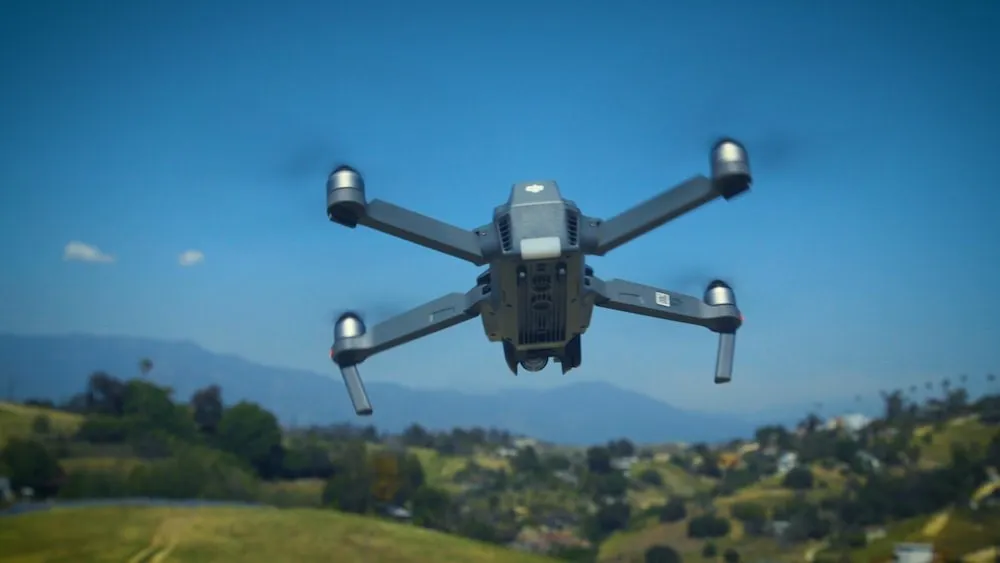
Drone regulations on 1 July 2016
The mini drone rules came into effect on 1 July 2016. These rules made it easier to fly a drone for business purposes. The rules were limited to drones weighing no more than four kilograms. To be allowed to fly such drones commercially, a so-called ROC-light (RPAS Operator Certificate Light) was needed.
Under the former regulations, a distinction was therefore made between flying drones recreationally on the one hand and flying drones professionally on the other. For professional pilots, a further distinction was made between mini drones up to 4 kilograms and heavier drones up to 150 kilograms. Understanding this distinction is necessary to see why the mini drone rules were so favourable.
Flying a drone recreationally
The rules that applied on 1 July 2016 were the most relaxed for recreational drone users. These recreational drone users could fly drones up to 25 kilograms. They were not allowed to fly over built-up areas. Furthermore, they were not allowed to fly higher than 120 metres and could only fly in daylight.
More information about flying a drone recreationallyFlying a drone professionally up to 150 kg (ROC)
Anyone wanting to fly a drone up to 150 kilograms professionally needed a certificate of competence. The drone in turn had to have a certificate of airworthiness. Registration in the aviation register was also necessary, as was drone insurance and an operations manual. Expect costs of around €10,000 to fly a drone professionally. Under certain conditions, an exemption could be obtained on some points, for example as regards flying over crowds.
Mini drone rules: flying drones up to 4 kg professionally (ROC-light)
The mini drone rules made it easier for professional drone pilots to fly a drone legally. The requirements became much more limited. Third-party liability insurance (WA) was still compulsory, for example, but an operations manual was not. There was also an exemption from the certificate of competence for the pilot (licence). As a result, the costs fell to just €400. Pilots were also allowed to fly closer to buildings and crowds, but an exemption to fly over buildings or crowds was not possible.
Overview of the drone rules when the mini drone rules were introduced
The distinction between the various drone schemes, as it stood on 1 July 2016, is shown below. It shows how attractive the so-called ROC-light was for professional drone users.
| Flying a drone recreationally | Mini drone rules (ROC-light) | Flying a drone professionally (ROC) | |
|---|---|---|---|
| Use | Recreational | Professional | Professional |
| Drone weight | Up to 25 kg | Up to 4 kg | Up to 150 kg |
| VFR (Visual Flight Rules) | Always in sight of the pilot | Always in sight of the pilot | Always in sight of the pilot |
| Distance from the pilot | N/A | Max. 100 metres | Max. 500 metres |
| Flight altitude | Max. 120 metres | Max. 50 metres | Max. 120 metres (exemption possible) |
| Distance from crowds and built-up areas | Not over | Min. 50 metres | Min. 150 metres (exemption possible) |
| Distance from railway lines, port areas and industrial areas | Not over | Min. 50 metres | Min. 50 metres (exemption possible) |
| Distance from public roads, main roads and motorways | Not over, except for roads in 30 km/h zones within built-up areas and roads in 60 km/h zones outside built-up areas | Min. 50 metres | Min. 50 metres (exemption possible) |
| Certificate of competence for the pilot (licence) | N/A | Exemption | Compulsory |
| Certificate of airworthiness for the drone | N/A | Exemption | Compulsory |
| Registration in the aviation register | N/A | Compulsory | Compulsory |
| Min. age | N/A | 18 years | 18 years |
| Operations manual | N/A | N/A | Compulsory |
| Insurance | Not compulsory | Compulsory | Compulsory |
| Duty to notify | N/A | N/A | 24 hours before the flight |
| Costs | None | +/- €400 | +/- €10,000 |
From the mini drone rules to the European drone legislation
Introducing the mini drone rules was enormously useful. Developments in the field of drones were moving very fast, and only around seventy operators were legally active in drone services. More than 130 companies were operating illegally, mainly due to the complexity of the ROC. By relaxing the requirements for light drones or mini drones, the government came up with a solution.
Other European countries were also working on drone legislation. That led to a fragmented economic climate, which goes against the principles of the European Union. For a single market, it is important that such rules are uniform throughout the Union. That is how the European drone legislation came about. The European drone legislation has also had consequences for the mini drone rules and the ROC-light.
European drone legislation and consequences for the ROC-light
As of 1 January 2022, the ROC-light is no longer valid in the Netherlands. Anyone who wants to fly a drone must comply with the European rules. To do so, the ROC-light must be converted into a drone pilot certificate for the open category (or for a subcategory). Commercial drone users who want to fly in the specific category must first apply for an operational authorisation (exploitatievergunning) from the Human Environment and Transport Inspectorate (Inspectie Leefomgeving en Transport, ILT). Bear in mind that the European drone rules are different from what you were used to under the former rules. The ROC-light does, however, remain valid for state aviation operators.
Overview of the European drone rulesFrequently asked questions about the mini drone rules
In recent years, a great many drone rules have come and gone. Simplification was the watchword, but in fact it has mainly made everything even less clear, and many people have questions about it. It is important to answer these questions.
Was the ROC-light also valid abroad?
No, the mini drone rules only applied in the Netherlands. Anyone who wanted to fly commercially in other countries had to take the local regulations into account. Because this is enormously complex and goes against the principles of the European single market, Europe has drawn up rules for the entire Union. As a result, the ROC-light has lapsed and the same rules apply in all European countries.
What counts as a crowd?
The legislation does not clarify what is meant by a crowd. In any case, it concerns a group of people. According to the police, the concept depends on the situation and has to be assessed case by case.
How are the height limits for drones enforced?
Height limits still exist under the new regulations too. They can be enforced using binoculars that measure height and distance. However, not all police officers have such binoculars yet. Enforcement can also be visual. Naturally, visual enforcement will mainly focus on blatant violations. Flying a metre too high cannot be established with the naked eye.
Was it permitted to fly over your own home with the ROC-light?
Under the rules, it was compulsory to keep a horizontal distance of at least fifty metres from built-up areas. It was not possible to obtain an exemption. This means that someone living in a terraced house cannot fly over their own home. Someone who lives in a detached house, on the other hand, can fly professionally over their own home. These rules have given way to the European drone rules.
What is the difference between ROC and ROC-light?
In the past, anyone who wanted to fly professionally in the Netherlands had to hold an ROC (RPAS Operator Certificate). Strict obligations were attached to this. The rules more or less corresponded to the rules that also applied to traditional aviation companies. This made it enormously difficult to use drones commercially. That is why the mini drone rules were developed especially for smaller drones. These rules only apply to drones weighing a maximum of 4 kilograms. Companies could thus apply for an exemption, a so-called ROC-light. In the meantime, the ROC-light is no longer valid and the European drone rules apply.