Just like motorists, cyclists must follow a number of traffic rules. These traffic rules are laid down in the Road Traffic Act (Wegenverkeerswet), which consists of the Traffic Rules and Signs Regulations (Reglement Verkeersregels en Verkeerstekens, RVV), the Administrative Provisions (Road Traffic) Decree (Besluit Administratieve Bepalingen inzake het Wegverkeer, BABW) and the Vehicle Regulations (Voertuigreglement). The RVV contains all the traffic rules, as well as the meaning of the traffic signs. The BABW is mainly of interest to the road authority. After a traffic accident, a lawyer can sometimes use it to hold the road authority liable. The Vehicle Regulations, in turn, concern the requirements that bicycles must meet, for example the obligation to fit a bicycle with a bell. This page describes the situation in the Netherlands.
Traffic rules for cyclists
A general rule of conduct applies to all road users. This means that every road user must behave properly in traffic. It is prohibited to behave in such a way that you are a danger on the road (or could become one) or that you obstruct traffic (or could obstruct it). In addition to this general rule of conduct, there are also specific traffic rules for cyclists. Bicycle insurance is not compulsory in the Netherlands. For speed pedelecs, however, liability insurance is compulsory.
1. Riding on the cycle path
Cyclists may or must ride on the cycle path. Motorists, on the other hand, may not drive or stop on the cycle path. Motorists are, however, allowed to drive across a cycle path marked with a broken line, for example to turn or to drive to or from a parking space. To be allowed to ride on the cycle path, a bicycle may not be wider than 75 centimetres. Tricycles and cargo bikes, for example, are sometimes wider. Such bikes, which may not be wider than 150 centimetres, must use the carriageway.
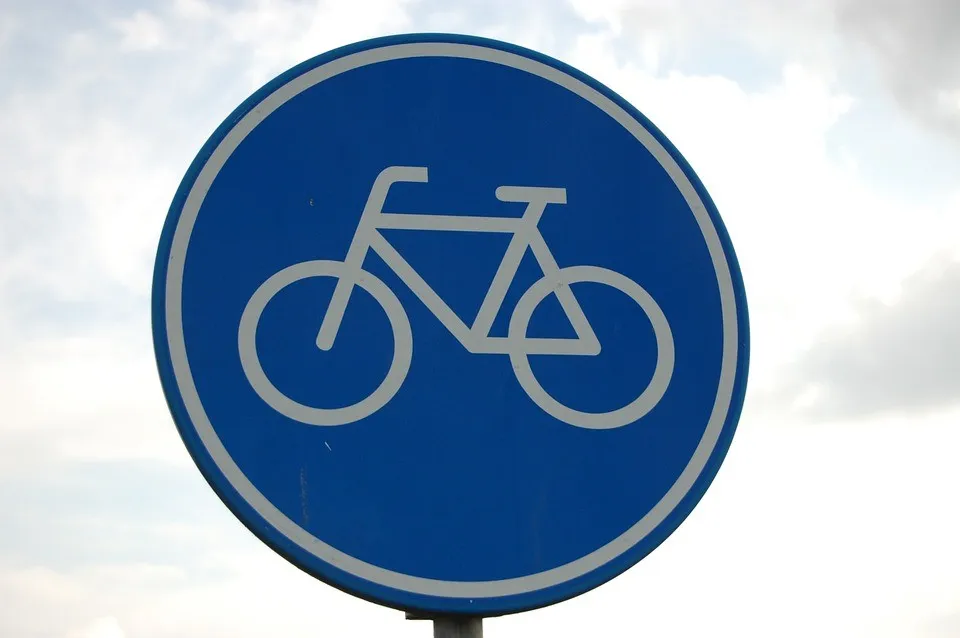
If there is a compulsory cycle path, the cyclist must ride on the cycle path. A compulsory cycle path can be recognised by a blue traffic sign with a white bicycle (and sometimes also a moped). If it is a rectangular blue traffic sign with the word fietspad (cycle path), the cycle path is not compulsory. You may then ride on the cycle path, but you do not have to.
2. With a child on your bike
Children under the age of eight may only be carried on a bike in an effective and safe device with sufficient support for the back, hands and feet, such as a suitable child seat (article 58a(3) of the RVV 1990). One person aged eight or older may be carried on the luggage rack (article 58a(2)(g) of the RVV 1990). This child seat may not obstruct the visibility of the compulsory bicycle lights. Instead of a child seat, you can also use a bike trailer, for example.
All information about the safety of children on bikes
3. Cycling side by side
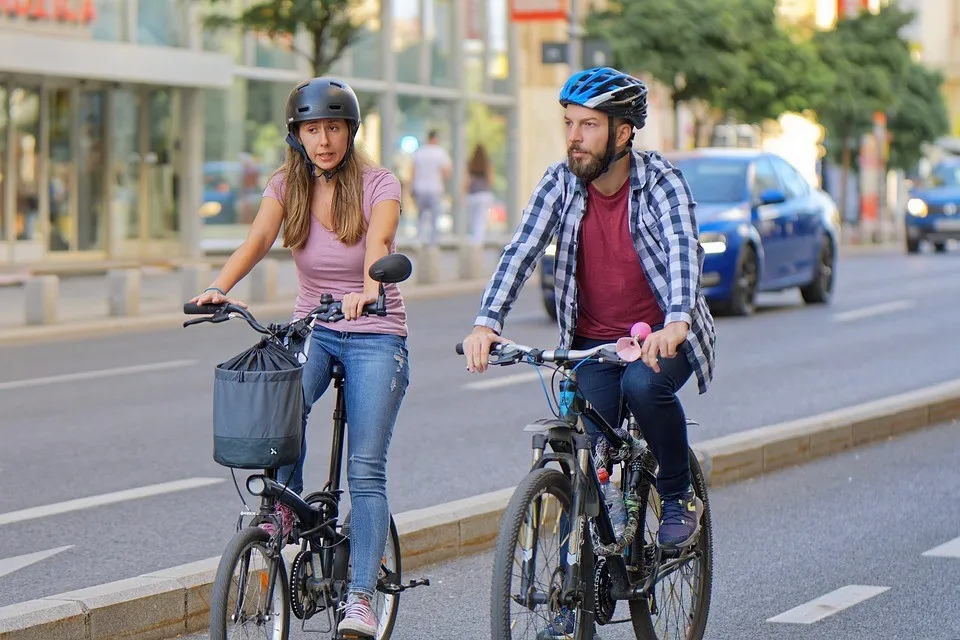
Cyclists are allowed to ride side by side, just as car passengers may sit side by side. Do keep the general rule of conduct in mind: you may not cause obstruction. So behave properly and cycle in single file when it is busy and cars cannot easily pass. The idea is not to create dangerous situations.
4. Parking your bike
In principle, you are allowed to park your bike on the verge, on the footpath, on the pavement or in other specifically designated places. Be careful, though, because municipalities can impose restrictions. Restrictions may also apply on private property. In addition, many municipalities have a limited parking time, and bikes that are parked for longer are removed. On Leidseplein in Amsterdam, for example, bikes must be parked in a marked bay, a rack or a bike park. They may also not be left there for longer than six weeks, or they will be removed.
5. Position on the road
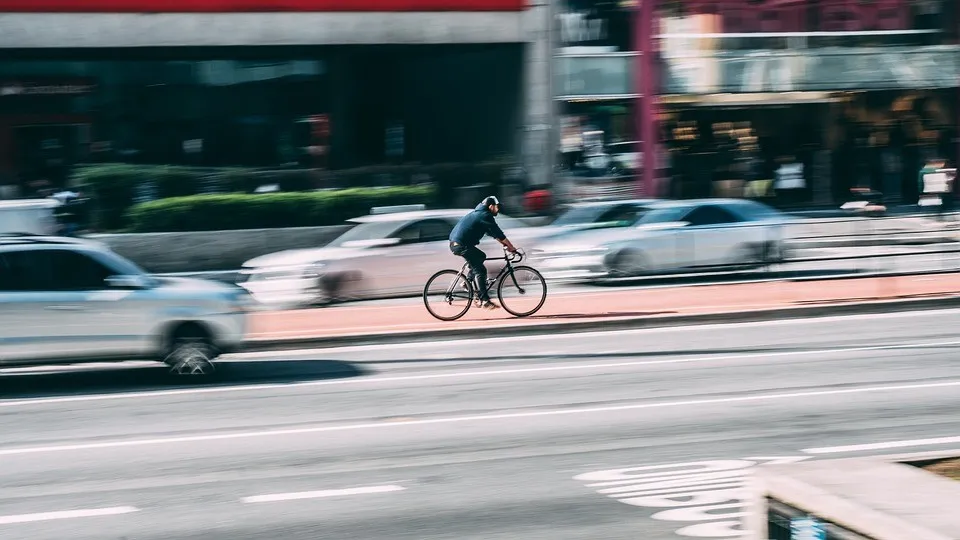
Like other road users, cyclists are required to keep to the right as much as possible. Unlike motorists, cyclists may also overtake other drivers on the right, but cyclists must overtake each other on the left (article 11(3) of the RVV 1990). It is safer to overtake on the left, though. Cyclists may not leave a cycle lane marked with a solid line. If the cycle lane has a broken line, this is allowed. The cyclist may then leave the cycle lane, for example to pass a stationary car.
Requirements for the bicycle
The Road Traffic Act 1994 pays extensive attention to the requirements that vehicles must meet. Very specific requirements also apply to bicycles. Here we distinguish between permanent requirements and what are known as requirements for use.
Permanent requirements for the bicycle
The permanent requirements for the bicycle relate to the equipment that must always be present on the bike, so not only in bad weather, for example. The responsibility for this lies with the road user. Some bikes are sold that do not meet all the requirements. You then have to make the necessary adjustments yourself. The permanent requirements for the bicycle are listed below.
- A properly functioning bell
- A properly working brake
- A red reflector fitted between the mudguard and the luggage carrier, or under the saddle if there is no mudguard
- White or yellow reflectors on the wheels, on both sides and fitted as close to the rim as possible
- Pedals with four amber or yellow reflectors
On top of these permanent requirements, you can fit the bike with extra accessories for safety. For example, you can fit a white front reflector, mount a bright white rear mudguard on the bike or add a reflective flag to the bike. Such additions are permitted.
Requirements for use of the bicycle
The requirements for use relate to requirements that only apply in certain cases and/or under certain circumstances. The most important requirement is the use of bicycle lights. If visibility is poor or if you use the bike at night, you must use a bright red rear light and a bright white or yellow front light. A number of specific requirements apply.
- The rear light must be fitted between 25 and 120 centimetres above the road surface.
- The front light must be clearly visible to oncoming traffic, but may not dazzle other road users.
- The lights do not have to be on the bike; they may also be attached to the cyclist's body or the cyclist's backpack, for example.
- The bicycle lights must be on continuously; flashing is not permitted.
Priority rules for cyclists
All drivers and riders of vehicles must respect the priority rules, including cyclists. A general rule is that traffic from the right has priority, unless indicated otherwise. That is the case on priority roads, for example.
Traffic from the right has priority
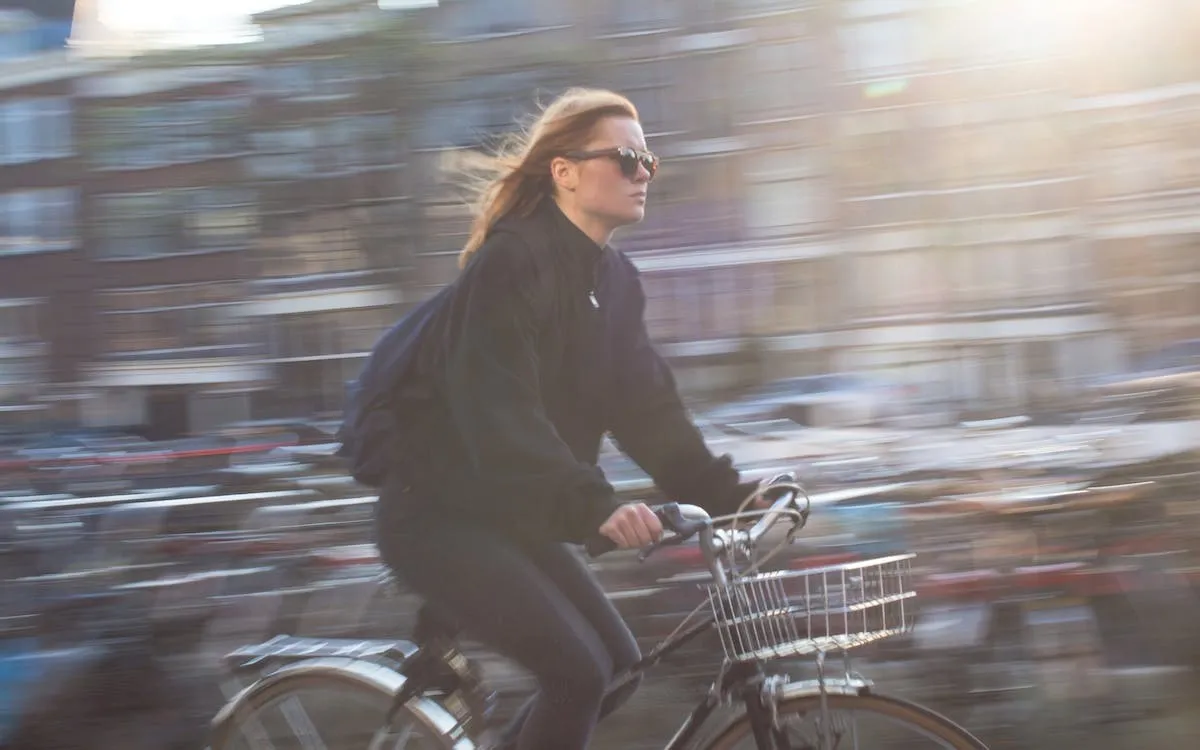
At an uncontrolled junction, the road user coming from the left must always give way to the road user coming from the right. It does not matter what type of vehicle it is. A cyclist coming from the left must therefore give way to a car coming from the right. And a car coming from the left must also give way to a cyclist coming from the right. Road users who count as drivers include horse riders, people leading draught animals, coachmen, moped riders, cyclists and motorcyclists. Pedestrians, on the other hand, are not drivers. Skaters and inline skaters are not counted as drivers either.
This rule only applies at an uncontrolled junction. This means that priority is not regulated in another way, for example by shark's teeth (give-way markings), signs or traffic lights. There are also three important exceptions to this general rule:
- Drivers must always give way to a tram.
- At an exit or exit construction, you must always give way, even to pedestrians.
- Drivers on an unpaved road must always give way to drivers on a paved road.
Priority roads
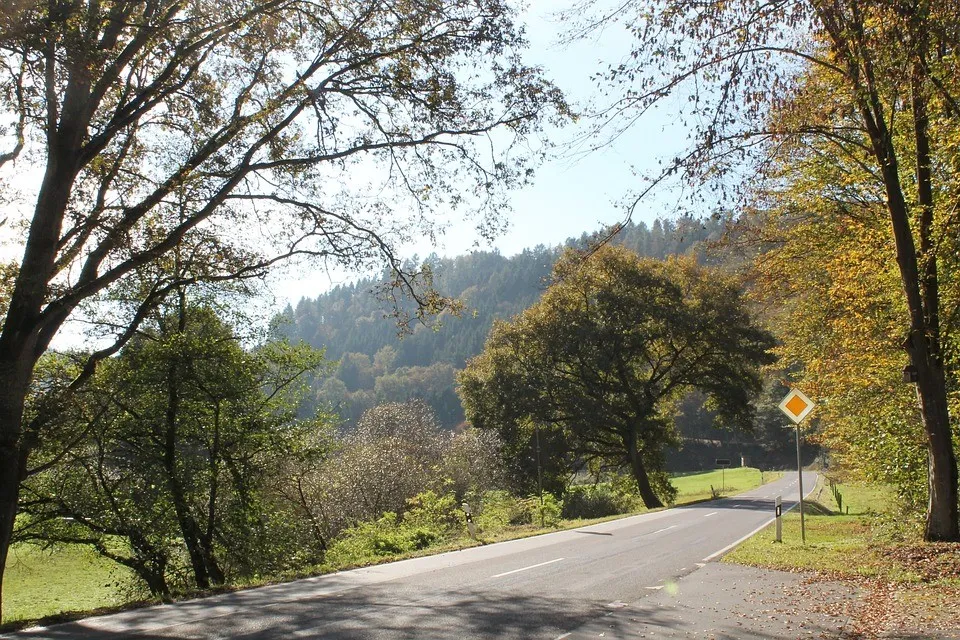
On a priority road, you do not need to give way to traffic coming from the right. Drivers coming from the side roads must then give way to the vehicles on the priority road. As a cyclist, you also have priority when you are riding on a priority road. The priority road is indicated by priority signs and/or by shark's teeth.
Priority rules at roundabouts
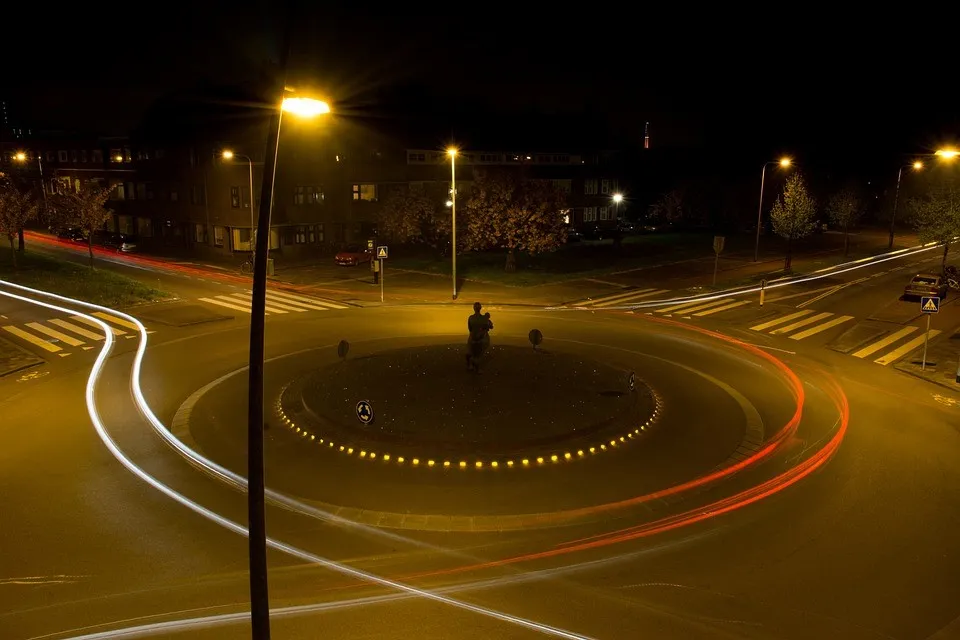
The general rule is that traffic on the roundabout has priority over traffic leaving or approaching the roundabout. At a roundabout outside a built-up area, you do not have priority as a cyclist. If you follow the roundabout, you must therefore give way to turning car traffic. Within a built-up area, you usually do have priority over turning car traffic.
At roundabouts, however, you always need to pay attention. The road authority assesses each situation in its own way. Sometimes priority for cyclists within a built-up area is too dangerous, for example, so it is decided that cyclists must give way to turning car traffic after all. So always pay close attention and check the traffic signs and priority rules that apply. Be extra careful, signal your direction clearly and make sufficient eye contact.
Read also: Cycling safely on a racing bike.
Frequently asked questions about the rules for cyclists in traffic
Cyclists are drivers and, like all other drivers, must take traffic rules into account. Sometimes different rules do apply to cyclists than to motorists, for example. It is not inconceivable that this raises questions. This FAQ about traffic rules for cyclists answers the most important questions.
Do I have to signal my direction as a cyclist?
Like motorists, cyclists are required to signal their direction when they change direction. You do this by holding out your hand. Nowadays there are also orange indicator lights for bikes. Using them is permitted. This is safer, because you can then keep both hands on the handlebars.
May a cyclist turn right when the light is red?
That is allowed if there is a supplementary sign at the traffic light and this sign indicates that turning right is allowed. The sign then reads “Rechtsaf voor (brom)fietsers vrij” (right turn permitted for cyclists and moped riders). If you are allowed to turn right, you must still give way to crossing traffic (usually pedestrians).
Do I have priority if I come from the right pushing my bike?
The priority rules only apply between drivers and riders of vehicles. If you are pushing a bike, you are treated as a pedestrian. This means that the standard priority rules do not apply.
Do the traffic rules for cyclists also apply to the e-bike?
Yes, an e-bike with pedal assistance up to 25 km/h is treated as a traditional bicycle. In other words, the same rules apply. Different rules do apply to speed pedelecs with pedal assistance up to 45 km/h. In that case, the rules for moped riders apply.
May I use a cycle navigation app while cycling?
It is not permitted to hold or use an electronic device while cycling. You may, however, mount your phone on your handlebars with a phone holder and use your smartphone as a navigation system that way. While cycling, you may not tap on the screen, but you may, for example, make hands-free calls and navigate.