
Climate change and climate risks: all about climate and storm damage
Climate change is not fiction, and that will not make the climate any friendlier in the future. Severe storms, floods and extreme temperatures: we are getting more and more of them on our plate. Add to that the occasional dessert of frost, lightning and hail. Climate damage is far from unrealistic any more, while it is often not insured as standard. Storm damage in particular can cause a lot of damage, but the climate can also strike mercilessly in other ways. This page describes the situation in the Netherlands.
Storm damage in the Netherlands
Although meteorologically a storm only starts at wind force 9 on the Beaufort scale, insurers use a different definition. They already speak of a storm at wind force 7 and from that point on, provided the conditions are met, will pay for the storm damage. In principle, the wind force must have been measured by the Royal Netherlands Meteorological Institute (KNMI), but local storm damage is also eligible for compensation. Local storm damage is presumed, for example, when many policyholders in a small area report storm damage.
Insurance for wind damage
According to the KNMI'23 climate scenarios, little changes in wind speed and wind direction in the Netherlands, although stronger gusts and downbursts during showers are possible. Even so, many Dutch people suffer some wind damage every year, for example because a tree falls over.
Wind damage to homes is almost always fully insured, except in cases of poor maintenance or negligence. Home contents insurance, for example, will not pay for a table that is blown away if the insured person knew a storm was coming and still failed to put the table away neatly in the shed. For cars, too, damage caused by wind force 7 Beaufort or higher is in principle always insured under casco or all-risk insurance. At lower wind speeds there should in principle be no risk.
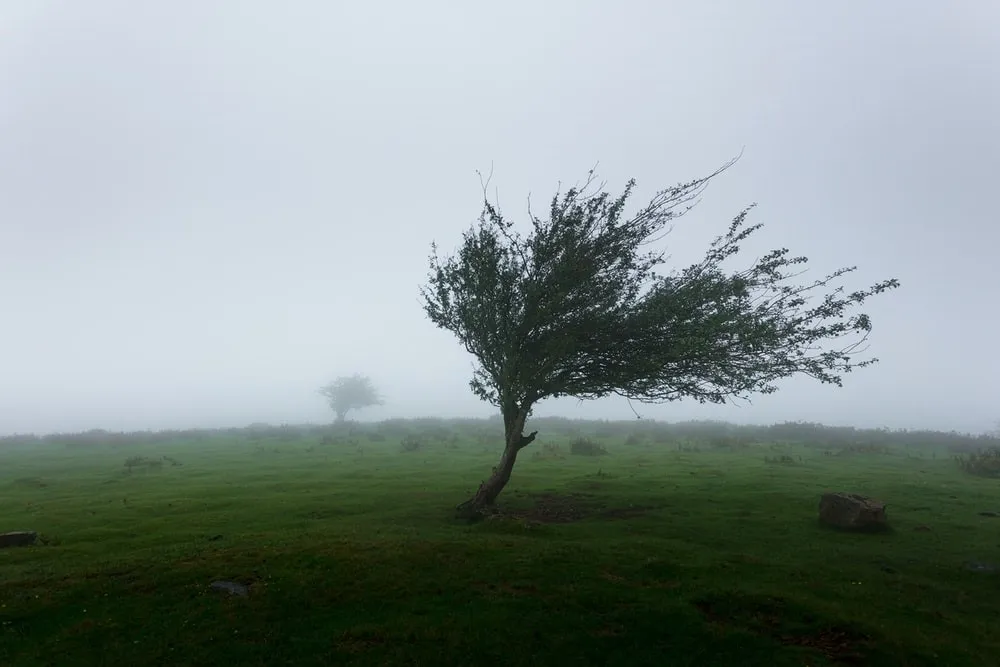
With business insurance, wind damage can often be insured as an option, but in practice damage caused by loose items on the premises is hard to insure. Damage to the building, to the contents or to the fences can be insured.
It is important that the insured person takes some steps to limit or prevent damage. Think, among other things, of:
- Closing doors and windows
- Putting away loose items in the garden
- Closing the roller shutters
- Cleaning drainpipes and gutters in good time
- Pruning trees in good time and removing loose branches
- Felling dead trees
- Staying indoors during stormy weather
- Not parking under trees
Insurance for damage caused by lightning and induction
As the climate warms, the risk of lightning damage also increases. That is because the chance of lightning increases on hot summer days. It is no coincidence that around ninety per cent of all lightning strikes occur during spring and summer. According to researchers, the number of lightning strikes would increase by 10 to 15% if the earth warms by 1 degree.
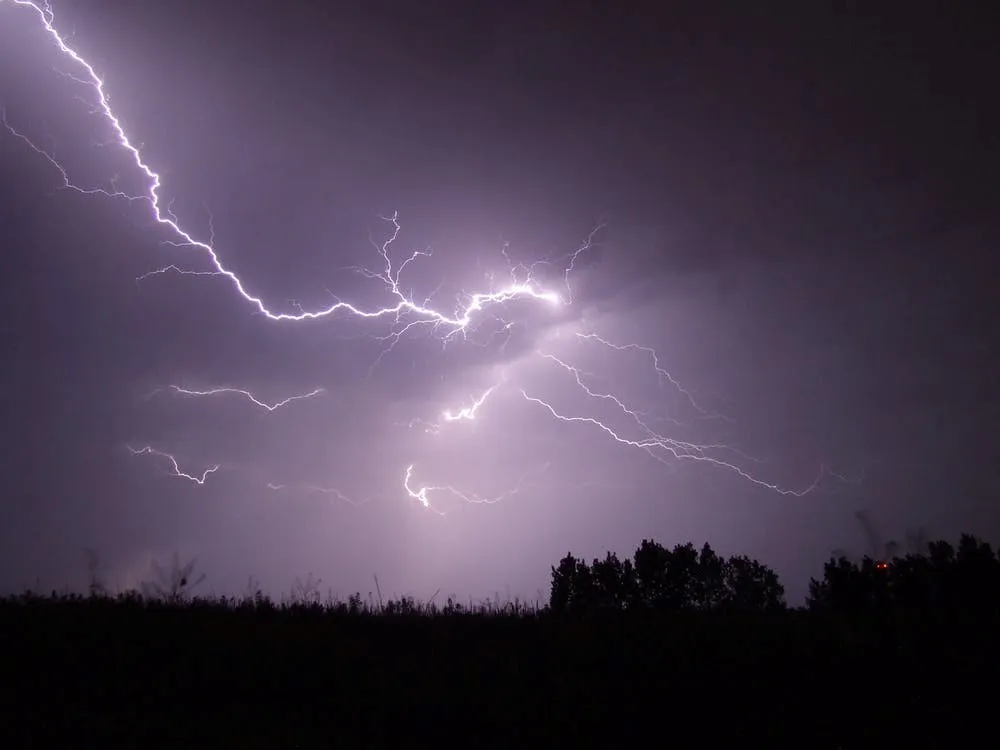
In the case of lightning damage, many insurance policies offer cover. These are, of course, property insurance policies, such as home insurance, business insurance for buildings and contents, or casco or all-risk insurance. With the latter, a claim also has no effect on the no-claims ladder (bonus-malus ladder). There are sometimes restrictions, however. With business insurance, for example, it is often the case that damage to the building is covered, but not damage caused by induction (appliances that break because of the large current that enters the building through the wiring). If induction is not covered as standard, it is usually possible to add it as an option.
Liability for storm damage
In some cases there can be liability. These are situations in which someone made a mistake that allowed the storm to cause damage. Think, for example, of someone who clearly failed to repair the roof, after which the roof tiles fly in all directions and injure bystanders. Or of a tree that should have been felled much earlier and has now fallen onto a car.
Many property insurance policies will not pay for the damage in such cases, because the insured person is at fault. The damage to others can be paid for, but that is what liability insurance is for. The other party can then hold the insured person liable and the liability insurer will then pay for the damage. There is often an excess.
Sums insured and payouts for storm damage in and to the home
It is fairly simple: storm damage to the home (everything that is fixed to the building) can be paid for under buildings insurance, and storm damage to the interior (all loose items in the home) is paid for under home contents insurance. With a rented home, it is the owner who has to arrange the buildings insurance. Insurers also pay for consequential damage. An example of this is water damage that occurs because the roof tiles are damaged. On the other hand, various exclusions have to be taken into account, for example in the case of negligence by the owner or insufficient maintenance.
The amount paid out depends on various factors. With home contents insurance, the contents will be reimbursed at new value for some time after purchase, but after that the contents are depreciated. With buildings insurance, the maximum insured is the rebuilding value. In both cases, an excess almost always applies to storm damage.
Below are a number of practical examples:
| Type of storm damage | Handling of the storm damage |
|---|---|
| Storm damage to the fence | The buildings insurer will pay for the damage. If the fence is on the property boundary, 50% of the fence may belong to the neighbour. That is why your own buildings insurer will also only pay 50% of the costs. The neighbour must pay the other 50% or must turn to their own buildings insurer. With a rented home, the landlord must take the necessary action. |
| Storm damage to the roof | The buildings insurer will pay for the damage. It is important, however, that the roof has been properly maintained. That means that the roof has been checked at least once a year, loose roof tiles have been repaired, it meets the government's building requirements, and so on. |
| Storm damage to solar panels | If the solar panels are fixed to the building, the buildings insurer will pay for the damage. There are often many exclusions here, however. Invisible damage and consequential damage (for example from not being able to generate electricity) are often not insured. |
Other forms of climate damage and their consequences
Natural phenomena can also damage your own possessions in other ways. In that case there is in principle no liability, because nobody made a mistake. If nobody is liable, it is of course not possible to recover the damage from someone else. Here too, however, there are insurance policies that also pay for climate damage. These are property insurance policies such as casco insurance or home contents insurance. There are sometimes a number of exceptions to this.
Damage caused by drought
Climate change will undoubtedly cause more severe droughts. The risk rises sharply especially in the low-lying parts of the Netherlands, where many homes are built on soft soils. Droughts are not only disastrous for farmers who see their harvest lost, but also increase the risk of wildfires and fires that spread. In principle the same applies here as with lightning damage: most property insurance policies will pay for damage caused by (wild)fires.
There are of course also exclusions here. For example, there is often an exclusion for salinisation of groundwater in coastal areas, and damage to the foundations of a home is not always automatically insured. Especially in extreme drought there is a risk of uncovered damage. This includes, for example, pile rot and cracks in homes.
To limit such uncovered risks, the Dutch Association of Insurers (Verbond van Verzekeraars) advises homeowners to invest in measures to strengthen their foundations themselves. If they still suffer damage, they can obtain a foundation loan from the Fonds Duurzaam Funderingsherstel (Sustainable Foundation Repair Fund). A number of conditions apply to this foundation loan:
- The foundation loan may only be used for urgent repairs to the foundation and structural parts (for example window frames or brickwork)
- The damage must have been caused by the poor foundation of the home
- It is mandatory to insulate the floor if it has to be removed anyway. Otherwise, retrofitted insulation is sufficient
- The loan covers the costs of the foundation repair, the financing costs, legal costs up to a maximum of €500, the mandatory structural supervision and the mandatory floor insulation
- People with serious financial problems (for example a negative registration with the Dutch Credit Registration Office, BKR) cannot claim the loan
- The term of the foundation loan is 30 years
- The foundation loan is at least €2,500 (municipalities may set a maximum)
- The loan consists of a mortgage with annuity repayment
For newly built homes, the NKWK (Nationaal Kennis- en innovatieprogramma Water en Klimaat, the national knowledge and innovation programme for water and climate) advises owners to take measures straight away to prevent problems. This includes choosing more expensive black soil, which retains moisture better than the commonly used and cheaper sand.
Damage caused by flooding and rain
Because of climate change, extreme rainfall will occur more and more often. Over the past century, the number of showers with more than 30 mm of rain has already doubled, and this will only occur more often in the future. In addition, the sea level is rising, something the Netherlands is fortunately well prepared for. If a flood does occur, the Calamities Compensation Act (Wet tegemoetkoming schade bij rampen) offers a way out. Even so, full compensation can never be obtained under it. Then try the insurer, or hold a water authority (waterschap) liable? It is worth a try.
Insurance for damage caused by flooding and rain
The number of exclusions was fairly limited in the cases above, but for damage caused by flooding and rain the list of exclusions is usually much longer. Home contents insurance, for example, often does cover flooding or water seeping in, but not when this is the result of a rise in the groundwater level or of poorly maintained gutters. Similar exclusions also exist in business insurance for buildings and contents.
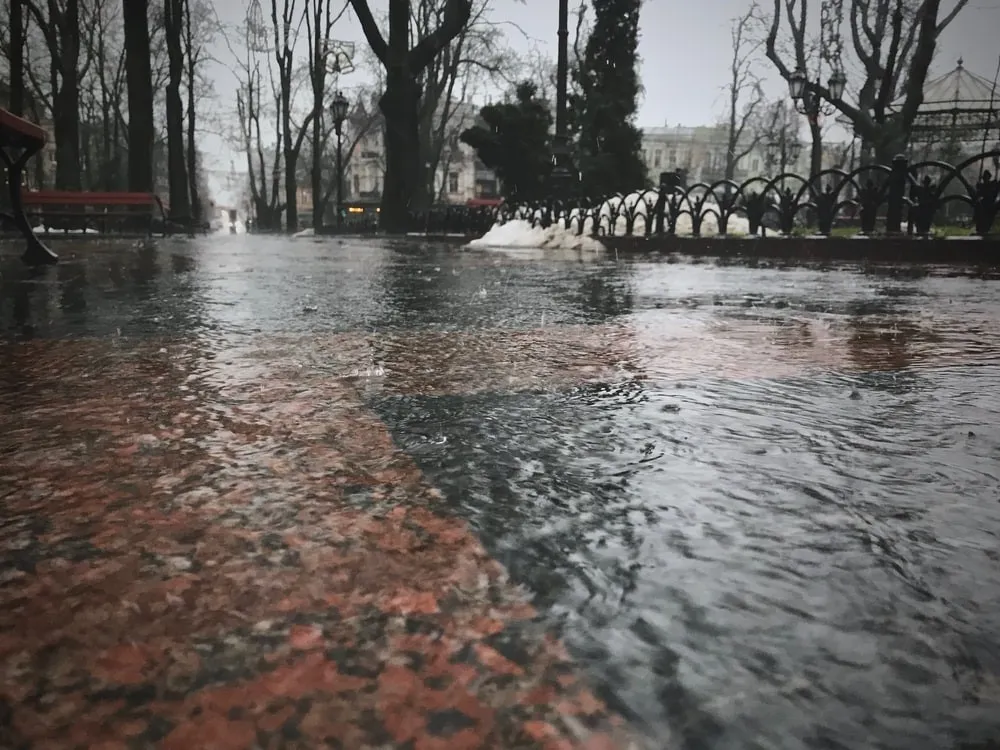
With car insurance, the liability component (third-party liability insurance, WA) will always pay for the damage to someone else in an accident caused by heavy rainfall. If the insured person suffers damage themselves, they must hold the other driver liable if that driver is liable, or they can claim under their casco or all-risk insurance.
The table below shows how things are arranged at most insurers. Always check the policy conditions, of course, because deviations can certainly apply.
| Insured | Sometimes insured or via tailor-made solutions | Not insured | |
|---|---|---|---|
| Home contents and buildings insurance | Damage caused by local rainfall (note: definitions sometimes differ!) Damage caused by rainwater flowing in over the thresholds Damage to contents caused by a roof collapsing due to rainfall (for example water accumulating on a flat roof, but the Buildings (Living Environment) Decree (Besluit bouwwerken leefomgeving, Bbl), formerly the Buildings Decree (Bouwbesluit), must have been complied with) Damage caused by rainwater entering the home through roofs and gutters, including consequential damage (for example problems with the electrical installations) Damage caused by overflowing pipes Damage caused by sewage water | Overflowing or failure of dykes along canals or rivers, when this was not caused by local rainfall Damage caused by indirect rainfall (for example via the groundwater level) Damage caused by moisture penetrating the walls | Homes located in areas outside the dykes Damage caused by water from inland waters, the sea or a river as a result of a failed or overflowing flood defence Damage to gutters Damage caused by rainwater entering the home through open doors or windows Damage caused by rainwater flowing into the home through open entrances (for example an opening in the basement) Damage caused by a rise in the groundwater level Water damage due to poor maintenance |
| (Business) casco insurance | Damage to the car caused by flooding Damage to the car in a collision caused by heavy rainfall Damage caused by water when the street is flooded No effect on the no-claims ladder (bonus-malus ladder) | ||
| Business buildings and contents insurance | Damage caused by local rainfall Damage caused by rainwater entering the premises through roofs or gutters, including consequential damage Damage caused by rainwater flowing in over the thresholds Damage to contents caused by a roof collapsing due to rainfall (for example water accumulating on a flat roof, but the Bbl, formerly the Buildings Decree, must have been complied with) | Overflowing or failure of dykes along canals or rivers, when this was not caused by local rainfall Damage caused by water from inland waters, the sea or a river as a result of a failed or overflowing flood defence Areas outside the dykes | Damage to crops Damage caused by rainwater entering the home through open doors or windows Damage caused by rainwater flowing into the home through open entrances (for example an opening in the basement) Water damage due to poor maintenance |
Here too, insurance does not always offer a complete solution. Especially with home contents and buildings insurance, it is therefore important to take a number of preventive measures yourself. Think, among other things, of:
- Fitting a water stop valve between the tap and the washing machine and dishwasher
- Placing a water detector in the basement
- Cleaning the gutters regularly
- Do not pave the entire garden, but make sure there is enough greenery so that water can soak into the ground
- Install a rain barrel to prevent the sewers from becoming overloaded
Liability of the water authorities
A water authority can sometimes be liable for water damage. The water authorities (waterschappen) are responsible for managing water levels in the Netherlands. They therefore have a duty of care, and if they have not fulfilled this duty of care, they are liable. The most important rules are shown below.
| Flooding from water on the land after a cloudburst | Water authority is not liable |
| Flooding caused by a flood | |
| The flood defence or the area meets the standard | Water authority is only liable in exceptional cases Example: the water authority is liable if complaints have been received about the water drainage and the water authority has done nothing about them |
| The flood defence or the area does not meet the standard | Water authority is usually liable, but sometimes not Example: the water authority is not liable because certain measures cannot yet be taken under an environment plan (omgevingsplan, formerly the zoning plan or bestemmingsplan) |
Damage caused by snow, black ice and frost
Climate change brings extreme temperatures, and that is not only about extreme heat. For damage caused by extreme cold, such as damage to the roof from excessive snow load, private home insurance does offer cover. There are often few or no exclusions here, except when the damage is the result of poor maintenance. For damage to the car caused by black ice, frost or snow, casco or all-risk insurance will also pay for the damage.
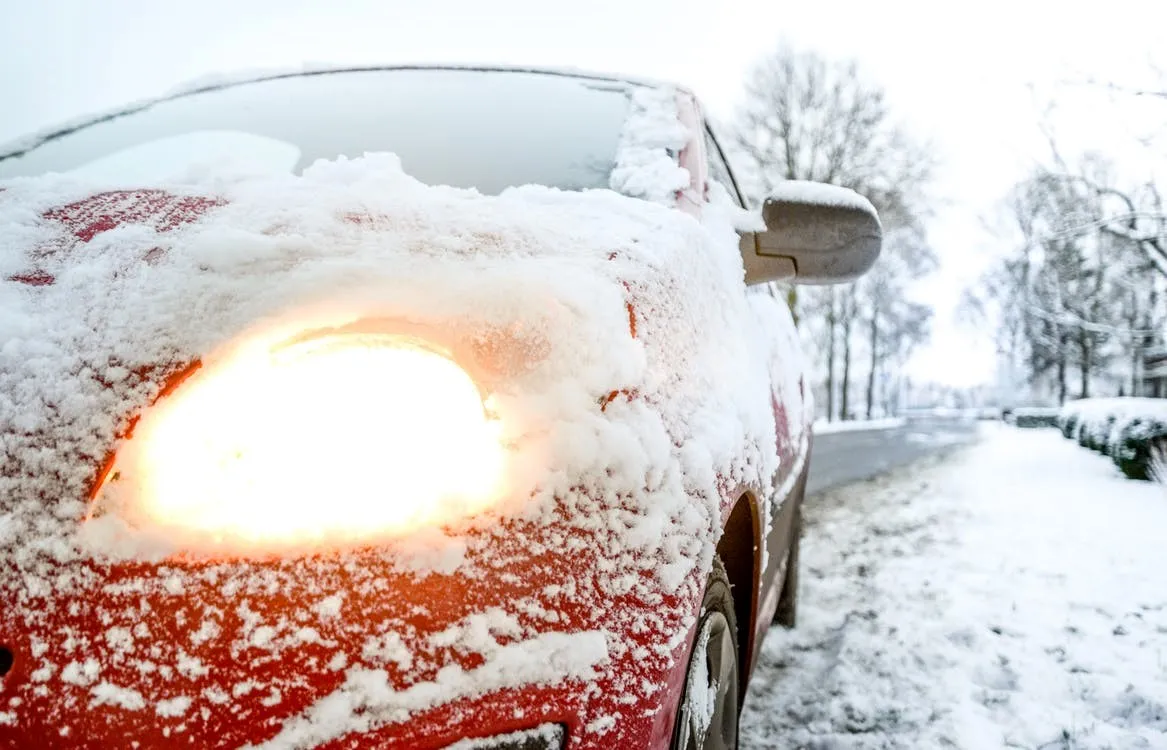
Insurance for commercial buildings often contains more exclusions. Damage caused to walls by drifting ice, for example, is often not covered. The same applies to damage to fences caused by lateral snow pressure. A number of other risks can often be insured as an option, such as damage to the roof caused by vertical snow load.
The overview below shows whether or not damage caused by snow, black ice and frost is currently covered by most insurance policies. Always read your own policy conditions, though, because deviations are certainly possible.
| Insurance | Insured | Not insured |
|---|---|---|
| Home contents and buildings insurance | Water damage caused by taps or pipes bursting in frost Damage to the roof and the contents when the roof collapses under snow load Damage to the walls caused by lateral snow pressure or drifting ice | If the damage was caused by poor maintenance |
| (Business) casco insurance | Damage to the car in an accident caused by an icy road Collapse of a garage roof caused by snow load No effect on the no-claims ladder (bonus-malus ladder) | |
| Business buildings and contents insurance | Water damage caused by taps or pipes bursting in frost Damage to the roof and the contents when the roof collapses under snow load Damage to the walls caused by lateral snow pressure or drifting ice | Damage to crops Damage to fences and materials caused by lateral snow pressure or drifting ice Damage caused by poor maintenance |
Damage caused by subsidence
One of the growing problems caused by climate change: subsidence as a result of periods of drought. These droughts cause the groundwater level to drop and layers of peat and clay to shrink. This in turn can lead to pile rot in wooden foundations, cracks in walls and facades and other forms of structural damage to the home. Repair costs can run extremely high, with an average cost of damage of more than €60,000 per home. It is important to note that this damage is not covered by buildings insurance and that there are currently no insurers offering insurance for it. It is therefore very important that homeowners are aware of this risk.
Hail damage to solar panels
Hail damage to solar panels is becoming more and more common. This is a consequence of climate change, which causes more extreme hailstorms. Although good-quality solar panels meet European standards and have undergone a hail test, they can still be damaged in very heavy hailstorms. This is especially the case if the solar panels have already become vulnerable after years of use. Even if the glass is not broken, the delicate solar cells can be damaged! Fortunately, this damage is usually well covered by buildings insurance, provided the solar panels are fixed to the house.
Frequently asked questions about damage from climate risks
Many homeowners do not know exactly what is covered by the insurer, especially when it comes to climate risks. For example, almost 50% of Dutch people think that damage to their home caused by subsidence is simply covered by buildings insurance, while this is not the case. It is perfectly normal to have questions about this subject, and it is important to know the answers before damage occurs. That is why we have put together this FAQ about damage from climate risks.
Does buildings insurance cover damage caused by subsidence?
Drought can make subsidence occur more quickly. The risk of subsidence in the Netherlands is fairly high. Subsidence is not only caused by drought, but also, for example, by works in the area or by gas extraction. As is often the case, insurers do not provide cover when a risk is very high or when damage occurs gradually, as is the case with subsidence. In principle, insurers only insure damage that occurs suddenly. That is why none of the major insurers provides cover for subsidence.
Will climate change also affect insurance?
Yes, because it already does. Reinsurers, the international insurers with which national insurers insure themselves, have noticed for years that they have to pay out more and more for storm and disaster damage. In recent years, some insurers have even paid out more in compensation than they have received.
Such a situation is of course not sustainable, and that is why Dutch insurers have to pay more and more on the international insurance market. At the end of the day, it is the consumer who has to foot the bill. As a result, Dutch consumers are already indirectly paying for the climate change that is clearly being felt elsewhere in the world. In the short term, premiums are becoming more expensive. In the long term, it may even mean that the consequences of climate change can no longer be insured on the international market, so that Dutch insurers can no longer insure climate damage.
Is there a higher excess for climate damage?
Not always, but in some cases the risk of damage is higher. Insurers would then have to make the premium very expensive, but that makes the insurance unattractive. That is why they include exclusions or a higher excess. Most buildings insurers, for example, have an increased excess for storm damage. With some insurers, the excess is more than €400.
Does buildings insurance cover flooding?
There are big differences between insurers here. Some insurers, for example, do insure local flooding and the failure of non-primary flood defences along regional canals and rivers, but not major dyke breaches. Between 2012 and 2020, only de Neerlandse offered flood insurance that also covered dyke breaches. According to STOWA (2021), since then no insurer in the Netherlands has offered insurance against flooding from the sea and rivers, apart from products for a number of multinationals and a few very wealthy private individuals. Most Dutch insurers offer their website and policy documents in Dutch only.
Can I get compensation if the insurer does not pay for climate damage?
Sometimes it is possible to hold someone else liable. For example, when the damage is not only the result of the climate, but also the result of someone else's mistake. In addition, in some cases the government provides compensation for (part of) the damage in extreme natural disasters, for example under the Calamities and Major Accidents Compensation Act (Wet tegemoetkoming schade bij rampen en zware ongevallen, WTS). Finally, there are also foundations such as the Nationaal Rampenfonds (NRF, the national disaster fund), which paid out 80 million guilders in 1995 during the near-flood disaster.
Can I carry out repairs before the insurer or the intermediary has visited?
No. Repairs must always be carried out in mutual consultation and after the damage has been assessed. The insured person must, however, take the necessary steps to prevent things getting worse, such as moving the contents, laying down a tarpaulin and so on.
When is it a storm?
Meteorologically, a storm is defined as wind with a force of at least 9 on the Beaufort scale. Insurers, however, have included their own definition of a storm in their policies. With many insurers, it is a storm at a wind force of at least 7 on the Beaufort scale. Their definitions usually state that the measurements of the KNMI must be consulted for this.
Is there an excess for storm damage?
Yes, even if an excess of €0 has been agreed. Every insurer has a clause under which the agreed excess is increased by an amount. This amount is usually between €200 and €500. You can find this in the policy conditions.
Insurance related to liability
- Liability and insurance
- Business liability
- Professional liability
- Car insurance
- Classic car insurance
- Youngtimer insurance
- Casco insurance
- All-risk insurance
- Home contents insurance
- Motorcycle insurance
- Accident insurance
- Buildings insurance
- Legal expenses insurance
- Travel insurance
- Third-party liability insurance (WA)
- Home insurance
Liability of persons
As a general rule, there are two possibilities:
Want to hold someone liable? Download the sample letter:
About this page
Written by Ronald de Waard, insurance editor. Last updated on 9 November 2026. WA.nl provides general information, not personal advice.