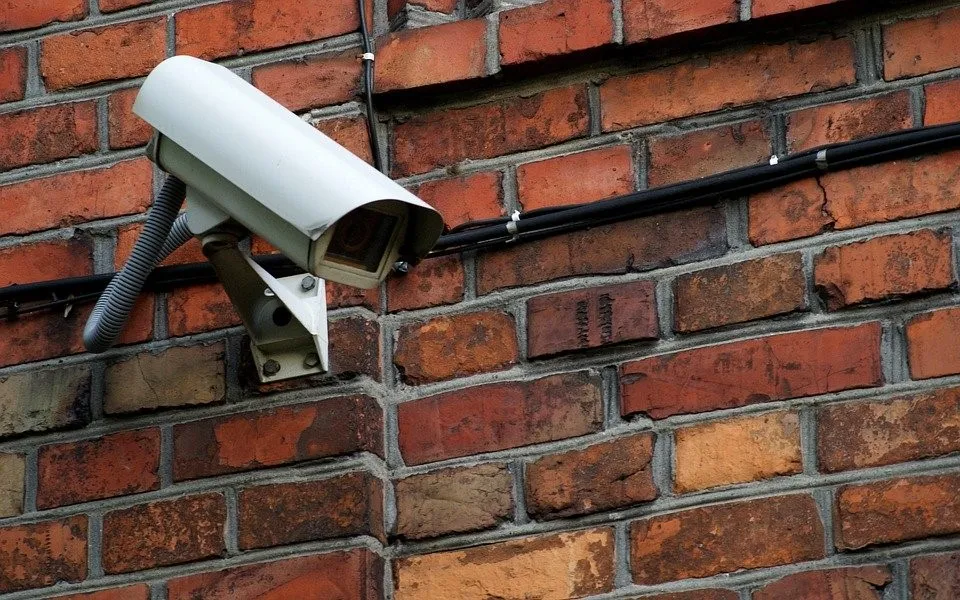
10 tips for installing cameras in and around your home
A security camera is an important deterrent for keeping burglars at a distance. If those burglars still get in, the camera footage provides evidence to hold them liable and get them convicted. However, cameras may not simply be placed anywhere. Below are ten important tips that owners should certainly not ignore. This page describes the situation in the Netherlands.
1. Check with your insurer
With many insurers, the owner is entitled to a discount when installing security systems. This is the case, for example, when installing a burglar alarm, a fire protection system or security cameras. Many insurers take part in this, but the systems often have to meet a number of requirements. One common requirement, for example, is the Police Secure Housing label (Politiekeurmerk Veilig Wonen). Home contents insurance is one of the policies on which such a discount is possible. Owners would therefore do well to check with their insurer and ask about the options.
2. Only film your own property
In your own home, installing a security camera is of course not a problem. In the garden, too, it is perfectly permitted to point a security camera at your own garden. All of this falls outside the scope of the General Data Protection Regulation (GDPR, in Dutch: AVG), so the Dutch Data Protection Authority (Autoriteit Persoonsgegevens, AP) has no jurisdiction here. When visitors come over or when a babysitter stays the night, the situation may be different. In that case, it is important not to go further than is strictly necessary. A camera pointed at the toilet is therefore unacceptable.
That is of course different when the camera films not only your own garden, but also the public road or your neighbour's garden. This is only permitted by way of exception, for example when there is a necessary and unavoidable interest. It is very important to respect the privacy of others when using cameras. It is essential not to go further than is strictly necessary and to protect the privacy of others as much as possible. Using cameras is permitted, but the recordings may only be kept for a limited period, to guarantee the privacy of the people involved.
If the owner does not follow these rules, they can get into trouble. Not only can they be penalised, they also run the risk of being held liable. In addition, they risk that the camera footage obtained cannot be used as evidence against a burglar. Nothing but disadvantages, in other words.
3. Inform others
Even when an owner only films their own property, they may sometimes also film other people. There is nothing wrong with that, as long as the footage is not misused. However, the owner is required to inform visitors about it, for example by putting up a pictogram at the entrance gate. That way, they can decide for themselves whether or not to enter. The same rule also applies to businesses and shops, but there are special rules for employers.
The same applies, by the way, when an owner has a doorbell with a built-in camera. It must be clear to the visitor whether or not they are being filmed. They can then decide for themselves not to ring the bell and leave, or simply to bang loudly on the door.
4. Secure the camera system
Nowadays, security cameras increasingly work via digital solutions. The footage is then stored in the cloud, and an owner can check from the Costa del Sol whether the coast is clear. Handy, but such tools also carry risks. It is important that the owner is aware of them, because ultimately they are also liable for the footage. For example, the owner can be held liable if footage of a Dutch celebrity stealing leaks because they did not think it necessary to change the default password. Personal liability insurance remains recommended in any case.
5. Place cameras in smart places
A camera is preferably mounted in a corner of a room. This is because all cameras have a blind spot. A camera hanging in the middle of a façade is often still quite easy to reach via the blind spot, after which a saboteur can do as they please. With a camera in the corner of a room, that is much more difficult or even impossible.
It is also important to think about the height at which the security cameras are mounted. Burglars often look down and not at cameras that are placed too high. As a result, the footage is often not usable and offers no extra protection. By placing the camera at a height of around 2.5 metres, burglars can already be spotted from some distance and yet they cannot easily sabotage it. This is a good height for the camera to work properly without compromising on security.
Then place the cameras in strategic places, namely at every outside door (preferably facing both ways) and pointed at valuable belongings. In a shop, the camera is always pointed at the till, but at home that might be the brand-new television.
Finally, do not forget to take sunlight or incoming light into account. Too much sunlight can cause unclear images, just as artificial light does with infrared cameras, for example.
6. Place a surveillance camera behind the window
Tenants are not always allowed to drill holes, but that does not mean they cannot install cameras. It is true, though, that most surveillance cameras do not film well behind glass. The cameras that can do this have no infrared lighting and have a Starlight function.
Although it is generally not advisable to place surveillance cameras behind the window, it can still be an option in some cases. It is important to check with the seller whether the camera in question is suitable for this. If it is, placing a camera behind the window can be a simpler and cheaper solution than installing a camera on the outside of the home.
7. Make cameras stand out
In the past, people often experimented with inconspicuous cameras fitted in lighting. The reasoning was that thieves would then not destroy them. Nowadays, experts believe it is a better idea to make cameras stand out. Even with inconspicuous cameras, criminals are not always recognisable, and so the advantages of cameras that stand out and deter are simply greater.
8. Choosing the right camera
When storing surveillance footage, it is very important not to rely only on local storage, because a criminal could then gain access to the footage. On the other hand, storing footage only in the cloud is not ideal either, because there is no access to the recordings when there is no internet connection. A better option is to choose a combination of both, so that a backup of the footage is always available. By using a combination of local storage and cloud storage, you can guarantee the security and accessibility of the surveillance footage.
An IP camera with an SD card and cloud storage, for example, is a good choice. An alternative solution is a camera with a SIM card, so that there is always mobile internet. Always choose a camera with a built-in battery that can take over when the mains power fails.
Also pay attention to the image quality. There are still surveillance cameras with such poor image quality that it is not clear from the footage whether Robin Hood is a human or an anthropomorphic fox. Old cameras with a limited number of megapixels are therefore better replaced.
9. Install outdoor lighting as well
With outdoor lighting, criminals around the house are more visible. Infrared also works, but less well than a camera that can simply film a well-lit area. Outdoor lighting also has a deterrent effect. It is no coincidence that impact-resistant lighting is a requirement for the Police Secure Housing label.
10. Maintain the surveillance cameras
Security cameras placed outdoors in particular need quite a bit of maintenance. That makes sense, because they are exposed to weather, wind and insects. Clean outdoor cameras every six months and check the cabling. With small cracks, it is better to carry out repairs now than when it is too late.
Frequently asked questions about cameras in and around the home
Using cameras in and around the home can be a useful way to improve security. However, the laws and regulations on camera footage are complex, so it is quite normal to have questions about the rules on cameras in and around the home. In this FAQ we answer some of the most frequently asked questions about using cameras in and around the home.
Can I share camera footage with others?
In principle, the camera footage you make is only for personal or household use. Sharing footage in which people are recognisable is therefore only permitted for that purpose. For example, it is permitted to share footage in a limited app group, but not to post it publicly on Facebook. Setting it so that only "friends of friends" can see it on Facebook is not permitted. To avoid problems and claims for damages, it is advisable not to share footage of others and to respect their privacy.
In the case of criminal offences, the camera footage can of course be shared with the police. It then becomes part of the criminal case file.
Can the owners' association (VvE) install cameras in the communal areas?
The owners' association (VvE) has a legitimate interest in monitoring the communal areas, and the association is therefore allowed to arrange camera surveillance. The rule is, however, that filming may not go further than necessary. Filming only the entrances will often be enough. In addition, the cameras may not be placed in such a way that they can film into the apartments when doors are opened. Finally, the VvE may not keep the camera footage longer than necessary. A retention period of four weeks is a good guideline here.
What can I do if my neighbours' camera invades my privacy?
In principle, it is not permitted to use cameras to film the public road or other people's private property. It may be permitted only if there is no other way. Measures must then be taken to limit the invasion of privacy as much as possible. If that is not the case, the injured party can take action. Always follow the step-by-step plan below.
[1. Try to reach an amicable agreement]
It is not always necessary to start flexing your muscles straight away. Often it is enough to talk to your neighbour to discuss the situation. Sometimes few changes are needed to solve the problem, and the camera can simply be mounted somewhere else.
[2. Call in help]
If the neighbour is unwilling to cooperate on a solution, the community police officer (wijkagent) can mediate. Some municipalities also offer neighbourhood mediation. More information about this can be found on the website problemenmetjeburen.nl.
[3. File a complaint with the AP]
The AP, or Dutch Data Protection Authority (Autoriteit Persoonsgegevens), is competent to handle complaints about privacy violations. No later than three months after the complaint is filed, the AP will provide information about its progress.
[4. Get legal help]
The court still has the most options to end the situation. If the AP does not come up with a suitable solution, it remains possible to go to court. The court can also award compensation. Legal expenses insurance can cover the legal costs.
What is Camera in Beeld?
Camera in Beeld is a police system in which members of the public and businesses can voluntarily register their security cameras (source: politie.nl). The police can make targeted requests for footage from registered cameras for investigations. That way, the police can, for example, try to reconstruct a burglar's escape route. The police must always request the footage and can therefore never watch live.
What are the rights of people who are filmed?
People who are filmed have various privacy rights, such as the right of access. This means they may see the footage that was made of them. The footage does not have to be handed over for this: watching it together on a connected screen is enough. They also have the right to ask for the footage to be deleted when it is no longer needed. The same also applies to vehicle owners whose licence plate is visible on the camera. Such a licence plate can be traced back to them personally, so the owner has exactly the same rights.
When am I not breaking the law with my video doorbell?
First of all, it is good to know that secret filming is not allowed. A video doorbell is meant for ringing the bell and is therefore mounted in plain sight. Do not secretly use it as a security camera. Also put up a sticker or a sign so that visitors know they are being filmed when they ring the bell. That way, they can still decide not to ring and leave, or to knock instead. Then mount the camera cleverly or set it up so that the impact on others is as small as possible. So do not film your neighbours or the public road. It is often possible to set zones so that the street is left out.
It is also important to know that footage may not be kept longer than necessary. Four weeks is given as a guideline. Finally, remember that video doorbells with facial recognition software are not a good idea. In that case, biometric data is processed, and the GDPR sets very strict conditions for this. It is simply easier and better not to use it.
Insurance related to liability
- Liability and insurance
- Business liability
- Professional liability
- Car insurance
- Classic car insurance
- Youngtimer insurance
- Casco insurance
- All-risk insurance
- Home contents insurance
- Motorcycle insurance
- Accident insurance
- Buildings insurance
- Legal expenses insurance
- Travel insurance
- Third-party liability insurance (WA)
- Home insurance
Liability of persons
As a general rule, there are two possibilities:
Want to hold someone liable? Download the sample letter:
About this page
Written by Ronald de Waard, insurance editor. Last updated on 9 November 2026. WA.nl provides general information, not personal advice.