A thatched roof gives a home a distinctive look, but it also brings particular risks. Fire, storms, damp problems and overdue maintenance can lead to major damage more quickly in homes with a thatched roof than with many other types of roofing. That is why a thatched roof raises not only structural and maintenance questions, but also legal and insurance questions. Who is liable if the roof turns out to be defective, if the seller withheld certain information or if a fire spreads to the neighbours? And what requirements do insurers set for prevention, maintenance, chimney safety, solar panels and wood-burning stoves? On this page you can read what to look out for when it comes to liability and insuring a home with a thatched roof. This page describes the situation in the Netherlands.
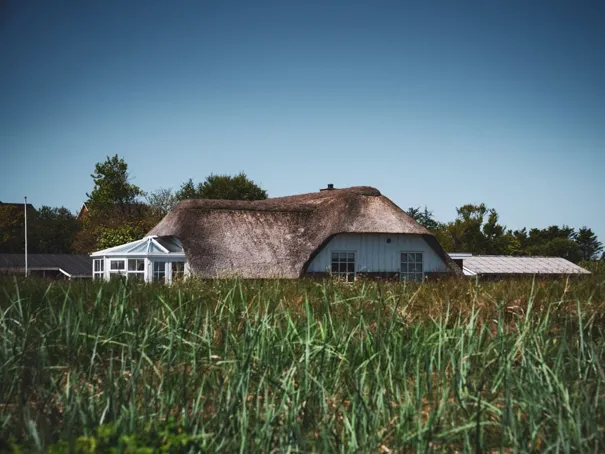
Dangers of a thatched roof
A thatched roof gives a home a lot of character, but it also brings specific risks. Thatch is a natural material and can catch fire relatively quickly, especially when it is dry. A small source of ignition can be enough. Think of sparks from a chimney, fireworks, flying embers from a fire nearby, a lightning strike, arson or an open fire close to the home. An indoor fire can also spread to the thatched roof, for example via a chimney, a roof penetration or a defective construction.
The biggest problem is that a fire in a thatched roof can develop quickly. Air remains between the reed stems, which allows oxygen to penetrate deep into the thatch layer. As a result, a thatched roof does not only burn on the outside: the fire can also spread within the thatch layer itself. Extinguishing it is also difficult. A thatched roof is designed precisely to drain rainwater away quickly. Extinguishing water therefore often runs off the roof and has difficulty reaching the core of the burning thatch. This means a fire can cause major damage to the roof, the home and the contents in a short time.
Fire is not the only risk. Water and storms can also cause damage. A well-laid thatched roof normally drains rainwater well, but damage, worn ridges, moss growth, damage caused by birds or a thatch layer that is too thin can lead to damp problems. Prolonged moisture in the thatch can cause rot and shorten the life of the roof. In a storm, weak spots in the roof can give the wind something to grip.
How do you make a thatched roof safer?
A thatched roof can never be made completely risk-free, but the chance of damage can be greatly reduced. Fire prevention, maintenance and a safe construction are especially important. Insurers may make preventive measures compulsory or take them into account when setting the premium and cover. Important preventive measures are:
- For new builds or renovations, choose a screw-fixed thatched roof (schroefdak). With a screw-fixed roof, the thatch is fitted onto a closed substructure. This means a fire spreads less quickly via the underside of the thatch, and the fire brigade has a better chance of intervening in time.
- Use non-combustible or fire-safe materials under the thatch. On an existing roof, the inside can be finished with fire-resistant board material, such as plasterboard. The space between the thatch and the boarding can be filled with mineral wool. This limits the air supply and does not contribute to the spread of fire.
- With sandwich panels, pay attention to the insulation material. Insulated roof panels are often used for a new thatched roof. For fire safety reasons, mineral wool is preferred over plastic foam, because mineral wool is non-combustible and better able to withstand heat.
- Make sure there is a good vapour control layer. With insulation and closed substructures, moisture from inside the home must be prevented from getting into the roof structure. A good vapour control layer on the warm side of the structure helps prevent condensation and damp damage.
- Only have suitable fire retardants used. Not every product is suitable for thatch. Ask for test reports and have it checked whether the product has been tested on a comparable roof structure.
- Pay extra attention to the chimney. A chimney on a thatched roof is a major fire risk. The flue must be suitable for the stove or fireplace, be properly installed and pass safely through the roof. Have old or questionable chimneys inspected.
- Fit a spark arrester on the chimney. With a fireplace or stove for solid fuels, a spark arrester is very important. Many insurers also make this compulsory.
- Have the chimney swept regularly. Soot and creosote in the flue increase the risk of a chimney fire. An annual inspection and cleaning by a qualified chimney sweep is no unnecessary luxury with a thatched roof.
- Install smoke detectors and carbon monoxide detectors. Smoke detectors on every floor and in high-risk rooms increase the chance that occupants can escape in time and that a fire is discovered quickly in its early stages. A carbon monoxide detector warns of carbon monoxide, an odourless gas released by incomplete combustion, for example from a wood burner, open fireplace or central heating boiler.
- Make sure you have good firefighting equipment. Think of a suitable foam extinguisher or a fire hose reel. A fire in its early stages must be tackled immediately. Firefighting equipment must be within reach and checked regularly.
- Have the roof checked periodically by a thatcher. A professional can spot wear, moss growth, damage, damage caused by birds, weak spots and problems with ridges in good time.
- Repair small damage straight away. Small holes, loose parts or damage caused by birds can quickly get worse in storms or rain. Deal with it immediately. For your insurance, too, it is important that the roof is demonstrably well maintained.
- Consider lightning protection if the home is in an exposed location. If the home stands in the open, with no taller trees or buildings nearby, lightning protection may be sensible.
Insuring a home with a thatched roof
A home with a thatched roof needs extra attention when taking out home insurance. For insurers, the fire risk is what matters most. Thatch is more combustible than roof tiles, and a fire in a thatched roof is often difficult to fight. This means fire damage can be extensive, and in serious cases the home can be completely lost. Traditional thatched roofs with an open construction in particular are more difficult to insure. With this type of roof structure, fire can spread more quickly via the thatch and the substructure. Insurers may require the chimney to be fitted with a spark arrester, the flue to be swept every year by a qualified company and the roof structure to meet certain fire safety requirements. Sometimes they also look at fire-resistant boarding, smoke detectors, firefighting equipment, the presence of an open fireplace, the location of the home and the state of maintenance of the thatch. The premium for buildings insurance for a home with a thatched roof is usually higher than for a home with a tiled roof. That is because the chance of fire damage and the possible extent of the damage are greater.
Insurers for a home with a thatched roof
A home with a thatched roof is not equally easy to insure with every insurer. Home insurers take a more critical look at this type of roof, mainly because the fire risk is greater than with a tiled roof. It makes a big difference whether it is a traditional thatched roof with an open construction or a modern screw-fixed roof with a closed substructure. A screw-fixed roof is generally easier to insure and can sometimes be insured for a premium closer to that of a tiled roof. A traditional thatched roof more often calls for a tailor-made policy, stricter prevention requirements or a specialist insurer.
Some mainstream insurers do not accept homes with a thatched roof, or only under strict conditions. Most Dutch insurers offer their website and policy documents in Dutch only. FBTO, for example, states that a traditional thatched roof cannot be insured through the FBTO Opstalverzekering (buildings insurance), but it does list conditions for an insurable thatched roof. These include fire-resistant boarding, a fire extinguisher of at least 6 kilos, a spark arrester for an open fireplace or wood-burning stove, annual chimney sweeping and a brick-built home. Univé also provides information about insuring a home with a thatched roof and stresses, among other things, the importance of a spark arrester when solid fuels are burned.
There are also insurers or insurance solutions that focus specifically on homes with a thatched roof. Rietpolis, a product of Howden, presents itself as specialist insurance for homes with a thatched roof and works together with the Dutch trade federation of thatchers (Vakfederatie Rietdekkers). De Onderlingen also calls itself a specialist in insuring thatched roofs, and looks not only at the policy but also at prevention, inspection and maintenance. Other providers are more reluctant. This also applies when an existing roof is later converted into a thatched roof. The Dutch homeowners' association (Vereniging Eigen Huis), for example, has clarified in its special terms and conditions (Bijzondere Voorwaarden) that a change from a tiled roof to a thatched roof must be reported as soon as possible, and in any case within 30 days. The insurer can then adjust the premium or end the insurance. Centraal Beheer also states in its terms and conditions that fitting or removing a thatched roof must be reported, after which the premium may change or, in some situations, the insurance may end.
Price of thatched roof insurance
The price of insurance for a home with a thatched roof varies greatly from home to home. There is no fixed rate for thatched roof insurance. Insurers look at factors such as the rebuild value, the location of the home, the type of roof structure, whether there is an open fireplace or wood-burning stove, the state of maintenance, preventive measures and the chosen level of cover.
The biggest price difference usually lies in the type of thatched roof. A modern screw-fixed roof with a closed substructure is more fire-safe than a traditional thatched roof with an open construction. As a result, a screw-fixed roof is generally cheaper and easier to insure. With some specialist solutions, the premium for a well-built screw-fixed roof need not be much higher than for a home with a tiled roof. A traditional thatched roof is a different story. There, insurers see more fire risk, which means the premium is often higher and the conditions stricter.
A premium example from Honig en Honig shows that large price differences are possible. For an example home with a traditional thatched roof and a rebuild value of just over one million euros, the buildings insurance premiums from different providers range from around €1,700 to more than €4,000 a year. For home contents insurance, too, the price varies from around €400 to more than €700 a year. In all these cases there is no excess. With some insurers, however, an excess per incident is compulsory. At Verzekeruwrecreatiewoning.nl, part of Roding Assurantiën B.V., for example, the excess is at least €250 per incident. For storm damage, the excess is then €450 to €1,250.
Liability for a thatched roof
When there is damage to or caused by a thatched roof, it is not always immediately clear who is liable. The cause may be a mistake by the contractor, a defect in the thatcher's work, incorrect information from the seller or insufficient maintenance by the owner. Liability can also come into play with a fire, especially when the fire spreads to a neighbouring home. Because thatched roofs carry specific risks in terms of fire, moisture, storms and wear, it is often examined whether all parties involved acted with sufficient care.
Liability of the contractor for a thatched roof
With problems with a thatched roof, the contractor may be liable if the defect results from an error in design, workmanship or choice of materials. A thatched roof requires specialist craftsmanship. The contractor must therefore ensure a sound construction, suitable thatch, correct detailing and workmanship that suits the properties of thatch. Think of a sufficient roof pitch, good ventilation or, on the contrary, a properly closed substructure, a correct vapour control layer and a safe connection around dormer windows, chimneys and roof penetrations. Even when the contractor hires a thatcher as a subcontractor, the contractor can remain liable to the client for the end result. A contractor can also be expected to warn if the design poses risks, for example with a roof pitch that is too shallow or a construction that allows moisture to build up. Mould, premature wear, rot, loose thatch or leaks may point to a workmanship error, but this usually has to be investigated by an expert. The owner also has a responsibility: defects must be reported promptly and specifically. Anyone who waits too long to complain runs the risk of losing their claim to repair or compensation.
Liability of the seller for a thatched roof
The seller of a home with a thatched roof may also be liable if, after the purchase, the roof turns out to have a defect. The key question is whether the home meets what the buyer was entitled to expect under the purchase agreement. A thatched roof needs more maintenance than a tiled roof, so some wear is not necessarily a hidden defect. That is different when there is a more serious structural problem, such as open joints in the substructure, damp problems or a roof structure that causes the thatch to deteriorate faster. If the seller knows about such problems, for example because similar defects were found in the same building project, they must inform the buyer. This duty of disclosure carries a lot of weight. A seller cannot then simply hide behind the buyer's duty to investigate. However, contributory negligence on the part of the buyer may play a role, for example if the buyer knew that there had been previous proceedings or technical reports about similar roof problems, but did not investigate further.
Liability of the thatcher
The thatcher may be liable if the thatched roof was fitted defectively or if unsuitable thatch was used. A thatched roof is not a standard product, but a structural construction in which craftsmanship, choice of materials, roof structure and moisture control come together. A thatcher can be expected to work according to the professional standards of the trade, to warn of visible risks and not to deliver a roof that they know, or should understand, will age, rot or leak too quickly. At the same time, not every disappointing thatched roof is automatically the thatcher's responsibility. Its lifespan also depends on factors such as ventilation, insulation, vapour control, roof pitch, location, maintenance and later work by others. If, for example, an owner has insulation fitted after the thatching without a sufficient vapour control layer, moisture can remain in the thatch layer and cause serious damage. In that case, it must be carefully investigated whether the cause lies with the thatcher or with a later structural change. In a dispute, an expert report is often decisive.
Liability when fire spreads from a home with a thatched roof
If fire spreads from a home with a thatched roof to a neighbouring home, the owner or occupant is not automatically liable. The cause of the fire must be examined, as well as whether the owner acted with sufficient care. If the fire is caused by a lightning strike, an unknown cause or a sudden technical defect that could not have been foreseen, liability will be less readily accepted. That is different when the fire is linked to negligence, such as poor maintenance of the thatched roof, an unsound chimney, a missing spark arrester, unsafe use of a stove or fireplace, an open fire near the roof or failure to comply with prevention requirements. With a thatched roof the fire risk is known, so extra vigilance can be expected from the owner. Liability for buildings (opstalaansprakelijkheid) may also play a role if the home or roof structure was defective and therefore posed a danger to others. In practice, the damage to the neighbours will often first be handled through their own buildings or home contents insurance. Their insurer may then try to recover the damage from the liable owner. This risk can be covered with good personal liability insurance. For your own home, suitable buildings insurance for homes with a thatched roof also remains essential.
Frequently asked questions about liability and insurance for homes with a thatched roof
Insuring a home with a thatched roof is often a little more complex than insuring a home with a tiled roof. This is mainly due to the higher fire risk and the possible extent of the damage if things go wrong. Insurers therefore look closely at the type of thatched roof, the state of maintenance, preventive measures and any additional risks, such as a wood-burning stove or solar panels. The conditions vary greatly from insurer to insurer. Questions about insuring a home with a thatched roof? Then be sure to read this FAQ.
Is a thatched roof more expensive to insure?
Yes, usually it is. For insurers, a thatched roof carries more risk than a tiled roof, mainly because of the fire hazard and the often high repair costs. As a result, the premium for buildings insurance for a home with a thatched roof is often higher. The difference is greatest with a traditional thatched roof with an open construction.
What does thatched roof insurance cost?
The price of thatched roof insurance varies from home to home and from insurer to insurer. Important factors are the rebuild value, the type of thatched roof, the location of the home, whether there is a fireplace or wood-burning stove, the state of maintenance, preventive measures and the chosen cover. For an example home with a traditional thatched roof and a rebuild value of just over one million euros, the buildings insurance premiums from different providers ranged from around €1,700 to more than €4,000 a year. With home contents insurance added, the total annual premium in such an example can rise to more than €4,500.
Do solar panels make thatched roof insurance more expensive?
Solar panels can affect the insurance of a thatched roof, but that does not automatically mean the premium always goes up. It depends on the insurer, the installation, the type of roof and the fire safety of the system. Insurers may require the solar panels and inverters to be installed by a certified installer, mounted on non-combustible material and kept at a sufficient distance from combustible parts of the roof. Always consult the insurer before the solar panels are installed.
Can I calculate my thatched roof insurance online?
Most insurers do not offer an online calculator for thatched roof insurance, because these policies are typically tailor-made. Thatched roofs are usually explicitly excluded from the online calculation. At Recreatiewoningverzekering.nl, however, it is possible to calculate thatched roof insurance for a holiday home online. This is then based on the rebuild value, the new value of the contents, the chosen excess (€250, €500 or €1,000) and whether or not you choose to include liability cover.
Is all damage to a thatched roof covered by insurance?
No. Buildings insurance can cover damage to a thatched roof caused by events such as fire, storms, water or burglary, but that does not mean all damage is automatically paid out. Damage caused by poor or overdue maintenance, wear, ageing, structural defects or construction errors is often excluded. The insurer may also refuse or pay out less if prevention requirements have not been met, for example with a wood-burning stove without the compulsory spark arrester. There may also be an excess.
Is a wood-burning stove allowed with thatched roof insurance?
A wood-burning stove or open fireplace is not necessarily prohibited with a thatched roof, but insurers usually set strict conditions. Often the flue must be installed safely, there must be a spark arrester on or above the chimney and the chimney must be swept and inspected at least once a year. Some insurers require this to be done by a certified or affiliated chimney sweeping company and the owner to keep proof of this.