The Dutch and neighbour disputes: a quarter of people in the Netherlands have fallen out with their neighbours at some point
A large-scale survey of 2,100 residents of the Netherlands shows that neighbour disputes are a significant problem in the country. This article describes the situation in the Netherlands.
- 1 in 4 Dutch people (26% of respondents, or 546 people) said they had had a conflict with their neighbours at some point.
- The conflicts appear to be becoming more serious, particularly in the Randstad (the densely populated western conurbation), which is due to the higher population density.
Main reason for the dispute, as a percentage of the 546 Dutch people who had a neighbour dispute
Source: WA.nl, National survey of neighbour disputes (2,100 Dutch people)
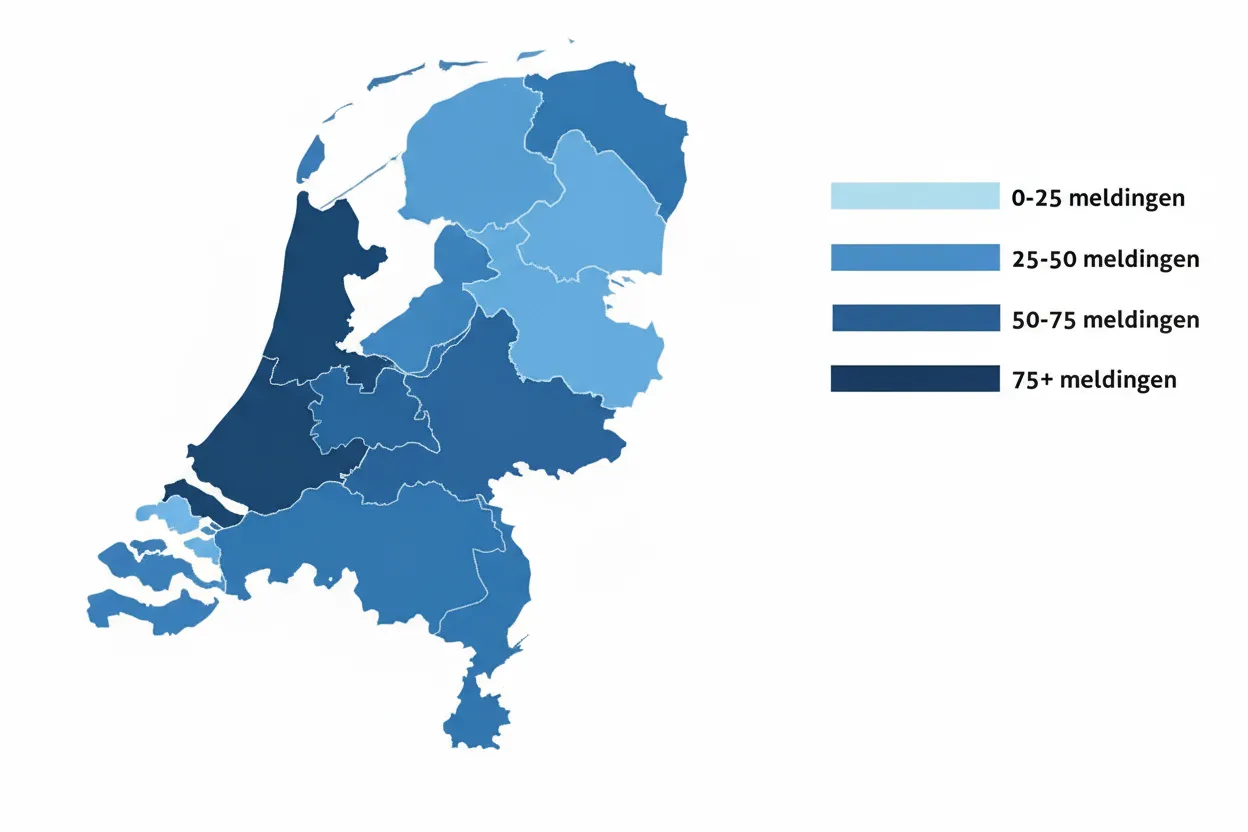
Number of reported neighbour disputes per province, in bands
- 75+ reports
Noord-Holland, Zuid-Holland - 50-75 reports
Gelderland, Utrecht - 25-50 reports
Flevoland, Groningen, Limburg, Noord-Brabant, Zeeland - 0-25 reports
Drenthe, Friesland, Overijssel
Province boundaries: CBS (CC BY 4.0)
Source: WA.nl, National survey of neighbour disputes (2,100 Dutch people)
Analysis of causes
The reasons for neighbour disputes vary, but noise nuisance is generally the most frequently heard complaint. The most common causes of neighbour disputes in the Netherlands are:
- Music and noise nuisance: noise nuisance, particularly from music, is given by 51% of people as the main reason for the dispute. In 60% of neighbour disputes in Zuid-Holland (South Holland), loud music is the cause.
- Nuisance caused by children: children are a source of nuisance for 19% of respondents. In Noord-Holland (North Holland), nuisance from other people's children is the biggest source of irritation. No less than 25% of all neighbour disputes in Noord-Holland revolve around nuisance from children.
- Renovations: renovation work leads to a dispute with the neighbours in 11% of cases.
- Other causes: other reasons for disputes include pets, barbecue smoke, overhanging greenery, the right of way, the boundary fence, invasion of privacy and parking nuisance. In Gelderland, where 12% of neighbour disputes take place, overhanging greenery is the main cause.
| Province | Percentage of neighbour disputes | Main cause |
|---|---|---|
| Zuid-Holland | 28% | Loud music (60% of disputes in that province) |
| Noord-Holland | 15% | Nuisance caused by children (25% of disputes in that province) |
| Gelderland | 12% | Overhanging greenery |
Cover from legal expenses insurance
To avoid financial loss as a result of a neighbour dispute, people often turn to their legal expenses insurance. Neighbour disputes usually fall under the housing module of the insurance. Because the cover is not always clear, it is advisable to check the policy conditions carefully, as what is covered differs from insurer to insurer:
- Some insurers offer standard cover.
- Most only offer additional cover.
- The odd policy excludes cover for neighbour disputes altogether.
Help and advice with neighbour disputes
If people cannot work things out themselves, they can also call on free help from neighbourhood mediation (buurtbemiddeling). These are volunteers who help to resolve disputes. According to Frank Visser, a lawyer known from the television programme 'De Rijdende Rechter' (The Travelling Judge) and an ambassador for Buurtbemiddeling, around 70% of the cases referred to Buurtbemiddeling are resolved.
The Hague has also started a trial with neighbourhood judges (wijkrechters) in the Escamp district to resolve disputes between residents and with the housing association. The aim of the neighbourhood judge is to reach agreements together with the parties involved, rather than to give a clear-cut ruling. A hearing costs €79.
Read also: Neighbour law in the Netherlands.
About this page
Written by Ronald de Waard, insurance editor. Last updated on 6 November 2026. WA.nl provides general information, not personal advice.