Allowing agricultural traffic is often very difficult for the road authority. Agricultural traffic brings extra safety risks that are inherent in the nature of an agricultural vehicle. A tractor is simply large and heavy and can cause an enormous amount of damage in a road accident. That is one of the reasons why tractor insurance is compulsory. At the same time, these vehicles drive relatively slowly, which hinders the flow of traffic. Raising the speed limit for tractors tackles this last problem. It should also contribute to road safety, because agricultural traffic can be directed via safer roads around built-up areas. This page describes the situation in the Netherlands.
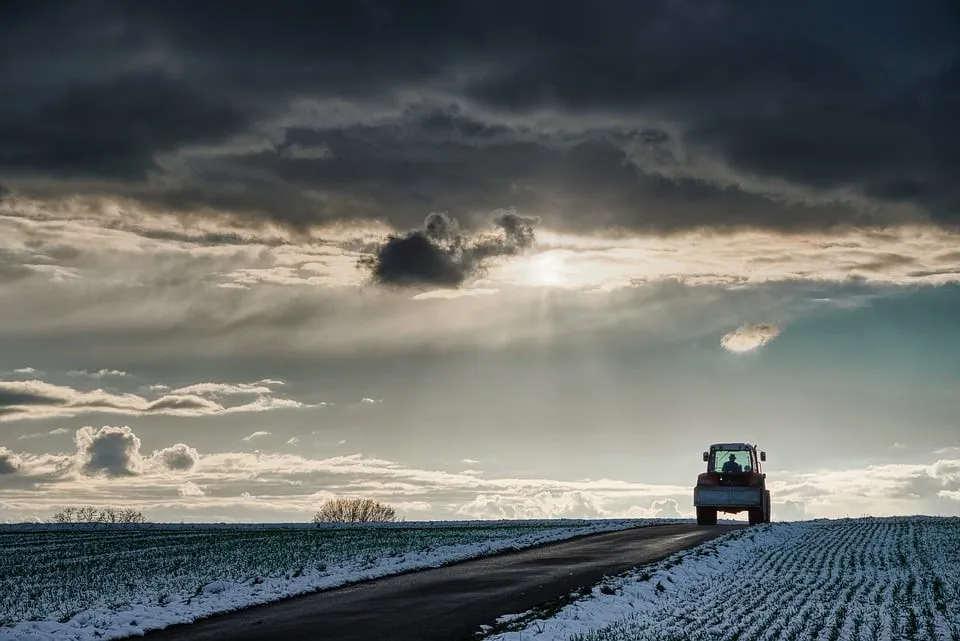
Higher speed limit for tractors
For a long time, the legal speed limit for agricultural vehicles was 25 km/h. In practice, however, many tractor drivers turned out to drive faster. This was shown by, among other things, research by the Transport Research Centre (Adviesdienst Verkeer en Vervoer). This research indicated that only 11% of the drivers surveyed stay below the 25 km/h limit. As many as 64% said they usually drive between 25 and 40 km/h, and 25% even said they drive faster than 40 km/h. The fact that agricultural vehicles did not have a registration plate for a long time made enforcement more difficult.
At the end of 2016, the House of Representatives (Tweede Kamer) adopted a motion to raise the speed limit for agricultural vehicles to 40 km/h. This proposal was adopted in May 2020. As a result, Article 22 of the Traffic Rules and Signs Regulations 1990 (RVV 1990) was amended and an Article 22a was introduced. In addition, there is an MOT (APK) requirement, but only for wheeled agricultural and forestry tractors that can go faster than 40 km/h (Netherlands Vehicle Authority (RDW)).
Speed limit of 40 km/h for agricultural vehicles
The 40 km/h speed limit has applied since 1 January 2021 (Article 22a RVV 1990). According to the Dutch government (Rijksoverheid), an (agricultural) construction vehicle may drive at a maximum of 40 km/h if the vehicle has a registration; without a registration, the speed limit is 25 km/h (Dutch government (Rijksoverheid)). Existing agricultural vehicles had to be registered before 1 January 2022, and since 1 January 2025 a registration plate requirement has applied to all (agricultural) construction vehicles that are subject to registration (Dutch government (Rijksoverheid)). Although the speed limit is 40 km/h, drivers must of course still take into account other speed restrictions that may apply on certain roads. Thanks to the registration plate, speeding offences, among other things, can be established more easily.
Areas with a speed limit of 40 km/h
The original idea was that tractors would be allowed to drive at up to 40 km/h everywhere, but this was later refined. The main aim is for agricultural traffic to be directed at a higher speed over roads that are suitable for it. According to Article 22a RVV 1990 and the Dutch government (Rijksoverheid), the following speed limits apply to agricultural and forestry tractors, motor vehicles with limited speed and mobile machines with a registration (Dutch government (Rijksoverheid)):
| Type of road | Speed limit for tractors |
|---|---|
| Roads outside built-up areas | 40 km/h |
| Roads inside built-up areas where 70 km/h applies | 40 km/h |
| Roads inside built-up areas with a separate cycle path or cycle/moped path, or that are closed to cyclists | 40 km/h |
| Other roads inside built-up areas | 25 km/h |
| All roads, without a registration | 25 km/h |
(Agricultural) construction vehicles may not drive on expressways (autowegen) and motorways. Ultimately, the municipality or province decides which roads (agricultural) construction vehicles use and which speed limit applies.
Important role for the road authority
It is the road authority (wegbeheerder) that decides where agricultural traffic is or is not welcome. The road authority must work out plans in the form of signage, traffic decisions and any infrastructure measures. A "yes, unless" policy is pursued here. This means that the starting point is that a road is accessible to agricultural traffic and that 40 km/h is allowed, unless there are reasons not to allow this. This is the case, for example, if the carriageway is too narrow, if the road is a main cycle route or an important school cycle route, or if there is already a parallel, safer route where agricultural vehicles are already allowed to drive at 40 km/h. It is also possible to exclude certain roads from the exemption based on the width of the vehicle, but in practice this is (almost) never done.
Traffic signs and the tractor speed limit
Because of the changed speed limit for tractors, the situation can differ from road to road. Traffic signs must therefore provide more clarity. Tractor drivers must take the traffic signs below into account (meaning according to Annex 1 of the RVV 1990).
| Traffic sign | Consequence for tractors |
|---|---|
| C8 | Closed to agricultural and forestry tractors, motor vehicles with limited speed and mobile machines: the road is not accessible, an additional sign can grant an exception for tractors that are allowed to drive faster than 25 km/h |
| C9 | Closed to, among others, riders, livestock, carts, agricultural and forestry tractors, motor vehicles with limited speed, mobile machines, bicycles and mopeds: the road is not accessible, an additional sign can grant an exception for tractors that are allowed to drive faster than 25 km/h |
| F11 | Compulsory use of passing lane or passing strip, intended only for agricultural and forestry tractors, motor vehicles with limited speed and mobile machines |
| F12 | End of compulsory use of passing lane or passing strip |
Frequently asked questions about the higher speed limit for tractors
The higher speed limit for tractors has probably raised many questions. It is understandable that people are concerned about the consequences of this change. Below are the answers to the most frequently asked questions about these amended rules.
What are the advantages of raising the speed limit for tractors?
On busy roads, the higher speed limit improves the flow of traffic and road safety. On rural roads, little changes in practice, because a lack of enforcement meant that people almost always drove fast there in the past anyway. The amended rules also mean that agricultural traffic can be directed via safer and more suitable roads.
Does the higher speed limit for tractors not increase the risk of accidents?
According to research, it does not. On the one hand, this is because tractors were already driving this fast in practice. So raising the speed limit does not change much in practice. At the same time, research shows that speed is not the main cause of accidents involving tractors. The introduction of the speed limit is also linked to better management of agricultural traffic, the introduction of a tractor driving licence, the introduction of a registration plate requirement and stricter enforcement. All of this should in fact contribute to a lower risk of accidents.
Why has the speed limit been set at 40 km/h?
This is the result of weighing up many factors. First of all, this is the speed that was often already maintained in practice. At the same time, this is the speed that is technically possible for many tractors, although there is a strong increase in the number of tractors that can drive at up to 60 km/h. Several researchers state that raising the speed to more than 40 km/h will lead to more accidents and casualties. With road safety in mind, 40 km/h was therefore chosen. This is a safe speed and it ensures an acceptable flow of traffic.
Does the higher speed limit make other road users feel less safe?
No conclusive research on this has been published yet. Earlier research did indicate that more than half of cyclists and three quarters of motorists feel that agricultural traffic makes them feel less safe on the road. Factors such as size, load, lighting, and dirt and mud played an important role in this. It is striking that low and high speeds contributed to the feeling of being unsafe to almost the same extent. So it is not clear whether raising the speed limit will make other road users feel more or less unsafe.
How fast may a tractor drive on private land?
The speed limit for tractors only applies when they are used on public roads. If your own land is not a public road, there are no speed limits. The driver must then make the necessary judgements himself. In doing so, he must take into account, among other things, his own safety, the safety of others and any nuisance to local residents. If the driver uses an inappropriate speed and hits someone, he can still be held liable on that basis.