Owners of agricultural tractors, forestry tractors, motor vehicles with limited speed (MMBS), agricultural or forestry trailers and interchangeable towed equipment are required to register them if they use them on public roads. Existing vehicles had to be registered before 1 January 2022. Since 1 January 2025, a registration plate requirement has applied to all (agricultural) construction vehicles that are subject to registration (Dutch government (Rijksoverheid)): so the registration plate requirement has gone ahead. If a vehicle is not registered, it may not be used on public roads. New vehicles are given a registration straight away. This page describes the situation in the Netherlands.
Read also: Compulsory MOT (APK) for tractors, the speed limit for a tractor and the category T driving licence for a tractor.
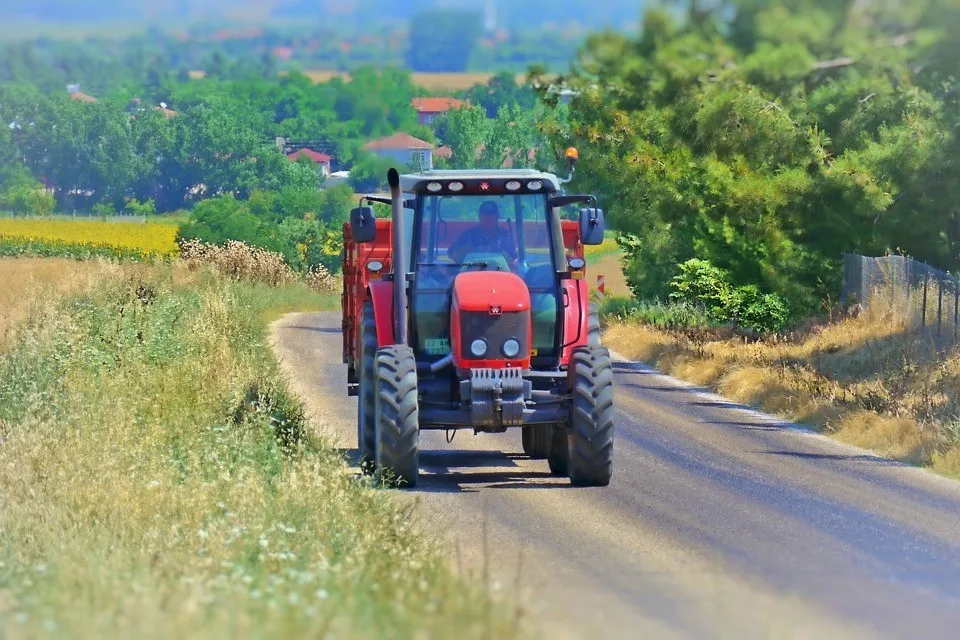
Registration plate requirement for (agricultural) construction vehicles
The registration plate requirement for agricultural vehicles was debated in the Netherlands for a long time. In the end, the Netherlands Vehicle Authority (RDW) set up a registration system. New tractors are given a registration straight away. When a tractor is sold, the registration must be transferred.
Registering an old tractor
Until 1 January 2022, these vehicles could be registered via the RDW website. To do so, a number of vehicle details had to be provided. A photo of the type plate showing the VIN was also required to complete the application. If all the requested details were provided correctly, registering a tractor online was straightforward and the application was handled quickly. Since 1 January 2022, it is no longer possible to register online; registration now takes place through an inspection by the RDW (RDW).
For a time, vehicles could be registered without the required technical inspection. This was only possible for existing vehicles. Vehicles that were put into use later first had to be inspected at an RDW inspection station.
Temporary registration for agricultural vehicles
It was possible for a temporary registration to be issued because the RDW had not yet processed the application. A temporary registration was valid until 1 January 2023. Until then, it was permitted to drive agricultural vehicles with a temporary registration. As of 1 January 2023, this is only permitted with a definitive registration.
Registration and insurance requirement for tractors
Not only is there a registration plate requirement for tractors, these vehicles must also have compulsory third-party liability insurance (WA) from the moment they are registered in someone's name. When you take out tractor insurance, the reporting code (meldcode) and the registration number are passed on to the insurer. The insurer notifies the RDW that the vehicle is insured. Insuring the vehicle under a general business policy is not sufficient. If you are not insured, you can be fined.
Registration plate or not for agricultural or forestry tractors
Has the registration plate requirement gone ahead? Yes. Since 1 January 2025, a registration plate requirement has applied to all (agricultural) construction vehicles that are subject to registration (Dutch government (Rijksoverheid)). Until that date, the registration plate requirement for existing tractors and motor vehicles with limited speed only applied if the vehicle was subject to the MOT (APK), if it was driven faster than 25 km/h or if it required an exemption.
According to the RDW, whether a vehicle is subject to registration depends on the type of vehicle (RDW):
- Motor vehicles with a maximum design speed of 6 km/h or more are subject to registration. There are a number of exceptions to this.
- Towed vehicles that were put into use before 1 January 2021 are subject to registration if they have a maximum design speed of more than 25 km/h and a maximum mass of more than 750 kg, and are connected to the towing vehicle so that they can pivot around a vertical axis.
- Towed vehicles that were put into use after 1 January 2021 are subject to registration if they have a maximum mass of more than 750 kg and are connected to the towing vehicle so that they can pivot around a vertical axis; in that case no speed requirement applies.
- A vehicle that is not used on public roads does not need to be registered.
| Type of vehicle | Existing (in use before 1 January 2021) | New (in use after 1 January 2021) |
|---|---|---|
| Agricultural or forestry tractor (> 40 km/h) | Yes | Yes |
| Agricultural or forestry tractor (≤ 40 km/h) | Yes, since 1 January 2025 | Yes |
| Motor vehicle with limited speed or mobile machine (≥ 6 km/h) | Yes, since 1 January 2025, unless an exception applies | Yes, unless an exception applies |
| Trailer or interchangeable towed equipment | Yes, since 1 January 2025, if the vehicle can go > 25 km/h, weighs > 750 kg and is connected so that it can pivot; otherwise no | Yes, if the vehicle weighs > 750 kg and is connected so that it can pivot; otherwise no |
Source: RDW and Dutch government (Rijksoverheid), checked on 9 November 2026. If in doubt, the RDW offers a registration requirement decision tool (keuzehulp registratieplicht).
Frequently asked questions about the compulsory registration plate for tractors
Since 1 January 2025, a registration plate requirement has applied to all tractors that are subject to registration. The transition periods made this complicated and raised questions for many people. Below are the answers to a number of frequently asked questions about the registration plate requirement for tractors.
Do I need a registration plate if my tractor does not go faster than 25 km/h?
Yes, if the tractor is subject to registration. Until 1 January 2025, an existing tractor that did not go faster than 25 km/h did not need a registration plate, but that transitional arrangement has lapsed. Since 1 January 2025, the registration plate requirement has applied to all (agricultural) construction vehicles that are subject to registration. If you cannot show a registration certificate, you can be fined.
Do I have to register a new tractor myself?
No, if you buy a new tractor to which the registration and registration plate requirement applies, the vehicle is delivered with a registration.
Why was the compulsory registration plate for tractors introduced?
The compulsory registration plate is intended to make it easier to trace the driver after an accident. In the event of theft, it also makes it easier to identify a stolen vehicle.
Is a registration plate compulsory if I only use the vehicle on my own land?
The registration plate requirement only applies to vehicles that are used on public roads. Business premises can also count as part of the public road, for example if there is no fence or there is a barrier that opens automatically. If the land is not accessible to others, it is not a public road and no registration plate requirement applies.
Does the registration plate requirement also apply to classic tractors?
Yes, the new rules also apply to classic tractors. These classic vehicles must have a registration and must have compulsory third-party liability insurance (WA) if they are used on public roads.