On 1 May 2021, the MOT (APK) requirement for tractors came into effect. The MOT requirement applies to wheeled tractors with a maximum design speed of more than 40 km/h. In other words: faster than the speed limit for tractors. If a tractor that is subject to the MOT has not been inspected, it is not permitted to drive it on public roads. This page describes the situation in the Netherlands.
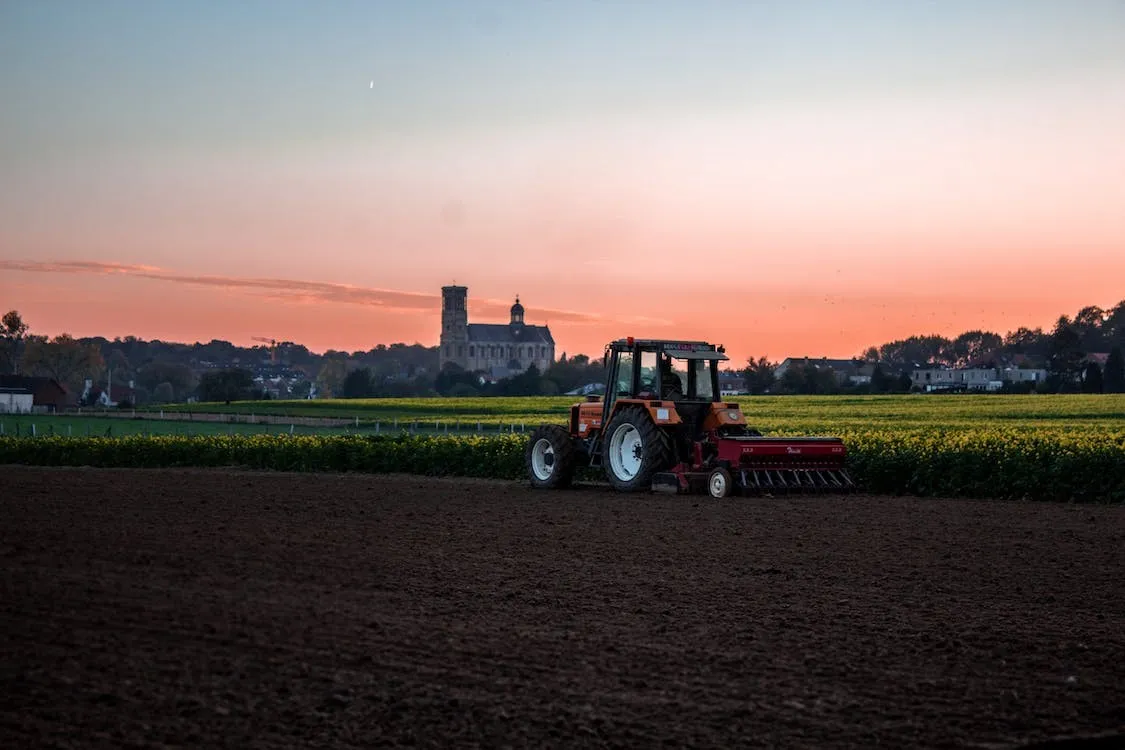
MOT requirement for tractors
The MOT requirement for tractors only applies to wheeled agricultural and forestry tractors with a maximum design speed of more than 40 km/h. This means that there is an exception for wheeled agricultural and forestry tractors with a lower maximum design speed, as well as for agricultural and forestry tractors on tracks. There are also a number of other exceptions. All exceptions are listed below.
- Wheeled agricultural and forestry tractors with a maximum design speed of up to and including 40 km/h
- Agricultural and forestry tractors without wheels (for example on tracks)
- Agricultural and forestry tractors used for fishing, livestock farming, forestry, horticulture and agriculture, mainly on the land where this takes place (including farm tracks, fields and forest paths)
- Agricultural and forestry tractors built more than 50 years ago
- Motor vehicles with limited speed (MMBS)
- Mobile machines
- Agricultural and forestry trailers
- Towed equipment
A motor vehicle with limited speed is a motor vehicle developed for specific (agricultural) work that cannot go faster than 25 or 45 km/h (Rijksoverheid); the mobile machine category is the successor to the MMBS category. This includes, among other things, road sweepers with limited speed, motorised lawnmowers and Unimogs.
Please note that these exceptions only apply in the Netherlands. In other countries, a tractor that is exempt in the Netherlands may not be exempt.
Is my tractor subject to the MOT? A tractor is subject to the MOT if all four of the points below apply (RDW):
- The tractor runs on wheels, not on tracks.
- The maximum design speed is higher than 40 km/h.
- The tractor is not mainly used on the land where the agricultural, horticultural, forestry, livestock or fishing work takes place (including farm tracks, forest paths and fields).
- The tractor is not older than 50 years.
The MOT date of a tractor can be found in the registration check (kentekencheck) of the Netherlands Vehicle Authority (RDW), under the tab for expiry dates and history (vervaldata en historie). To drive a tractor you also need a driving licence for a tractor; more about the MOT for scooters can be found on a separate page.
Introduction of the MOT requirement for tractors
The MOT requirement for fast tractors has applied since 1 May 2021. A tractor must be inspected for the first time when it is 4 years old, and every 2 years after that. Tractors older than 50 years are exempt (counted from the date of first admission). Source: RDW.
Having a tractor inspected
Once a vehicle has become subject to the MOT, the owner must make an appointment with an MOT garage approved by the RDW. The location finder can be found on the RDW website. This is a tool that makes it easy to find an approved MOT garage nearby. Approved MOT garages can be recognised by the sticker "APK Landbouwvoertuigen" (MOT for agricultural vehicles) and the approval sign with "RDW erkend" (RDW approved). If there is no approved garage in the region yet, it is advisable to contact the RDW by phone.
Not having a tractor inspected
If the owner does not comply with the compulsory MOT inspection for tractors, it is no longer permitted to drive the tractor on public roads or to park it on public roads. This is still permitted on private land that is not open to the public. Anyone who nevertheless drives an uninspected tractor on public roads can be fined by the police. In addition to the fine for not complying with the MOT requirement, you can also get a fine for the defect. In the event of an accident, this can also have consequences for the tractor insurance. In most cases the insurer will then not pay out, or will reclaim from the owner the amount paid to the victim.
Read also: Overview of traffic fines in the Netherlands and Tractor registration plate.
Consequences of a failed MOT for a tractor
The MOT inspection for tractors is a compulsory inspection for certain tractors that drive on the road. The purpose of this inspection is to keep traffic safe. If a vehicle does not meet the requirements, this can lead to a failed MOT. It is then important to take action, for example by having the vehicle repaired or by lodging an objection.
Tractor has failed and the expiry date has not yet passed
The inspector is required to report the failure to the RDW, but the owner still simply complies with the MOT requirement. So no fine follows and the tractor can in theory still be used. It is up to the owner to judge whether it is still wise to drive the vehicle. You can also be fined if the police find that the vehicle does not meet the technical requirements. In the event of an accident, this can also lead to insurance problems.
Tractor has failed and the expiry date has passed
After the expiry date, the owner has two more months to have the vehicle repaired so that it does meet the technical requirements. During this period, it is no longer permitted to drive the vehicle. You may still drive the tractor to the garage or to the MOT inspection. You must then be able to show that the journey is for this purpose. If the vehicle has still not passed two months after the expiry date, a fine from the Central Judicial Collection Agency (CJIB) follows automatically; according to the RDW between €180 and €500. This can be avoided by having the vehicle's registration suspended (schorsen).
Disagreeing with the failure
The owner may feel that the vehicle has been failed unfairly. In that case, he can lodge an objection to the MOT report. Tell the MOT inspector straight away that you dispute the failure. At the bottom left of the MOT report there is a section for objections. Fill this in. The MOT inspector will contact the RDW. An RDW employee will then come and check things. Until the RDW employee has visited, no more repairs may be carried out and the vehicle may not be moved.
Frequently asked questions about the MOT inspection for tractors
The compulsory MOT inspection for tractors is important for road safety. As a result of the new MOT rules, many people are looking for answers to their questions. Below are the frequently asked questions about the MOT inspection for tractors.
The garage refuses to give me an MOT report. What can I do?
The garage is required to issue an MOT report. If the garage does not do this, you can file a complaint about the garage with the RDW.
Who has to pay the inspection costs if I object to the MOT report?
This depends on who is proved right. If the garage failed the vehicle unfairly, the garage must pay the costs. However, if the garage rightly failed the vehicle, the owner pays these costs. In theory it is also possible to object to a pass. In that case too, it is the losing party that has to pay.
What is in the MOT inspection report?
You receive an MOT inspection report both when the vehicle passes and when it fails. If the vehicle has passed, this is stated on the report. It then states until when the inspection report is valid. Note: this is an "until" date, not an "up to and including" date. The MOT inspection report may also contain repair points, failure points and advisory points. Advisory points do not yet lead to a failure, but it is important that these issues are dealt with. If the vehicle fails, the report lists the failure points. That way the owner knows why the vehicle has failed and what needs to be done to get the vehicle to pass again.
Do I need to keep the MOT inspection report in my tractor?
In the Netherlands this is not compulsory, because the police can check digitally whether or not a vehicle has passed its MOT. Other rules may apply abroad.
Does the MOT requirement apply to all tractors?
No, the MOT requirement currently only applies to fast tractors. These are tractors with a maximum design speed of more than 40 km/h. There are also exceptions, for example for vehicles on tracks.
How often does a tractor have to be inspected?
A new tractor must be inspected for the first time after four years. After that, a new inspection must be carried out every two years.
How much does the MOT inspection for a tractor cost?
Garages that are approved by the RDW can set their own rates. As a result, the price can differ per garage. If there is no MOT-approved garage nearby, the RDW will carry out the MOT inspection. The costs differ per inspection station.
Does a classic tractor also have to be inspected?
Many old tractors will not exceed the required maximum design speed of more than 40 km/h. The MOT inspection is then not compulsory either. In addition, there is an exception for tractors whose DET (date of first admission, Datum Eerste Toelating) in the RDW register is fifty years or more ago. In principle, therefore, a classic tractor will not need to be inspected, but exceptions are of course possible.
What do they check during the MOT inspection for tractors?
They check various points, such as the general construction, the dimensions and mass, the engine, the fuel system, the environment, the transmission, the suspension, the steering, the braking system, the lights and so on. Only if the tractor meets the legal technical requirements will it pass. Every MOT station inspects the same points.