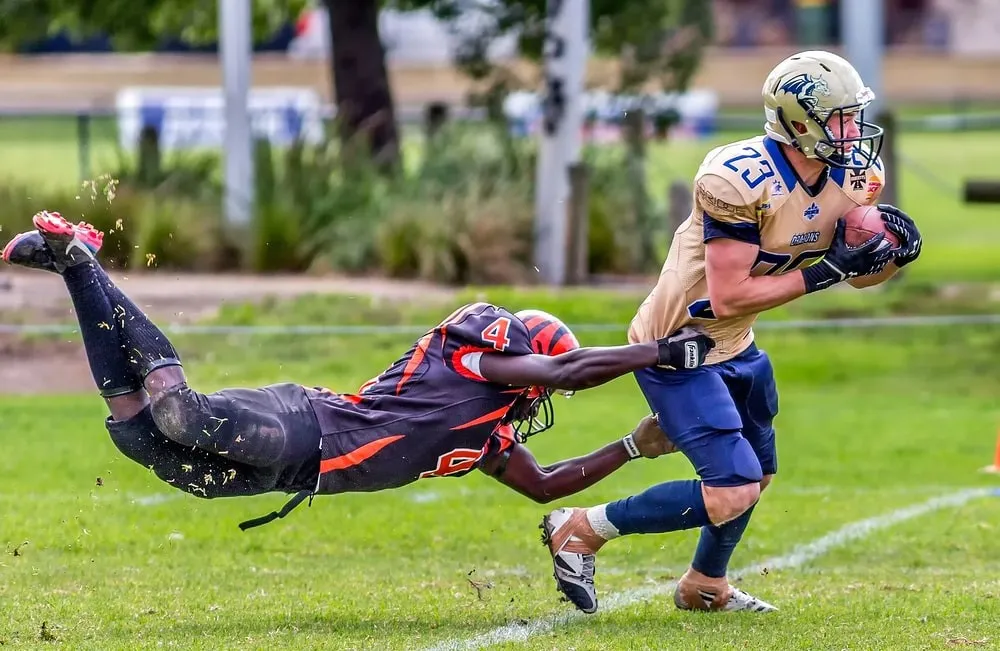
Liability for personal injury during sport and games
In sport and games, a higher threshold for liability applies. This means that not every tackle, even if it is considered unlawful under the rules of the game, is also unlawful in legal terms. However, this does not mean that fellow players can never be liable. Moreover, a lot of responsibility also rests with the organiser. This page describes the situation in the Netherlands.
Liability of participants in sport and games
In principle, you are liable as soon as you make a mistake and cause damage as a result. For athletes, such a situation would be undesirable. A footballer would then be liable for every breach of a rule of the game, which is certainly established if he gets a yellow card. Most people sense that such a situation would not exactly benefit the game. Fortunately, different rules apply in sport and games.
This special exception exists because anyone who takes part in a training session or a sports match can expect certain dangerous behaviour. By taking part, you accept this risk. In other words, the risk is tolerated up to a certain point. This sounds very unusual, but it is not. With companies, for example, we find it logical that they may compete with each other; that is part of the economic game, as long as the competition is not unfair. The same goes for sport. Somewhere there is an unwritten fair play rule that participants must not cross.
Differences on and off the pitch
This was also confirmed in the Natrap judgment (kicking after the ball has gone, ECLI:NL:HR:1991:ZC0300). In a match between Achilles 94 and VC Drachten 2, the player Dekker had kicked out at the player Van der Heide when the latter no longer had the ball. Van der Heide suffered a permanent knee injury as a result. The Dutch Supreme Court (Hoge Raad) ruled that an athlete acts unlawfully less readily, because athletes provoke dangerous behaviour in one another. In other words, it confirmed that different rules apply on and off the sports field: as soon as a footballer steps onto the pitch, he can expect a greater risk, and so he cannot simply hold his fellow player liable. It is only when certain behaviour is not to be expected, such as kicking an opponent after the ball has gone or a headbutt, that the behaviour is unlawful and a claim for damages does become possible. It is precisely for this reason that liability was accepted in this case.
Differences between sports
So breaking a rule of the game does not immediately make the player liable. It will, however, be taken into account when assessing the claim. This is because what is or is not acceptable in the sport is indeed relevant. A punch is not allowed on a football pitch, but in boxing it is completely normal. So not only do different rules apply on and off the sports field, there are also differences between the various sports.
Differences between levels of play
So breaking a rule of the game does not immediately lead to liability, but it is taken into account. What is more decisive is what the participants may expect of each other, which is of course partly determined by the rules of the game, but also by the way the game is refereed in practice. This also means that the standard can vary not only between different sports, but also between different levels. At amateur level, for example, a mistake caused by poor technique is more to be expected.
Differences during and after the game
It is often assumed that the game, and the acceptance of the higher risk, stops after the final whistle, but it is not that simple. The less strict duty of care can also continue to apply during half-time or after the final whistle. Two examples show this.
Firstly, there is the tennis ball judgment (ECLI:NL:PHR:1990:AD1456). In this case, a tennis player hit a ball over the net after a game had ended. The ball hit another player in the eye. The Supreme Court ruled that players are also in a game situation between games and accept more risks. On the other hand, it qualified this and indicated that more care may be expected between games than during play. A mishit between games therefore does not automatically lead to liability, but it may be expected that the ball is hit with less force and intensity.
Another example is the judo throw judgment (ECLI:NL:HR:1994:ZC1533). In this case, a judo opponent still made a shoulder throw after the command to stop, after which the other player suffered whiplash. Because such a stop command is sacred in judo and players really do not have to expect to be thrown to the ground at that point, this act was considered unlawful.
Contributory negligence for damage during sport and games
When, on the basis of these considerations, it is established that a player acted unlawfully and that this can be attributed to him, that player is also liable. The question that can then still be asked is whether the victim is also partly to blame (contributory negligence, eigen schuld). The Natrap judgment already shows that merely practising a risky sport in which serious fouls happen frequently is not enough to speak of contributory negligence. After all, even then you may assume that other players will still behave properly. When a player provokes the unlawful act himself, for example by taunting the other player and behaving unlawfully himself, there may of course be contributory negligence.
Other liable parties for damage during sport and games
It is not only fellow players who may be responsible for personal injury during sport and games. Also think of the role of spectators, organisers or even the road authority when activities take place on the public road. Discussing every possible situation would be an impossible task, but a number of common examples are given below.
Liability of clubs and legal entities that organise sport (matches)
While risks are inherent in sport and participants are therefore not quickly liable, we must not forget the position of the organisers. It is precisely where athletes can expect more danger that organisers have a stricter duty of care to protect them against it.
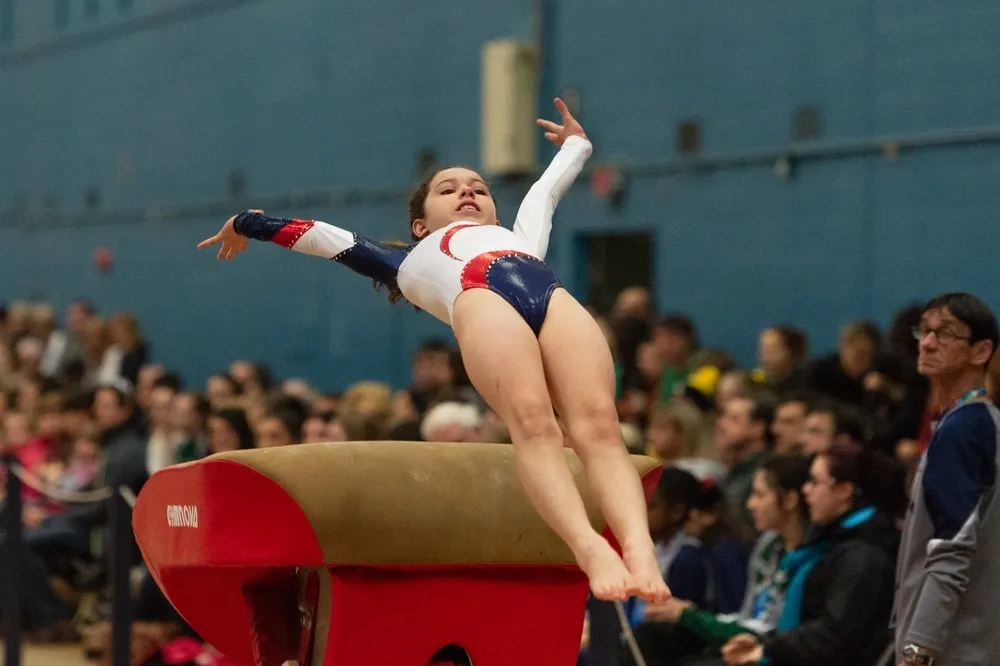
A good example of this is the Disloque judgment (ECLI:NL:HR:1995:ZC1836). In that case, a fourteen-year-old gymnast had fallen while performing a so-called dislocate (disloque). She was in a coma for a while, suffered brain injury and has been in a wheelchair ever since. The dislocate is a difficult element in gymnastics in which the gymnast runs the risk of falling at the end of the swing. During the exercise, an experienced and qualified gymnast was responsible for catching the young gymnasts. According to the Supreme Court, the trainer and the club could have done more to protect the gymnast, for example by working with two catchers.
Detailed information about the liability of organisersLiability of the employer
During sporting activities, an athlete sometimes acts in the capacity of an employee, for example as an employee of a football club or when the employer organises a tennis tournament. In such cases, the employer can be liable. This will have to be looked at on a case-by-case basis.
Detailed information about employment law in the NetherlandsOther parties that can be liable
Finally, third parties can also be liable for damage during sporting events. Think of a dog that breaks loose and ends up on the cycling course, a spectator who throws an object at a player, or a company that made a mistake in maintaining the pitch. In each individual case, it will have to be determined whether anyone is liable for the damage caused, and if so, who.
Liability in various sports
Sport brings people together and offers both excitement and joy. It can also come with legal complications, especially in the area of liability. From football to tennis and from swimming to athletics, every sport has its own specific risks and rules on liability.
Football and liability
Football is a sport that inspires many and that can change the lives of people, both footballers and spectators. There are various football insurance policies that cover, among other things, the liability risk. And that matters, because both sports clubs and footballers themselves can be held liable under certain circumstances. Yet this will not automatically be the case, not even if a player has made a mistake and gets a yellow or even a red card for it. That is because a higher threshold for liability applies.
All about liability in football →
Tennis and liability
Tennis is a popular sport that is quite intense. So it is not surprising that people sometimes get injured. It is no coincidence that some injuries are even named after the sport, such as tennis elbow. In most cases, you are responsible for such injuries yourself. But sometimes someone else can be responsible, such as the organiser or the tennis coach. This has to be assessed on a case-by-case basis, just as it is with football, for example.
All about liability in tennis →
Sport fishing and liability
Sport fishing can take place at sea as well as in coastal waters and inland waters. The applicable rules depend, among other things, on where you fish. As with other sports, participants can be held liable under certain conditions, but a higher threshold for liability applies. Some knowledge of this and of the rules of sport fishing is important for assessing liability cases.
All about liability in sport fishing →
Golf and liability
In golf, it is important to have good insurance, including liability insurance. Players can be held personally liable for damage or injury caused by their actions, such as hitting a ball that breaks a window or hits a person. That is where personal liability insurance (AVP) comes in handy. Golf courses and golf clubs have their own responsibility, in particular for maintaining a safe environment for players and for people who live or walk nearby. They can be held liable for accidents resulting from negligent maintenance or a lack of safety measures. That is why most golf courses and clubs have business liability insurance to protect themselves against possible claims.
Liability in gymnastics
Gymnastics is known for its precision, strength and technical complexity. This sport involves risks, such as the risk of falls or injuries caused by poorly maintained apparatus. Liability in gymnastics can have consequences for trainers, competition organisers and schools, among others. These parties have a responsibility to guarantee a safe environment and to take appropriate measures to prevent accidents. The balance between accepting risk and the duty to ensure safety is at the heart of all liability issues in gymnastics.
All about liability in gymnastics →
Hockey and liability in hockey
Hockey is a sport full of speed and precision. Although not a true contact sport, it involves quite a few risks. And these risks can raise questions about, among other things, the liability of fellow players, coaches and hockey clubs. While players accept a certain level of risk, which is inherent in the sport, situations of negligence or unsafe behaviour can still have consequences and result in claims for damages. In hockey, as in other sports, a higher threshold for liability applies, especially during matches and training sessions, but serious or reckless actions can go beyond the acceptable limits.
All about liability in hockey →
Horse riding and liability
Horse riding can serve various purposes. Often it is about sport and relaxation, but sometimes it is more professional. An example of this is the mounted police (police on horseback). In any case, it is important to be very careful, because a horse is still an animal and animals are unpredictable. A horse is also very large and strong and can cause a lot of damage. The dynamics and the acceptance of risk that are inherent in handling horses increase the legal complexity. Who is or is not liable in an accident during horse riding depends on various factors.
More information about liability in horse riding →
Swimming and liability
Liability in swimming is a complex issue that can involve various parties. Firstly, swimming pool owners or operators are responsible for providing a safe swimming and recreational environment. This includes maintaining the safety of swimming facilities, making sure there is enough supervision by qualified staff and complying with all relevant safety regulations. In the event of defects in the facilities or negligent maintenance, they can be held responsible for any personal injury. Swimming instructors and lifeguards also bear a degree of responsibility, which can result in liability. In addition, fellow swimmers can be liable for accidents caused by their reckless behaviour, such as pushing or dangerous play.
All about liability in swimming →
Liability in volleyball
Volleyball clubs and organisers of volleyball events can be liable for injury caused by inadequate safety measures or poor maintenance of playing surfaces and equipment. Trainers and coaches also bear responsibility, among other things for ensuring a safe training environment. They can be liable if negligence in training or supervision leads to injury. Board members of (beach) volleyball clubs, in turn, can be held liable for damage caused by wrong decisions or actions. And players can sometimes be personally liable. In that case, the general liability rules that apply to sport and games apply.
All about liability in volleyball →
Air sports and liability
Air sports, such as ballooning, gliding, paragliding and parachuting, combine adventure with specific safety risks. Liability is often more complex than in many other sports, because not only does the participant accept risks themselves, but third parties can also suffer damage. Think, for example, of a hot air balloon flying low over animals, landing in a meadow or causing damage to crops, vehicles or property. Passengers, organisers, pilots, operators and landowners can also become involved in an incident. In air sports, therefore, not only the general rules on sport and games play a role, but also aviation rules, permits, safety regulations and so on.
Frequently asked questions about liability in sport and games
When is there a sport and games situation?
This is a question of fact. Among other things, the presence of sporting and competitive elements can point to this, as can clear rules of the game or game elements. In a football or hockey match, for example, there will be a sports situation in which the higher threshold for liability applies. A bike ride with friends or children playing tag does not fall under this. In that case, there is no higher threshold for liability. A recent example of this is an accident that happened during an introduction party for students (ECLI:NL:RBDHA:2019:4173). A student jumped from the stage into the arms of other students. A fellow student was injured in the process. According to those present, the situation was comparable to sport and games. The court took into account that the student had never been to such a party before and that nobody had jumped from the stage before. According to the court, there was no sport and games situation, and the fellow student did not have to be on guard against other students suddenly jumping off a stage.
Does the higher threshold for liability only apply to participants?
No, it is not required that you take part in the game. A substitute on the bench, or even a spectator, also accepts the higher risk that comes with the game. This means that a spectator who gets hit in the face by a ball cannot simply hold the football player liable either.
Does liability insurance cover liability in sport and games?
If the insured person is liable, that liability is in principle simply covered by personal liability insurance (AVP). Because of the high threshold for liability, however, this does not happen often: anyone who sticks to the rules or makes a small mistake now and then is not liable, and then there is nothing for the AVP to cover. Some insurers also pay for damage during sport and games if the insured person is not liable, usually up to a maximum amount and only if the injured party is not taking part in the sport or game themselves. In the AVP terms and conditions of ZLM (1 May 2026 to 30 April 2027), for example, this is a maximum of €25,000 per event. Most Dutch insurers offer their website and policy documents in Dutch only. The policy conditions of your own insurer are decisive.
Is there insurance that covers such risks?
Yes, there are countless insurance policies that cover sports risks. For example, many clubs and sports associations take out sports disability insurance to protect their players. Liability insurance for spectators, for example, is also recommended. At professional level, cover sometimes goes very far. You can even insure a player's transfer value, so that a single tackle does not lead to a loss of millions.
More about liability
Articles about liability
 WonenLiability for a fire caused by a home battery: how to choose a safe home batteryRecent developments are making investing in a home battery increasingly attractive for households. Think of the arrival of dynamic energy contracts, which let you respond smartly to fluctuating energy prices. Or think of the abolition of…
 AansprakelijkheidEverything about liability for (un)safety in the workplaceIn the Netherlands, employers have a duty of care (zorgplicht). That is why the employer is also obliged to look after the safety and health of their employees. The duty of care also presumes that the employer takes measures to prevent an…
 AansprakelijkheidDifferences between third-party liability insurance and personal liability insuranceWA stands for wettelijke aansprakelijkheid (legal liability). Third-party liability insurance (WA) and personal liability insurance (AVP) are often confused with each other. The most important difference: third-party liability insurance…
About this page
Written by Ronald de Waard, insurance editor. Last updated on 6 November 2026. WA.nl provides general information, not personal advice.